

Get Weekly Blogs Straight To Your Inbox
Permaculture, in simple terms, is a way of designing and creating systems – like gardens or farms working in harmony with nature.

The word “permaculture” itself comes from combining “permanent” and “agriculture” or “culture,” reflecting a focus on sustainability and long-term thinking.
Permaculture was co-founded by Bill Mollison and David Holmgren in Tasmania, Australia, in the 1970s. Both Mollison and Holmgren played significant roles in developing and popularising permaculture.
Bill Mollison, an Australian ecologist, researcher, and teacher, was a driving force behind the development of permaculture. He observed natural ecosystems and traditional agricultural practices, inspiring the creation of a holistic design system.
David Holmgren, also an Australian ecologist, collaborated with Bill Mollison in refining and expanding permaculture principles. Holmgren’s contributions have been crucial in shaping the design framework and principles of permaculture.

In a nutshell, permaculture is like learning from nature’s playbook to create sustainable, efficient, and harmonious systems that support both the environment and people.
It’s about being smart, observing, and working together with the Earth to create a better way of living.
There are 12 Permaculture Principles and we will be looking each each one every month over the year and how we use it in our garden
Permaculture Principle No. 2: Catch and Store Energy
Permaculture principle No. 2 is “Catch and Store Energy.” This principle emphasises the importance of capturing and storing energy when it is abundant and using it when needed. Here’s a more detailed explanation of this permaculture principle:
Permaculture recognises that energy is a fundamental aspect of natural systems, and it encourages us to harness and store different forms of energy within our designs. This principle applies to various aspects of a permaculture system, including water, sunlight, wind, and organic matter. We will look at this in the terms of Explanation, Application and Outcome.
This principle emphasises the importance of capturing and storing energy when it is abundant for later use. The importance of thoughtful observation and strategic design to make the most of available resources, leading to more sustainable and resilient systems.
In permaculture, energy comes in various forms, including sunlight, rainwater, wind, organic matter, and human effort
The goal is to design systems that efficiently harvest and store this energy, preventing waste and promoting sustainability.
Water Harvesting:
Collect rainwater through systems such as swales, ponds, and rain barrels. This stored water can then be used during dry periods to irrigate plants, reducing the dependence on external water sources.
Solar Energy:
Utilise solar energy by strategically placing elements such as solar panels, greenhouses, and sun traps to capture and store sunlight for heating, electricity generation, or extended growing seasons.
Wind Energy:
In windy areas, consider incorporating wind turbines or windbreaks to either generate electricity or protect more delicate plants from strong winds.
Biomass and Organic Matter:
Composting and mulching organic matter not only enrich the soil but also capture and store energy in the form of nutrients. This stored energy becomes available to plants and contributes to overall soil fertility.
Food Preservation:
Preserve surplus food through methods like canning, drying, or fermentation. This allows you to store the energy from the harvest for later consumption, reducing waste and dependency on store-bought produce.
Energy-Efficient Design:
Design structures and systems with energy efficiency in mind. This may include optimising building orientation for passive solar heating, using natural ventilation, and insulating homes to reduce the need for external energy sources.
Energy Planning:
Plan activities and tasks to align with natural energy patterns. For example, scheduling more labour-intensive tasks during times of higher energy and saving less demanding tasks for lower-energy periods.
Seed Saving:
Save seeds from plants that have adapted well to your specific environment. Over time, this allows you to select and store genetic material that is better suited to local conditions.

Increased Resilience: Systems designed to catch and store energy become more resilient to fluctuations in environmental conditions.
Year-Round Productivity: Storing energy in various forms allows for a consistent supply of resources throughout the year.
Regeneration of Natural Systems: By mimicking natural processes, permaculture systems contribute to the health and balance of ecosystems over time.
There are 12 permaculture Principles we will be looking at each one every month
When looking at implementing the design into our garden we looked at
- Rainwater Harvesting
- Composting
- Windbreaks
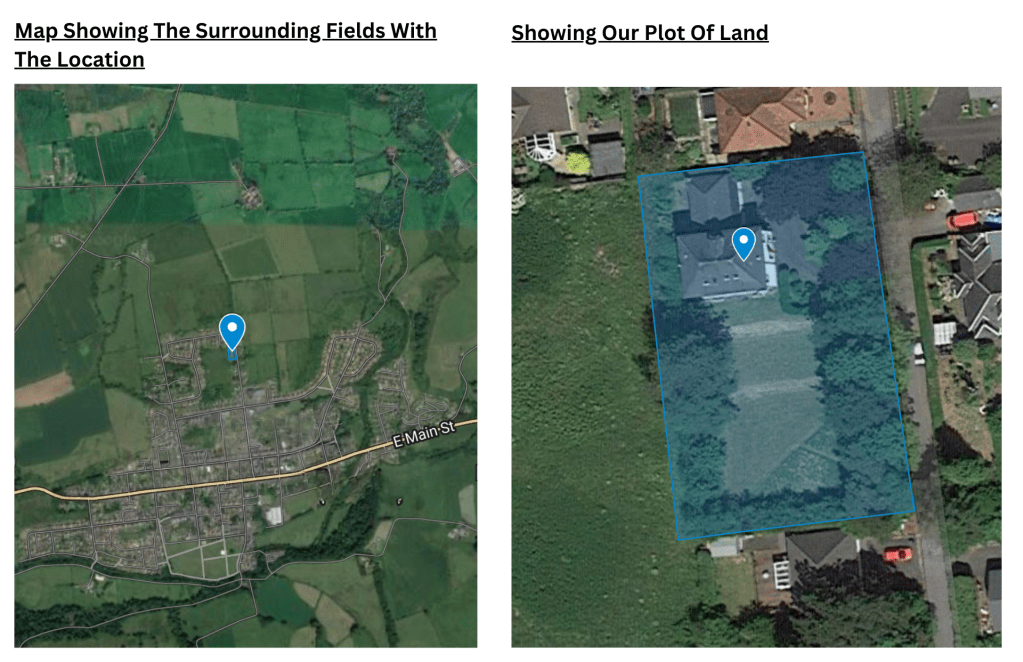
This is a shot of our home showing the surrounding area. We are on a hill, at the top of the hill and behind us the fields you see are an even steeper hill
- Rainwater Harvesting
The garden being on a slope allows for the rain to run downhill causing us no water lag. The top 2 tiers are flat with sloped areas to the next but the food forest, growing area is all sloped. We collect drain water with water butts to use where possible. Looking at adding some low down in the garden to collect water to use, but with Scottish weather we rarely water the garden as it rains so often.
The water butts we harvest rainwater in are in the vertical growing kitchen garden, where we use watering cans to top up anything in this area, it is always full, because of the rain in Scotland we could fill this 20 times over, but this is enough for our needs for this area if we have no rain for a solid 2 or 3 weeks in the summer.
2. Composting
We have several ways of producing our compost:
1. Traditional Compost Area: using pallets in a square that we pile up the green and brown compost in layers and it decomposes over time
2. Chop and Drop: Chop and drop returns organic matter and nutrients to the soil, enriching it and improving soil fertility over time. The decomposing plant material releases nutrients that are absorbed by plant roots, promoting healthy growth. Chopping just above the soil leaving the roots in place so not to disturb the soil
3. Leaf Mould: We use this as a mulch around our food forest area and in all our raised beds over the winter. This allows the soil underneath to stay warmer, not directly damaged by the frost and snow, holds moisture and decomposes over time allowing more nutrients to flow into the soil AND protecting the nutrients already in the soil from washing away with the rain. Much like a traditional wooded forest ground floor area would be.
3. Windbreaks
We have large trees all the way round the edge and hedges underneath. There have been issues with the bottom set of trees due to neighbours removing the middle section of them which has given us no choice but to cut them down in size. We have added a 2nd row of Cherry Laurel in front so in time will cover that area again. In the mean time we will be adding tall willow whips to fill the gaps.
There is a section (shown with the orange lines) that needs to be addressed that has limited tree protection at the side of our house as during the winter the stormy months these hedges are bare with no ever greens here. We will be addressing this this year too (2024)

How We Use It In Our Garden Video Reel
PDC Permaculture Design Certificate
Peter received his Permaculture Design Certificate PDC online in 2019 with Oregon State Uni. Certified by the Permaculture Institute of North America. Taught by: World Renowned Permaculturist Andrew Millison
Peter designed our garden using the Permaculture Design processes and the 12 Permaculture Principles.
Katrina finished her Permaculture Design Certificate Professional PDC PRO in 2024 to continue the process and pass all the knowledge onto Clayton and others.


Katrina & Clayton and family live in East Ayrshire and share their daily life in the garden on instagram. They practice permaculture principles in the garden, reducing & repurposing waste whenever they can. Katrina shows how home educating in nature has helped Clayton thrive.
Clayton Completed The 2 Grow and Learn Courses with the Royal Caledonian Horticultural Society. He is Autistic, Non Verbal & has been Home Educated since 2018. Katrina & Peter hold their PDC & PDC PRO Permaculture Design Course from Oregon State University
They featured on BBC Beechgrove Gardens Ep23 2022 and returned in 2023 for an update,Katrina & Clayton are also columnists for ScotlandGrows Magazine, Guest Blog for Caledonian Horticulture as well as working with Gardeners’ World Magazine and many other brands. They are also Authors of the new children’s book: Clayton’s New Garden Journey: A Story of Autism and Growing available on Amazon & Kindle. Listen in on our Guest Podcasts to learn more about us.

Get Weekly Blogs Straight To Your Inbox
Our Children’s Book Series
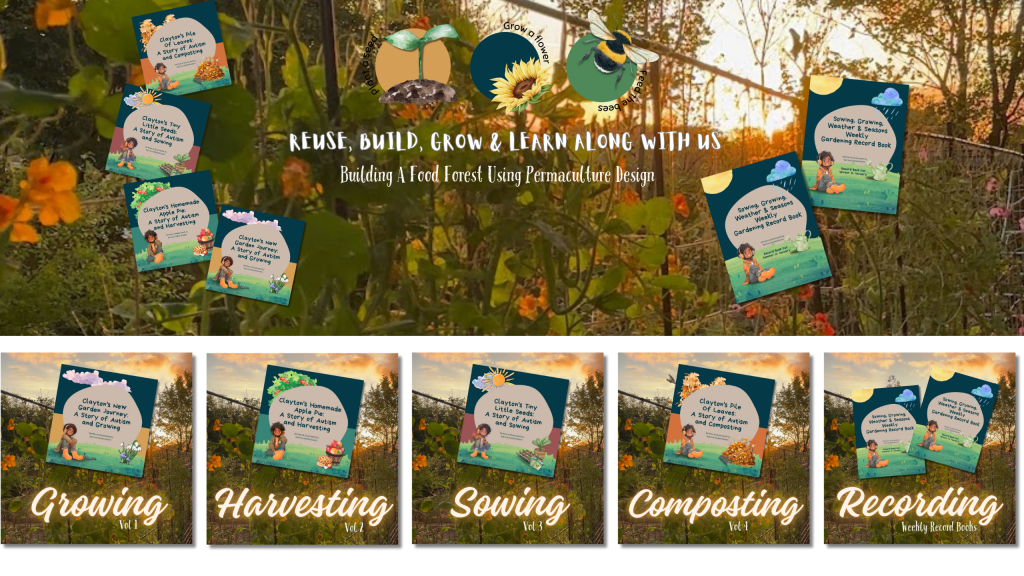
Author of the new children’s book series: Clayton’s Garden Journey: A Story of Autism and Gardening. Topics on Growing, Harvesting, Sowing & Composting and 108 Page Weather and Seasons Weekly Gardening Record Book available on Amazon and Kindle
Visit Our Print On Demand Stores
REDBUBBLE STORE -WORLDWIDE
Over 175 Garden & Nature Designs. Coasters, Phone Covers, Bags, Mouse Mats & Much More

Discover more from Building a Food Forest -Scotland
Subscribe to get the latest posts sent to your email.

One thought on “Permaculture Principle No. 2: “Catch and Store Energy””