

Get Weekly Blogs Straight To Your Inbox

Simple and Effective Composting Methods & Solutions
Natural Composting Methods for Your Garden
Composting is a fantastic way to recycle organic waste and create nutrient-rich soil for your garden. By using nature, you can turn kitchen scraps, garden waste, and other organic materials into a valuable resource that enriches the soil and promotes plant growth. Here are three different methods for composting in your garden naturally:

Composting – Food Waste
Food scraps are a rich source of organic matter that can be composted to create nutrient-rich soil amendment for your garden. However, it’s essential to balance the types of food you add to your compost pile to ensure proper decomposition and avoid attracting pests. Here’s how to compost food scraps effectively:
Balance Green and Brown Materials: Food scraps, such as fruit and vegetable peels, coffee grounds, and eggshells, are considered “green” materials and provide nitrogen to the compost pile. To balance them, add “brown” materials like dry leaves, straw, or shredded paper, which provide carbon.
Chop or Shred: Chop or shred larger food scraps into smaller pieces to speed up decomposition and prevent clumping. Smaller pieces break down more quickly and evenly, allowing beneficial microorganisms to access the material more efficiently.
Layering: Alternate layers of green and brown materials in your compost pile to promote airflow and prevent odours. Aim for a ratio of roughly 2 parts brown material to 1 part green material by volume.
Moisture: Keep your compost pile moist, similar to a wrung-out sponge. Water helps microorganisms break down organic matter, so it’s essential to maintain adequate moisture levels. If your compost pile becomes too dry, add water as needed.
You don’t even have to have a compost pile dedicated to composting:
We dig a hole and add our food scraps straight in, layering some dry leaves or shredded cardboard on top and cover back over.

Composting – Grass Cuttings & Leaves
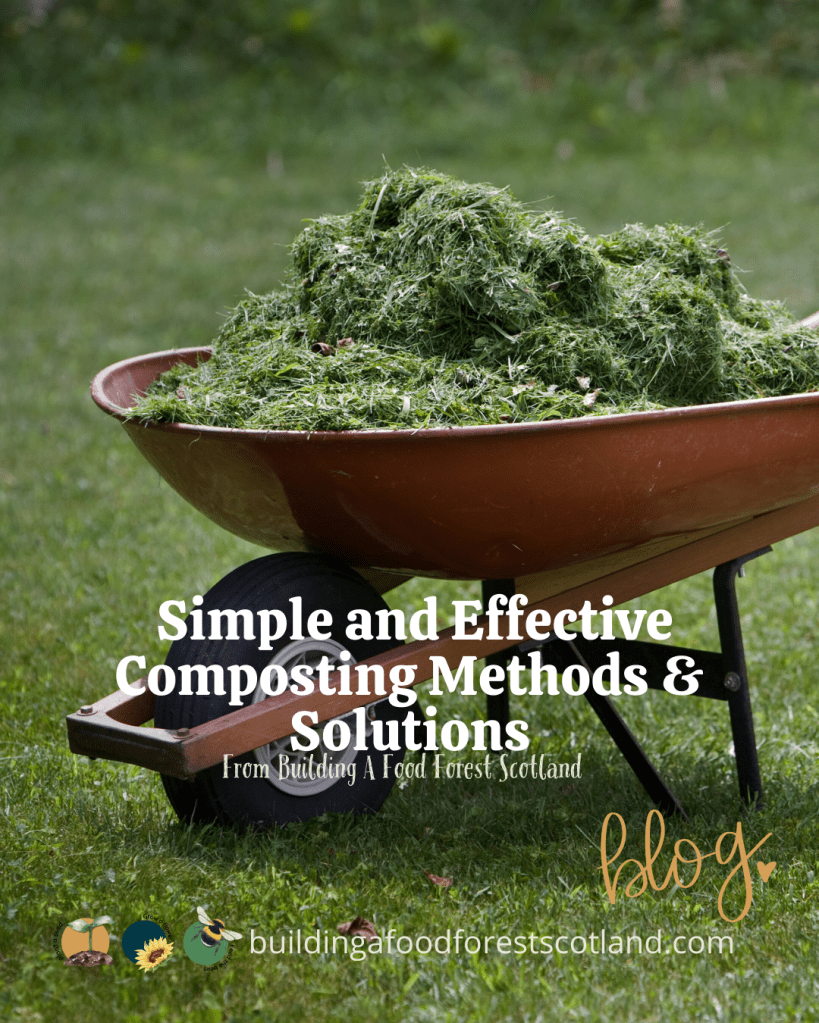
Grass clippings are another valuable organic material that can be composted to enrich your garden soil. Grass clippings are rich in nitrogen, making them an excellent “green” addition to your compost pile. Here’s how to compost grass cuttings effectively:
Mix with Brown Material: Grass clippings decompose quickly, so it’s crucial to balance them with brown material to prevent the pile from becoming too dense and anaerobic. Mix grass clippings with dry leaves, straw, or shredded paper to promote airflow and prevent odours.
Spread Thin Layers: Rather than adding large clumps of grass clippings to your compost pile, spread them out in thin layers to ensure even decomposition. Mixing grass clippings with other materials helps prevent them from matting together and forming an impenetrable barrier.
Turn Regularly: Grass clippings can become compacted if left undisturbed, leading to anaerobic conditions that slow decomposition and produce unpleasant odors. Turn your compost pile regularly, at least once a week, to aerate the material and promote decomposition.
You don’t even have to have a compost pile dedicated to composting:
We sprinkle the grass cuttings around our plants and across the food forest for added mulch, soil protection from erosion from water wash away and sun dry out, adding nitrogen to the soil over time. As mulch decomposes, it releases nutrients into the soil and improves moisture retention.
3 Ways To Use Your Leaves Video Reel
Composting – Plants & Twigs
Chop and drop is a natural composting method that involves cutting up plants and twigs and leaving them to decompose directly on the soil surface. This approach mimics the natural decomposition process that occurs in forests and can help improve soil structure and fertility. Here’s how to chop and drop effectively:
Prune Regularly: As you prune plants and shrubs in your garden, collect the trimmings and chop them into smaller pieces using pruners or a shredder. Avoid adding diseased or pest-infested plant material to your chop and drop pile to prevent the spread of pathogens.
Spread Around Plants: Scatter the chopped plant material around the base of your garden plants, creating a natural mulch layer. As the plant material decomposes, it releases nutrients into the soil and improves moisture retention.
Layer with Leaves: For added benefits, layer the chopped plant material with fallen leaves or other organic matter to create a diverse and nutrient-rich mulch. This combination provides habitat for beneficial microorganisms and encourages earthworm activity.
You don’t even have to have a compost pile dedicated to composting:
With Chop & Drop methods you don’t need a space for composting you do it right there under the plants. We chop and drop at the end of every season right in place. Then at the beginning of the new we add a layer of topsoil on top to start planting in.
By implementing these natural composting methods in your garden, you can recycle organic waste, improve soil fertility, and create a healthier and more sustainable environment for your plants to thrive. Whether you’re composting food scraps, grass cuttings, or plant trimmings, each method contributes to building healthy soil and promoting biodiversity in your garden.
Also take a look at our Blog post on what we do with larger branches:
DIY: Dead Hedge- Wildlife Haven, Wind Barrier, and Permaculture Powerhouse
Chop & Drop Method Video Reel
Clayton’s Pile Of Leaves: A Story of Autism and Composting
Clayton’s Pile Of Leaves: A Story of Autism and Composting
The next in the series of books. A short story about a young boy discovering the magic of composting and soil. In this beautifully crafted story, Clayton embraces the art of composting and learning to build a Hugelkultur mound transforming scraps of food and leaves into soil and creating a sensory friendly garden. With determination and love, Clayton nurtures his garden and himself, growing resilience and confidence along the way. A touching narrative of transformation and the power of nature.
Aged from baby to under 5’s to enjoy, this book can be enjoyed by any age
- Beautiful Bright Coloured Illustrated Large Size Book & Fonts
- Relatable Clayton & Mum Characters
- Under 400 Words
- Ideal For Reading In Group Settings
- Nurseries, Libraries & Child Minders Have Bought This Book
- Talking Points on: Fruit, Veg, Flowers, Insects
- Talking points on: Emotions and why others may feel them differently
Talking points on: Sensory issues – you’ll always see Clayton in ear defenders for blocking out sound and wearing a coat or bag even indoors for weight and feeling safe.
Short colourful story helping children understand differences in being Autistic through Clayton and how horticulture can have a therapeutic benefit. Supporting the awareness of starting gardening and being in nature with children from a young age, even if it is just a sunflower or a hanging basket of strawberries.
Other titles in the series so far
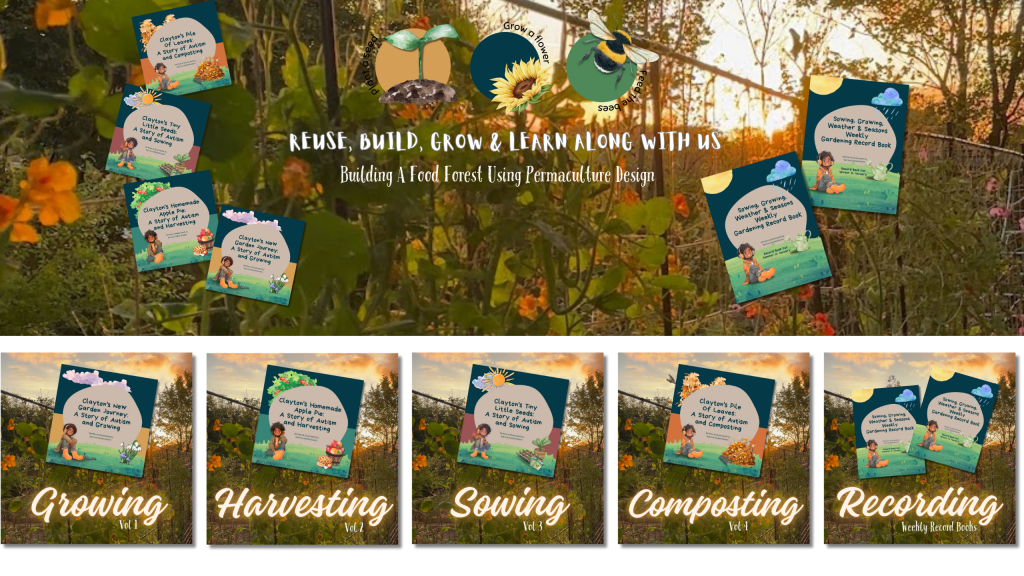
- Vol 1 : Clayton’s New Garden Journey: A Story of Autism and Growing
- Vol 2: Clayton’s Homemade Apple Pie: A Story of Autism and Harvesting
- Vol 3: Clayton’s Tiny Little Seeds: A Story of Autism and Sowing
- Vol 4: Clayton’s Pile Of Leaves: A Story of Autism and Composting

Happy Gardening!


Katrina & Clayton and family live in East Ayrshire and share their daily life in the garden on instagram. They practice permaculture principles in the garden, reducing & repurposing waste whenever they can. Katrina shows how home educating in nature has helped Clayton thrive.
Clayton Completed The 2 Grow and Learn Courses with the Royal Caledonian Horticultural Society. He is Autistic, Non Verbal & has been Home Educated since 2018. Katrina & Peter hold their PDC & PDC PRO Permaculture Design Course from Oregon State University
They featured on BBC Beechgrove Gardens Ep23 2022 and returned in 2023 for an update, Katrina & Clayton are also columnists for ScotlandGrows Magazine, Guest Blog for Caledonian Horticulture as well as working with Gardeners’ World Magazine and many other brands.
They are also Author of the new children’s book series: Clayton’s Garden Journey: A Story of Autism and Gardening. Topics on Growing, Harvesting, Sowing & Composting and 108 Page Weather and Seasons Weekly Gardening Record Book available on Amazon and Kindle.
Listen in on our Guest Podcasts to learn more about us.
Get new content delivered directly to your inbox.
Our Children’s Book Series
Author of the new children’s book series: Clayton’s Garden Journey: A Story of Autism and Gardening. Topics on Growing, Harvesting, Sowing & Composting and 108 Page Weather and Seasons Weekly Gardening Record Book available on Amazon and Kindle
Visit Our Print On Demand Stores
REDBUBBLE STORE -WORLDWIDE
Over 175 Garden & Nature Designs. Coasters, Phone Covers, Bags, Mouse Mats & Much More

Discover more from Building a Food Forest -Scotland
Subscribe to get the latest posts sent to your email.

2 thoughts on “Simple and Effective Composting Methods & Solutions”