


Get Weekly Blogs Straight To Your Inbox
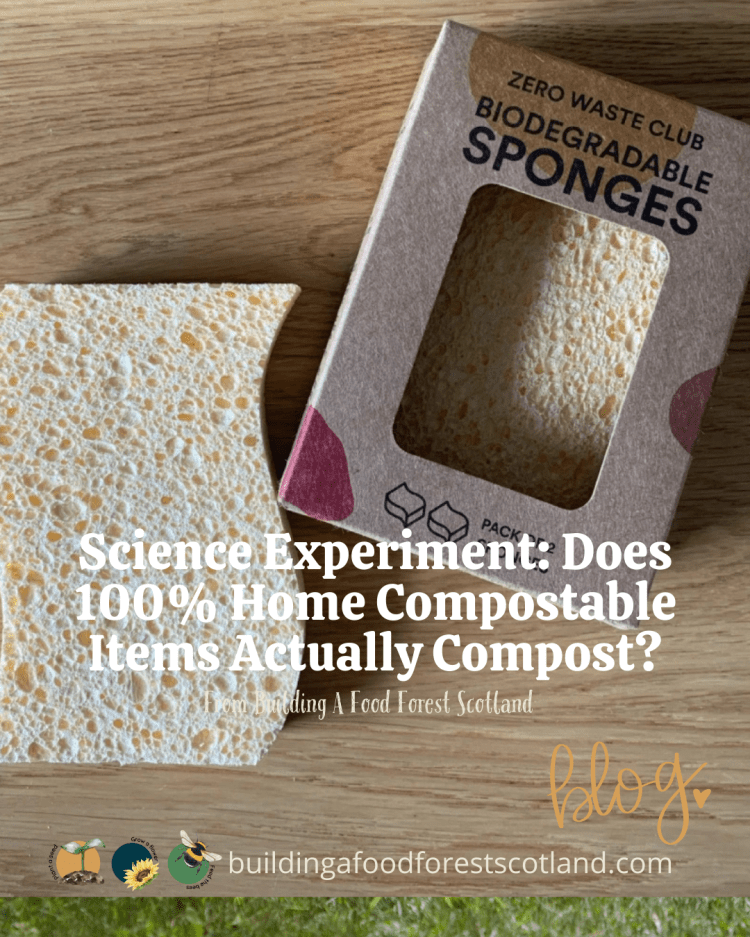
Science Experiment: Does 100% Home Compostable Items Actually Compost?
What is 100% Compostable and can you really “just bury it” in your back garden?
July 1 – July 31 Plastic Free July is a global movement that helps millions of people be part of the solution to plastic pollution so we can have cleaner streets, oceans, and beautiful communities. Check out our year long project of 12 Months Eco Swaps to reduce plastic in our home.
The point of this science experiment we took on, was to look at items that say 100% compostable on them, some even state on the items “just bury” in the back garden. What we want to find out is, is that even possible?
We have so many questions:
Will they fully compost leaving no trace?
Will they compost in the timeframe? (180 days is the time frame required to state compostable)
Do they really need hot heat treatment to work? because if they do that isn’t accessible to most.
Will just burying them in soil be enough?
Do they need to be added to a compost heap with other organic matter?
If they don’t work and need special treatment then how do they help the environment?
Compostable or Biodegradable
Compostable
Compostable materials are those that can break down into non-toxic, natural elements when placed in a composting environment. This process usually requires specific conditions, such as the presence of microorganisms, heat, and moisture. The end result of composting is nutrient-rich compost, which can be used to improve soil health. This needs to be achieved within 180days for items to be classed as compostable.
Compostable materials typically include:
Food scraps
Garden waste like leaves, grass clippings
Certain types of paper and cardboard
Bioplastics designed for composting
Decomposition: Fully breaks down into water, carbon dioxide, and biomass within a specific time frame.
Environment: Requires a composting environment
End Product: Results in compost, which is beneficial to soil.
Compostable: Requires specific composting conditions, breaks down into non-toxic compost that benefits the soil.
Biodegradable
Biodegradable materials are those that can break down into natural elements through the action of microorganisms, such as bacteria and fungi, over time. Unlike compostable materials, biodegradable materials do not necessarily improve soil health or decompose in a specific time frame or environment. It can be 1year or 10,000years.
Biodegradable materials include:
Certain plastics labeled as biodegradable
Natural fibres such as cotton, wool, coconut coir
Food waste such as bones
Decomposition: Breaks down into natural elements like water, carbon dioxide, and biomass, but has no set time frame.
Environment: Can decompose in a variety of environments, including landfills, water, and soil, although conditions affect the speed of decomposition.
End Product: May not result in useful compost; it simply breaks down into natural substances.
Biodegradable: Can decompose in various environments, not necessarily resulting in compost, and the breakdown time can vary.
The main difference lies in the environment required for decomposition, the end product of the process and the time frame.
PART 1: BURYING THE ITEMS
Part 1: Filmed 6th Nov 2022
What are we using?
Science Experiment testing if these items that say they are 100% compostable actually are! Here are the 5 items we are using.
1. Greaseproof Paper
2. Dish Sponge
3. Carrier Bag
4. Sandwich Bags
5. Packaging Bag
Compostable items are made of natural plant starch, and do not produce any toxic material.
They break down readily in a composting system through microbial activity to form compost.
They need to break down within 180 days and leave no toxic residue to be called compostable.
PART 2: 180 DAYS LATER!
Part 2: Filmed 4th May 2023
What happened?
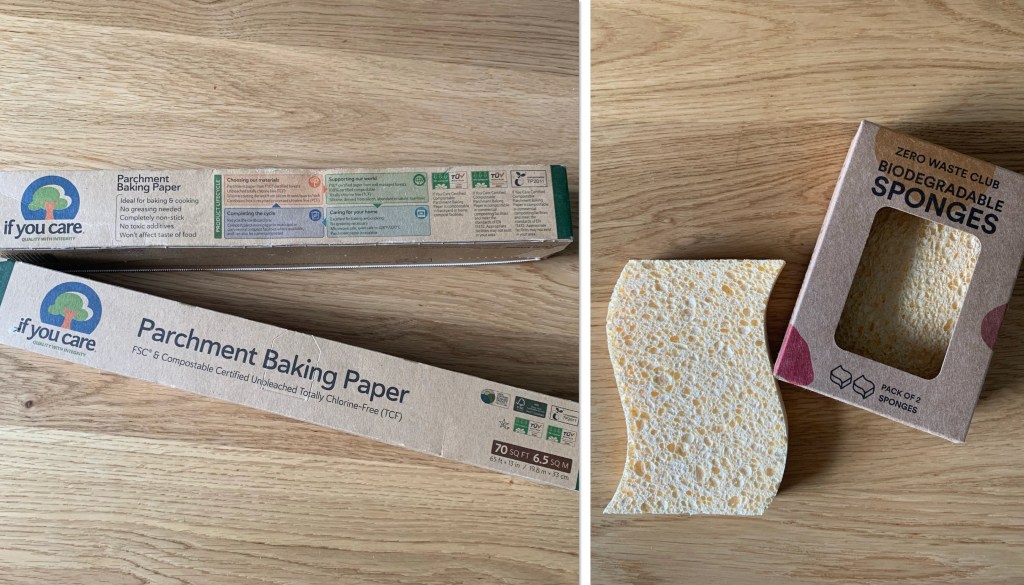
1. 👏🏽Greaseproof Paper was a success and was gone
2. 👏🏽Dish Sponge was a success and was gone
3. 👎🏽Carrier Bag still not touched
4. 👎🏽Sandwich Bags still not touched
5. 👎🏽Packaging Bag still not touched
These 2 were a success after 180days when we visited this area, they were gone, nothing left of them at all. I will certainly be buying these again and adding them to the compost pile or indeed just burying them into the soil.
PART 3: WHAT NEXT?
Part 3: Filmed 4th May 2023
What did we do next?
After disappointing results of this science experiment so far. Trying something else for another 180 days to see if these starch based (not plastic) that are stated 100% compostable items actually do something.
As in the video reel we then decided to go another 180days with the remaining ones in a smaller black pot that will get warm in the sun with full with layers of composting brown and green materials to mimic a mini compost bin
3. Carrier Bag
4. Sandwich Bags
5. Packaging Bag
PART 4: FINAL RESULTS
Part 4: Filmed 4th Feb 2024
Conclusion
There we go. 15 months.
454 days since we started.
Do they fit the criteria?
Original questions we wanted to answer:
Will they fully compost leaving no trace?
2 of 5 did
Will they compost in the timeframe?
2 of 5 did.
180 days is the time frame required to state compostable Do they really need hot heat treatment to work? because if they do that isn’t accessible to most.
The 3 that didn’t even finish after over 450days, it seems they would need extra treatment.
Will just burying them in soil be enough?
For 2 of the 5 it was enough, the soil microorganisms and worms were able to break this down into usable compost and left no trace.
Do they need to be added to a compost heap with other organic matter? If they don’t work and need special treatment then how do they help the environment?
The further 3 is very questionable if they should be even considered compostable as they do not fit the criteria OR is it they do, BUT they need to be placed into a heated place for that to happen, so that then begs the question.
If we cannot do this at home, where do we put it? Do we put it into our garden waste bins (not that we use ours as we use all the garden waste right back into our garden) and let the council do it, or do we just put them into normal waste bins…..knowing that they NEED something different to actually decompose?
Should they be marketed as compostable if they don’t met 180days?
How are they better for the environment if we are unable to get rid of them correctly?
What turned out to be a little garden science experiment turned into a whole unexpected project. We will for sure be very careful when buying, using and disposing of any of these materials.

Katrina & Clayton and family live in East Ayrshire and share their daily life in the garden on instagram. They practice permaculture principles in the garden, reducing & repurposing waste whenever they can. Katrina shows how home educating in nature has helped Clayton thrive.
Clayton Completed The 2 Grow and Learn Courses with the Royal Caledonian Horticultural Society. He is Autistic, Non Verbal & has been Home Educated since 2018. Katrina & Peter hold their PDC & PDC PRO Permaculture Design Course from Oregon State University
They featured on BBC Beechgrove Gardens Ep23 2022 and returned in 2023 for an update, Katrina & Clayton are also columnists for ScotlandGrows Magazine, Guest Blog for Caledonian Horticulture as well as working with Gardeners’ World Magazine and many other brands.
They are also Author of the new Children’s Book Series: Clayton’s Garden Journey: Stories of Autism and Gardening. Topics on Growing, Harvesting, Sowing & Composting and 108 Page Weather and Seasons Weekly Gardening Record Book available on Amazon and Kindle.
Listen in on their Guest Podcasts to learn more about them.
Get new content delivered directly to your inbox.
Our Children’s Book Series
Author of the new children’s book series: Clayton’s Garden Journey: Stories of Autism and Gardening and Sowing, Growing, Weather and Seasons Weekly Gardening Record Book available on Amazon and Kindle
Visit Our Print On Demand Stores
REDBUBBLE STORE -WORLDWIDE
Over 175 Garden & Nature Designs. Coasters, Phone Covers, Bags, Mouse Mats & Much More

Discover more from Building a Food Forest -Scotland
Subscribe to get the latest posts sent to your email.
