

Get Weekly Blogs Straight To Your Inbox

The Importance of Not Touching Plant Roots When Transplanting Seedlings
Adaptable Gardening – Transplanting Tips
Transplanting seedlings is a crucial step in a plant’s growth journey. Whether you’re an experienced gardener or a beginner nurturing your first crop, how you handle seedlings during transplantation can significantly impact their health and future development.
One of the most vital yet often overlooked practices during this process is avoiding direct contact with the delicate roots. Understanding why this is essential can help achieve stronger, more resilient plants and a thriving garden and if this is a difficult skill for smaller hands then here is how we adapt this.
Also see Blog Post on how we plant our sweetcorn:
Using Milk Cartons To Plant Sweetcorn
Why Are Roots So Sensitive?
Roots serve as the lifeline of any plant, responsible for absorbing water, nutrients, and anchoring the plant in the soil. Seedling roots are particularly fragile as they have not yet developed the resilience found in mature plants. These young roots are covered in fine, hair-like structures called root hairs, which perform the critical task of absorbing moisture and nutrients from the soil.
Root hairs are exceptionally delicate and can be easily damaged through physical contact. When you touch or disturb these hairs during transplanting, you risk breaking them or even causing microscopic wounds. This damage can impair the seedling’s ability to uptake water and nutrients, resulting in transplant shock, stunted growth, or even plant death.
The Impact of Root Damage on Seedlings
When roots are disturbed, the consequences can be immediate and long lasting. Most common issues caused by improper root handling during transplanting are:
Transplant Shock: This occurs when a plant experiences stress due to sudden changes in its environment. Root disturbance intensifies this shock, causing wilting, yellowing leaves, or slowed growth.
Reduced Water Uptake: Damaged roots struggle to absorb water efficiently, leading to dehydration and increased vulnerability to environmental stressors.
Nutrient Deficiency: Roots play a vital role in drawing essential nutrients from the soil. Any disruption in their function can cause deficiencies, weakening the seedling and impeding development.
Increased Disease Risk: Broken or damaged roots create entry points for soil-borne pathogens, increasing the likelihood of root rot and other infections.
Best Practices for Transplanting Seedlings
To ensure your seedlings thrive, adopt gentle handling techniques that prioritise root protection. Key steps to follow when transplanting:
Prepare the New Pot in Advance: Have the destination container filled with moist, well draining soil ready before you begin. This reduces the time roots are exposed to the air, minimising stress.
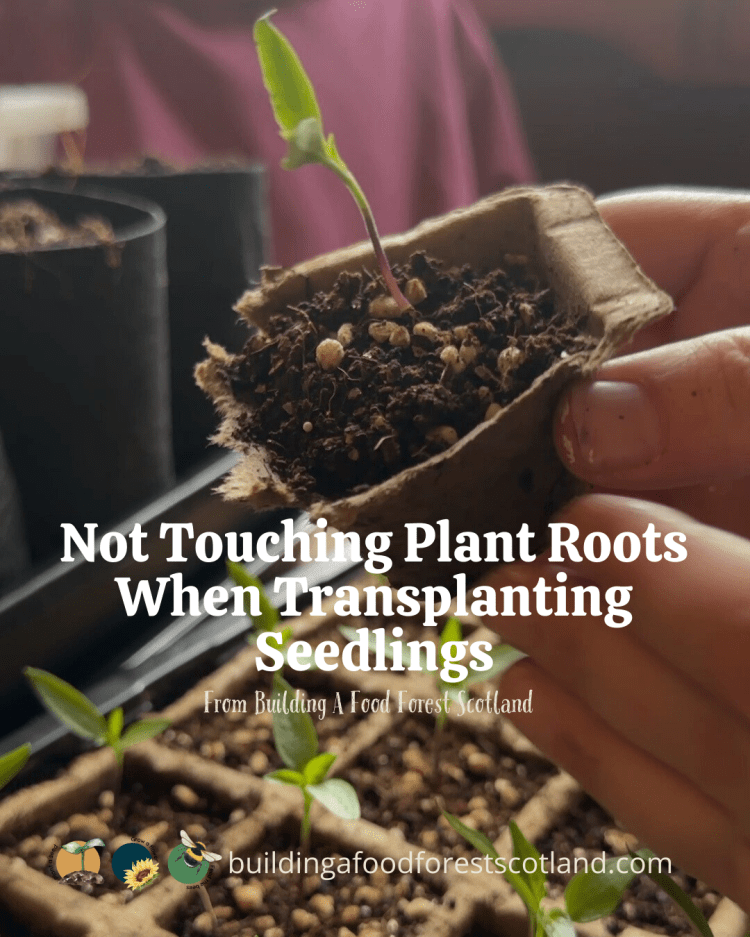
Handle by the Leaves, Not the Stem or Roots: Always lift seedlings by their leaves rather than the stem or roots. Leaves are more robust and can recover from minor damage, while root or stem injuries are harder to repair.
Use Tools to Ease the Process: Employ a spoon, dibber, or similar tool to gently lift the seedling from its original container. Avoid pulling or tugging directly on the plant.
Minimise Root Disturbance: If the seedling is in a biodegradable pot, plant the whole container directly in the soil. If using plastic cells, gently squeeze the container to loosen the root ball without pulling on the roots.
Plant at the Right Depth: Ensure the seedling is placed at the same depth it was growing previously. Too shallow or too deep planting can stress the plant further.
Water Immediately After Transplanting: Hydrate the newly transplanted seedling thoroughly to help the roots establish themselves quickly and reduce air pockets.

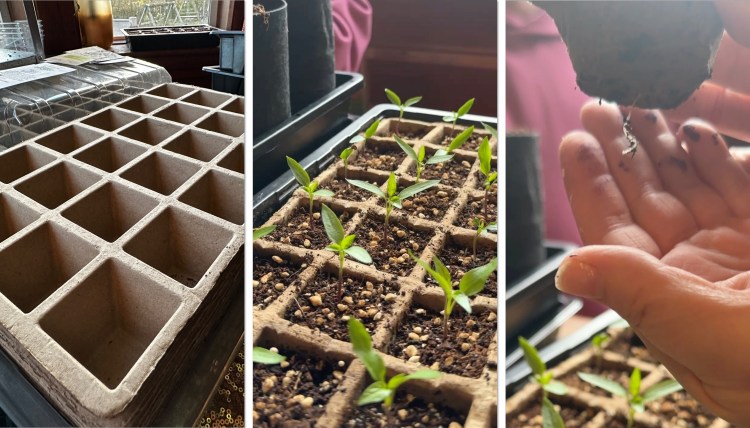
The type of pots and trays we use as well as toilet roll tubes
How We Transplant Our Seedlings
Firstly, selecting the correct pots for sowing in these need to be biodegradable, we use toilet roll tubes for a lot of our sowing so they can be planted on directly in the tubes. We start our seeds off in trays or pots made of fibres.
Fibre trays are organic, peat free and biodegradable, you can plant straight into the soil avoiding root disturbance. When planting out ensure that the whole pot is below soil level and it is kept moist for first few days. Depending on the soil and moisture, usually 3 months in the soil are enough for a 100% degradation.
The roots even before being potted on have grown out of the bottom, this is also due to bottom watering in the trays they sit in (rather than watering on the top of the soil), this allows the roots to dig down further to get the water needed, making them even stronger.
Using trays like this, they can be moved directly into the next larger pot with ease. Ideal for those with fine motor skills that are not as developed or griping smaller items are harder.
Clayton is still a little heavy handed with translating and finds it very stressful when they don’t come out easy and pulls too hard resulting in snapping of the roots when leads to upset so removing this out of the equation really helps this process. There are many little adjustments and adaptions that can be made to make each step a successful and enjoyable one.

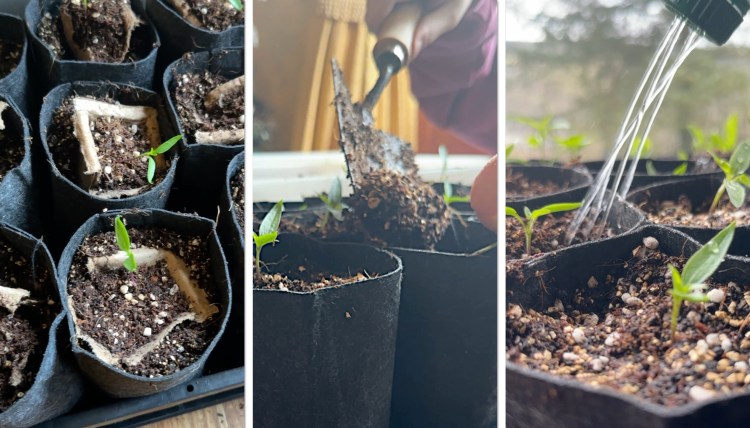
Ripping each cell to transplant as a whole unit, add soil on top to fill & water in
Easy Potting On Tip – Video Reel
Worried About Mould? Watch How We Stop It
The Long Term Benefits of Careful Root Handling
By taking the time to protect seedling roots during transplantation, you are investing in the plant’s long term health and productivity. Healthy, undisturbed roots lead to:
- Faster growth and establishment
- Increased resistance to pests and diseases
- Greater yields in fruiting and flowering plants
- More robust root systems that support long-term vigor
The simple act of avoiding root disturbance can significantly improve your gardening success. With gentle handling, careful preparation, and post transplant care, you can give your seedlings the best possible start in their new environment.
Happy Gardening!


Katrina & Clayton and family live in East Ayrshire and share their daily life in the garden on instagram. They practice permaculture principles in the garden, reducing & repurposing waste whenever they can. Katrina shows how home educating in nature has helped Clayton thrive.
Clayton Completed The 2 Grow and Learn Courses with the Royal Caledonian Horticultural Society. He is Autistic, Non Verbal & has been Home Educated since 2018. Katrina & Peter hold their PDC & PDC PRO Permaculture Design Course from Oregon State University.
They featured on BBC Beechgrove Gardens Ep23 2022 and returned in 2023 for an update, Katrina & Clayton are also columnists for ScotlandGrows Magazine, Guest Blog for Caledonian Horticulture as well as working with Gardeners’ World Magazine and many other brands.
They are also Author of the new Children’s Book Series: Clayton’s Garden Journey: Stories of Autism and Gardening. Topics on Growing, Harvesting, Sowing & Composting and 108 Page Weather and Seasons Weekly Gardening Record Book available on Amazon and Kindle. Listen in on their Guest Podcasts to learn more about them.
Get Weekly Blogs Straight To Your Inbox
Our Children’s Book Series
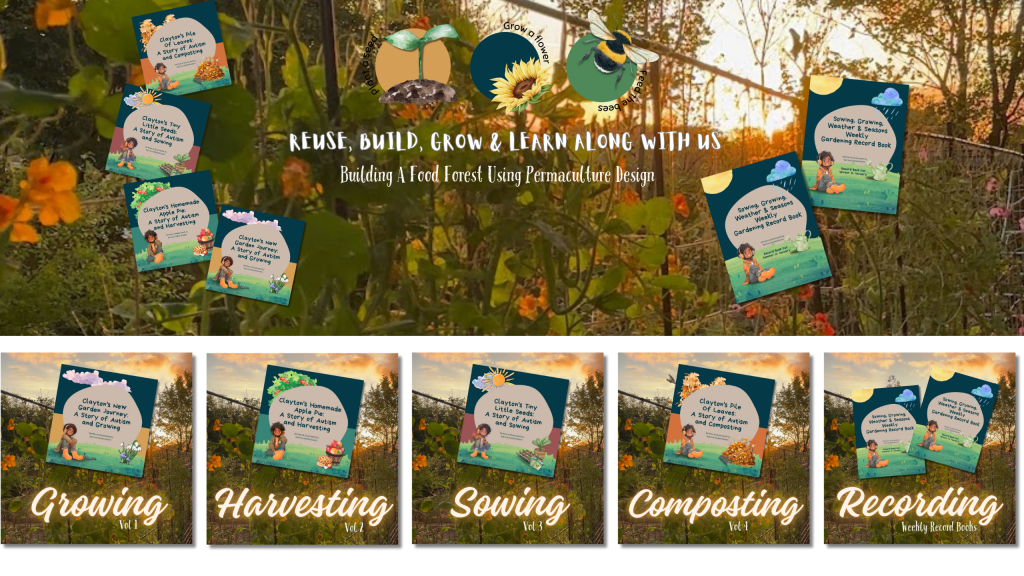
Author of the new children’s book series: Clayton’s Garden Journey: Stories of Autism and Gardening and Sowing, Growing, Weather and Seasons Weekly Gardening Record Book available on Amazon and Kindle
Visit Our Print On Demand Stores
REDBUBBLE STORE -WORLDWIDE
Over 175 Garden & Nature Designs. Coasters, Phone Covers, Bags, Mouse Mats & Much More

Discover more from Building a Food Forest -Scotland
Subscribe to get the latest posts sent to your email.
