

Get Weekly Blogs Straight To Your Inbox

DIY: Dead Hedge – Wildlife Haven, Wind Barrier, and Permaculture Powerhouse
In the world of regenerative living, where every element of the landscape should serve multiple functions, dead hedges are an unsung hero. At first glance, they might look like piles of sticks arranged between stakes, but dig a little deeper and you’ll find they’re brimming with ecological value. From creating habitat and wind protection to embodying the permaculture principle of “using the edges,” dead hedges offer a beautiful, low tech, and sustainable solution to some big land management challenges.
What is a Dead Hedge?
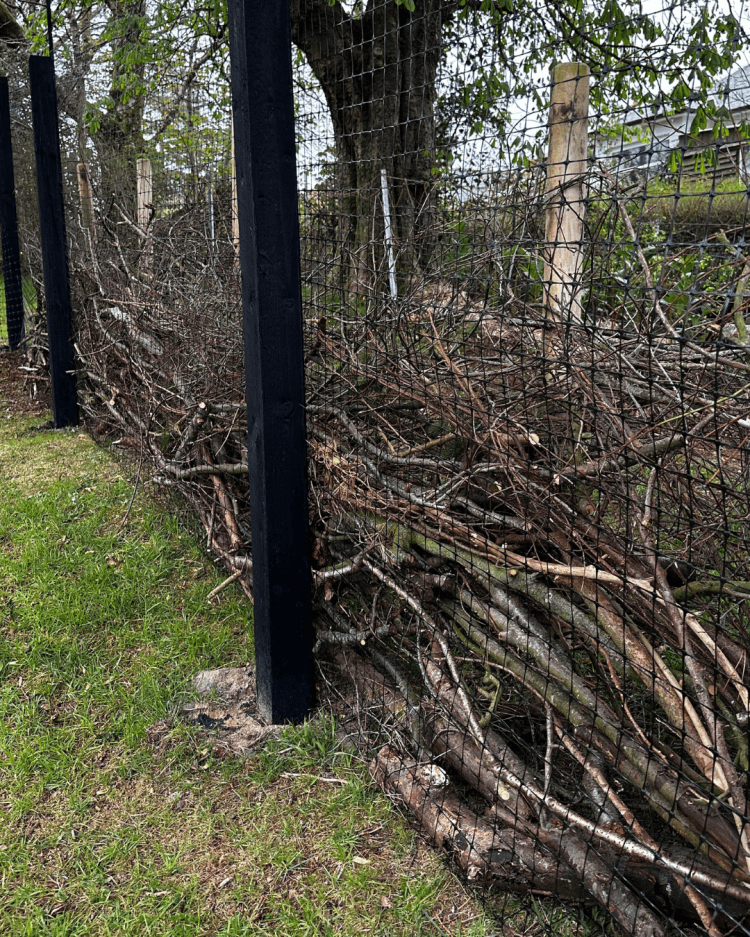
A dead hedge is a structure made from woody materials like pruned branches & twigs typically arranged in a linear form between upright stakes. Think of it as a natural fence made entirely of “waste” from your land, hedge trimmings, fallen limbs, even brambles.
Unlike a living hedge, which is made up of rooted plants, a dead hedge doesn’t grow, but it does evolve, gradually breaking down over time while providing structure and benefits along the way.


Why Build One?
Wildlife Habitat
One of the biggest reasons to build a dead hedge is biodiversity. It offers:
Shelter for birds, especially ground nesters and those that forage close to the ground like wrens and robins.
Safe overwintering sites for insects like ladybirds, solitary bees, beetles, and butterflies.
Hiding places for small mammals like hedgehogs, voles, and shrews.
A fungal haven, supporting the decomposition process and feeding the soil food web.
In an increasingly fragmented landscape, a dead hedge acts like a mini corridor or refuge, helping native species thrive.

Windbreak and Microclimate Control
Dead hedges are porous enough to let air through gently, reducing wind speed without causing turbulent eddies like solid walls might. This helps:
Protect tender plants or seedlings.
Prevent wind erosion of topsoil.
Create warmer, calmer microclimates behind the hedge.
You’ll notice that plants grow more vigorously on the other side, just one example of the microclimate benefits of smart design.
Waste Reduction
Instead of burning or hauling off prunings, a dead hedge repurposes biomass on site. This means:
Less carbon released into the atmosphere from burning.
No need for disposal trips.
More organic matter returned to the land as it breaks down.
Up till now we have been cutting all our branches and twigs up into small pieces and filling the bottom of our raised beds in a hugelkultur style, but after 6yrs we are coming to the end of raised beds we are adding to this area and still have surplus to use up.

Step-by-Step Guide to Building a Dead Hedge
What You’ll Need:
Sturdy wooden stakes: Chestnut, hazel, or treated posts, ideally 1.5–2 meters long.
Mallet or post driver
Prunings, sticks, and twigs
Optional: longer branches or poles for stabilising or “weaving” the structure.
Steps:
Choose a Location: Ideal for the edge of woodlands, around vegetable gardens as a windbreak, or along pathways as natural fencing. Consider sun, wind direction, and access needs.
Install Stakes: Drive stakes into the ground in two parallel rows about 30–50 cm apart. (We used this against a fence line so only 1 set of stakes required) Spacing between pairs can be 1–2 meters depending on desired length.
Start Filling: Begin laying woody material between the two rows. Alternate thick and thin layers for better structure and airflow. Pack it tight to reduce sagging over time.
Weave and Stack: Weave longer branches horizontally between stakes if desired, this adds stability and an appealing, woven look. Continue to stack until the hedge reaches about chest height (1.2–1.5 meters).
Top It Off: Add thorny branches or brambles on top to deter pets or grazing animals if necessary. Mulch around the base to further suppress weeds and hold moisture. (We are a long way off getting to this height right now but over the years it’ll build and condense over time)
Permaculture Principles in Action
Dead hedges are a prime example of several key permaculture principles:
Use the Edges and Value the Marginal (Read more about this Principle)
In permaculture, the edge the interface between two environments is where the most diversity and productivity happens. A dead hedge is a perfect “edge” habitat, sitting between open space and brush, or field and forest. It brings life to otherwise marginal land.
Produce No Waste (Read more about this Principle)
Everything has a use. Instead of seeing pruned branches as waste, they become a valuable resource. Dead hedges cycle nutrients back into the system slowly and efficiently.
Integrate Rather Than Segregate (Read more about this Principle)
Dead hedges integrate functions, habitat, fencing, composting, microclimate moderation all in one. Rather than needing separate infrastructure for each function, this one structure does it all.
Observe and Interact (Read more about this Principle)
As your hedge ages, observe how wildlife uses it. You might find blackbirds nesting in it, fungi fruiting in moist corners, or frogs hiding beneath it. Let your management evolve accordingly.

Maintenance and Lifecycle
Dead hedges aren’t permanent like a fence, but they age gracefully:
Over 2–5 years, depending on material and climate, they will begin to break down.
As it decomposes, the lower layers become excellent habitat for detritivores and fungi.
Simply top up annually with new trimmings to maintain height and density.
When it finally settles into the earth, you’ve built rich, humus laden soil beneath it ideal for planting a living hedge or food forest edge.
Bonus Tip: Combine With Living Elements
You can plant native shrubs or climbing plants at the base of a dead hedge to create a hybrid structure. Think hawthorn, dog rose, honeysuckle, or even edible species like blackberry or hops.
As the dead material decomposes, the living plants will eventually take over, giving you a self renewing, multifunctional edge.
A dead hedge may not be flashy but it’s powerful. It turns a chore (pruning cleanup) into a solution, channels natural processes to your advantage, and deepens your relationship with the land.
In permaculture, we aim to work with nature, not against it and the humble dead hedge is a perfect example. It’s an invitation to slow down, stack functions, and give back to the life that sustains us.
So next time you prune your trees or trim the brambles, don’t burn the branches—build a dead hedge. Your local robins, hedgehogs, and wind sensitive lettuces will thank you.
Dead Hedging Video Reel
Happy Gardening!


Katrina & Clayton and family live in East Ayrshire and share their daily life in the garden on instagram. They practice permaculture principles in the garden, reducing & repurposing waste whenever they can. Katrina shows how home educating in nature has helped Clayton thrive.
Clayton Completed The 2 Grow and Learn Courses with the Royal Caledonian Horticultural Society. He is Autistic, Non Verbal & has been Home Educated since 2018. Katrina & Peter hold their PDC & PDC PRO Permaculture Design Course from Oregon State University.
They featured on BBC Beechgrove Gardens Ep23 2022 and returned in 2023 for an update, Katrina & Clayton are also columnists for ScotlandGrows Magazine, Guest Blog for Caledonian Horticulture as well as working with Gardeners’ World Magazine and many other brands.
They are also Author of the new Children’s Book Series: Clayton’s Garden Journey: Stories of Autism and Gardening. Topics on Growing, Harvesting, Sowing & Composting and 108 Page Weather and Seasons Weekly Gardening Record Book available on Amazon and Kindle.
Listen in on their Guest Podcasts to learn more about them.

Get Weekly Blogs Straight To Your Inbox
Our Children’s Book Series
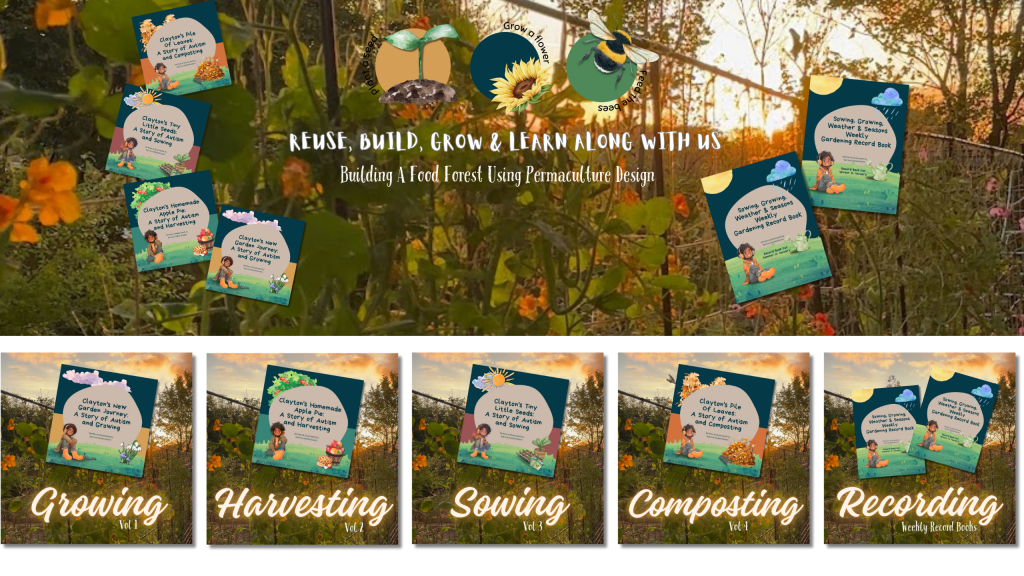
Author of the new children’s book series: Clayton’s Garden Journey: Stories of Autism and Gardening and Sowing, Growing, Weather and Seasons Weekly Gardening Record Book available on Amazon and Kindle
Visit Our Print On Demand Stores
REDBUBBLE STORE -WORLDWIDE
Over 175 Garden & Nature Designs. Coasters, Phone Covers, Bags, Mouse Mats & Much More


Discover more from Building a Food Forest -Scotland
Subscribe to get the latest posts sent to your email.

4 thoughts on “DIY: Dead Hedge- Wildlife Haven, Wind Barrier, and Permaculture Powerhouse”