
Get Weekly Blogs Straight To Your Inbox

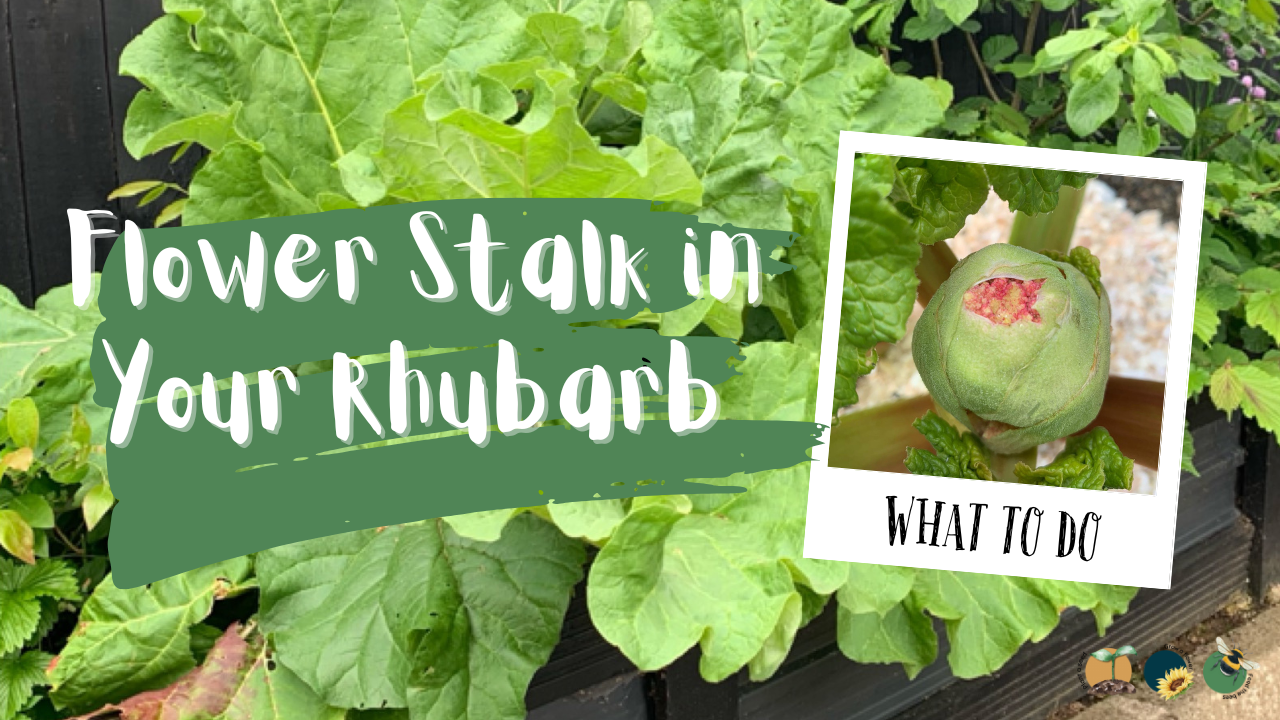
What To Do If You See a Flower Stalk Growing in Your Rhubarb
Rhubarb is a garden favourite, loved for its tart stalks that make delicious pies, jams, and crumbles. But every now and then, something surprising happens, a tall stalk shoots up from the centre of the plant, topped with what looks like a large bud or even a blooming flower.
If you’ve spotted a flower stalk growing in your rhubarb, don’t panic. It’s a natural process but one that requires swift action to keep your rhubarb healthy and productive.
What Is a Rhubarb Flower Stalk?
Rhubarb (Rheum rhabarbarum) is a perennial vegetable, and like many perennials, it can produce flowers as part of its natural life cycle. The flower stalk, also known as a bolting stalk, is thick tall and grows quickly often rising well above the leafy stalks. It eventually produces large clusters of flowers, which may be white, pink or greenish depending on the variety.
While it may look fascinating and even beautiful, flowering is not something you want in your rhubarb patch.
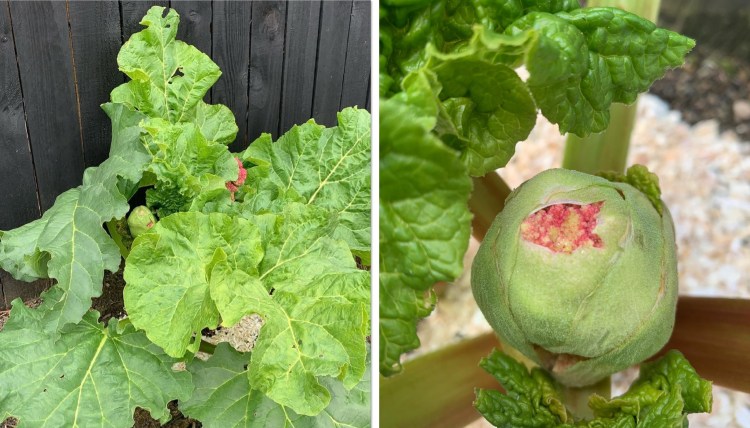
First year (2021) we planted rhubarb there was a very hot April and these flower stalks grew in the space of 2 weeks, we didn’t know we were suppose to remove them so left them.
Why Does Rhubarb Bolt?
Bolting is the term used when a plant shifts its energy from vegetative growth (leaves and stems) to reproductive growth (flowers and seeds). In rhubarb, bolting is usually triggered by environmental factors or stress conditions.
Here are some of the main reasons rhubarb bolts:
Maturity or Age
Older rhubarb plants (especially those that are 4+ years old) are more likely to flower. Just like animals reach reproductive age, plants do too.
Varietal Tendencies
Some varieties of rhubarb are more prone to flowering than others. For example, ‘Victoria’ is more likely to bolt than modern hybrids bred for delayed flowering.
Weather Fluctuations (the biggest one for UK weather)
Sudden changes in temperature, particularly a stretch of unseasonably warm weather in spring, can trigger bolting. A plant “thinks” it’s time to reproduce before conditions become unfavourable.
Stress Factors
Any type of stress, such as drought, overcrowding, or poor soil can push a plant to bolt as a survival mechanism. A stressed plant may flower early as an effort to produce seeds before it dies.
Excess Nitrogen or Imbalance
Fertilising with too much nitrogen can promote leafy growth, but if not balanced properly with phosphorus and potassium, it may also encourage the plant to bolt.
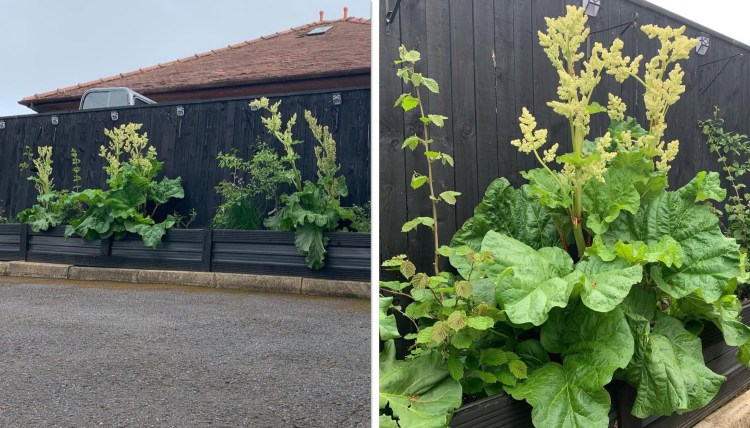
All 3 of them in this area grew flower stalks and grew up the middle with these white/greenish flowers
What Happens If You Let It Flower?
If you allow your rhubarb to flower and go to seed, you may notice:
Reduced stalk production: The plant diverts energy into the flower stalk, resulting in fewer edible stalks.
Thinner, weaker stalks: These become less palatable and tough.
Overall plant stress: Allowing the plant to complete its reproductive cycle can weaken it, especially if it’s still early in the growing season.
In short, while a flowering rhubarb plant isn’t immediately harmful, it compromises the quality of your harvest and the long term health of your plant.
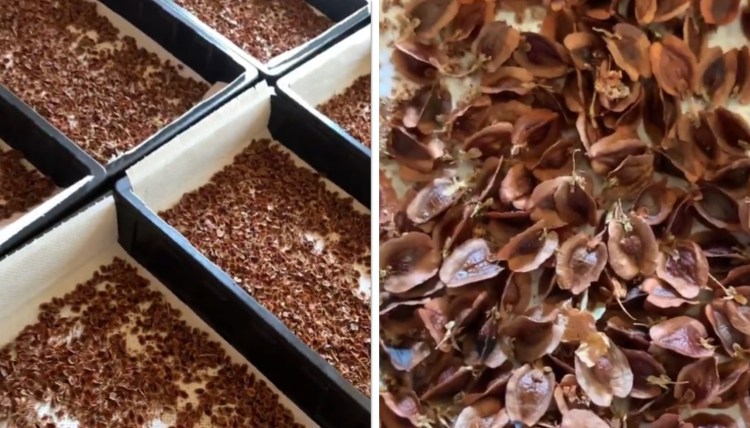
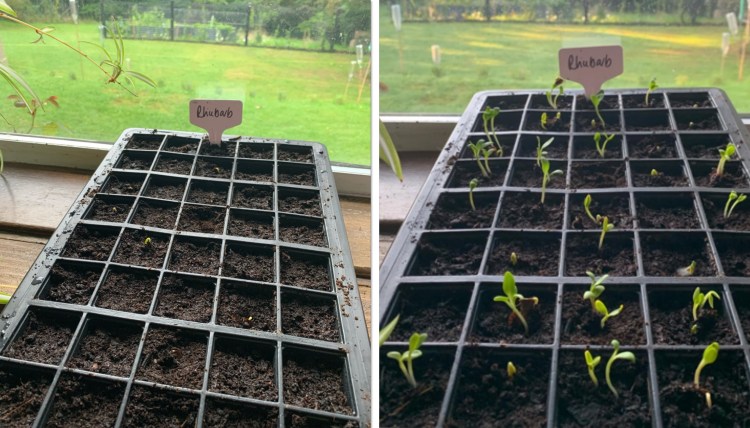
We collected the seeds once the flowers had dried on the plant and had a go at growing them but they didn’t grow big enough to survive outside.
What to Do When Your Rhubarb Flowers
The good news is that bolting can be managed. Here’s what to do if your rhubarb starts to flower:
Remove the Flower Stalk ASAP
As soon as you notice a flower stalk forming (it looks thicker and more vertical than the leaf stalks), cut it off at the base with a sharp knife or garden scissors. Don’t wait for it to bloom by then, the plant has already diverted energy to flowering.
This action redirects energy back into the production of edible stalks and helps preserve the plant.
Check for More Stalks
Sometimes a plant will send up more than one flower stalk, especially if it’s stressed or the weather is encouraging bolting. Keep an eye on your plant and remove any new ones as soon as they appear.
Evaluate Growing Conditions
Since stress can lead to bolting, assess your plant’s environment. Ask yourself:
- Is the plant getting enough water?
- Is the soil well draining and rich in organic matter?
- Is the plant overcrowded?
- Is it in full sun (which it prefers)?
- Have I fertilised properly?
Improving growing conditions can reduce the chance of future bolting.
Mulch and Water Regularly
Rhubarb prefers consistently moist soil. A layer of organic mulch around the base of the plant can help retain moisture, regulate soil temperature, and suppress weeds all of which reduces stress.
Divide Older Plants
If your plant is 5 years old or more and flowering every year, consider dividing it in early spring or Autumn. This helps rejuvenate the plant and can reduce bolting.

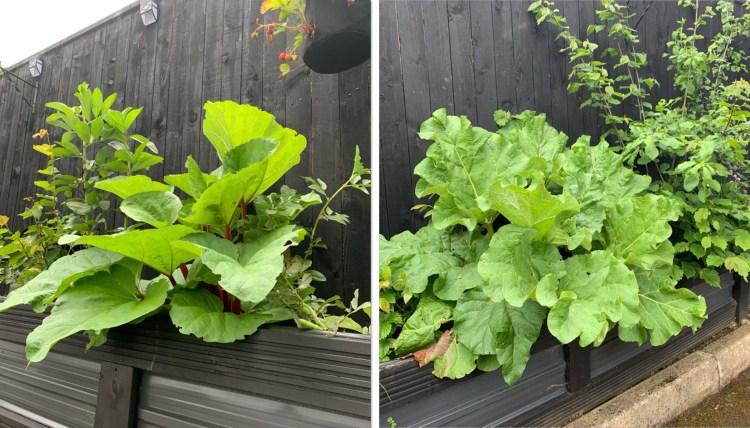
They produced some lovely rhubarb stems that year, but the following years the plant was never as big and over the years has produced less and less.
Should You Ever Let Rhubarb Flower?
In general, no if you’re growing rhubarb for its stalks, flowering is something to avoid. However, there are exceptions:
For Seed Saving: If you’re a plant breeder or want to grow rhubarb from seed, then controlled flowering is part of the process.
For Aesthetics or Pollinators: Some gardeners find rhubarb flowers visually striking and want to keep them for ornamental purposes or to support pollinators and sacrifice stalk production
So the next time your rhubarb sends up a flowering shoot, don’t panic. Grab your garden scissors, snip it at the base, give your plant a little TLC and enjoy the rest of your growing season with confidence.
Happy Gardening!


Katrina & Clayton and family live in East Ayrshire and share their daily life in the garden on instagram. They practice permaculture principles in the garden, reducing & repurposing waste whenever they can. Katrina shows how home educating in nature has helped Clayton thrive.
Clayton Completed The 2 Grow and Learn Courses with the Royal Caledonian Horticultural Society. He is Autistic, Non Verbal & has been Home Educated since 2018. Katrina & Peter hold their PDC & PDC PRO Permaculture Design Course from Oregon State University.
They featured on BBC Beechgrove Gardens Ep23 2022 and returned in 2023 for an update, Katrina & Clayton are also columnists for ScotlandGrows Magazine, Guest Blog for Caledonian Horticulture as well as working with Gardeners’ World Magazine and many other brands.
They are also Author of the new Children’s Book Series: Clayton’s Garden Journey: Stories of Autism and Gardening. Topics on Growing, Harvesting, Sowing & Composting and 108 Page Weather and Seasons Weekly Gardening Record Book available on Amazon and Kindle.
Listen in on their Guest Podcasts to learn more about them.

Get Weekly Blogs Straight To Your Inbox
Our Children’s Book Series
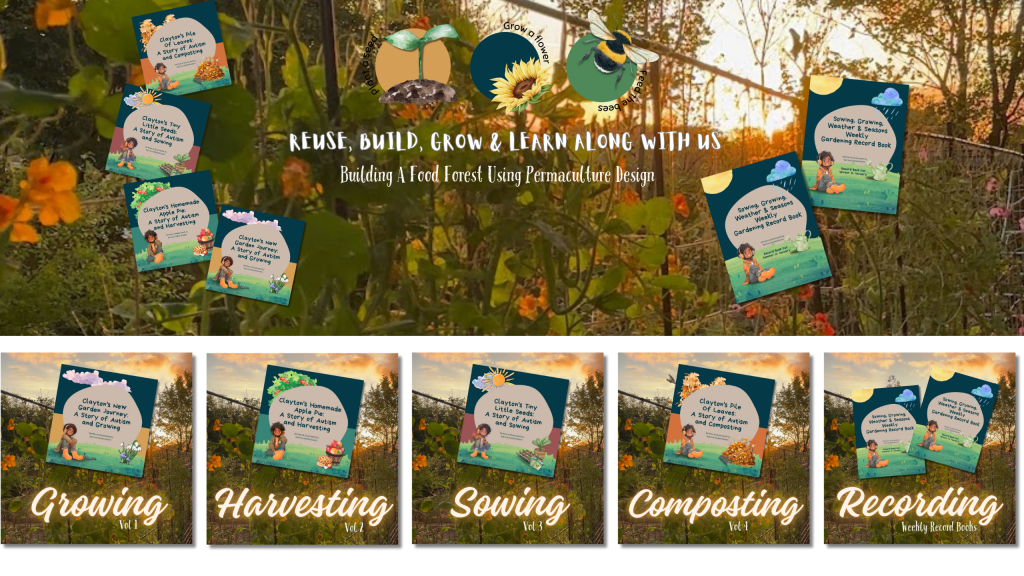
Author of the new children’s book series: Clayton’s Garden Journey: Stories of Autism and Gardening and Sowing, Growing, Weather and Seasons Weekly Gardening Record Book available on Amazon and Kindle
Visit Our Print On Demand Stores
REDBUBBLE STORE -WORLDWIDE
Over 175 Garden & Nature Designs. Coasters, Phone Covers, Bags, Mouse Mats & Much More

Discover more from Building a Food Forest -Scotland
Subscribe to get the latest posts sent to your email.
