
Get Weekly Blogs Straight To Your Inbox

Naturally Stopping Weeds in the Garden: Using Cover Crops and Living Ground Covers
Managing weeds without constant hoeing, mulching or chemical herbicides can feel like an uphill battle. One of the most effective and sustainable methods is to use cover crops, plants grown specifically to protect and enrich the soil while suppressing unwanted growth. Certain species from creeping ground covers like wild strawberries to nitrogen fixing legumes like red clover, can dramatically reduce weed pressure while improving soil health.
The Core Idea: Outcompete Weeds Naturally
Weeds thrive wherever bare soil exists. Sunlight, moisture and open space are invitations for opportunistic plants to germinate. Cover crops work by occupying that same space, creating a living mulch that shades the soil, uses available resources and leaves little room for weeds to establish. Unlike synthetic weed killers, they solve the problem ecologically:
Dense foliage blocks sunlight so weed seeds fail to sprout.
Aggressive root systems monopolise water and nutrients making weeds less competitive.
Seasonal persistence some grow through winter, covering ground when weeds often gain a foothold.
But they do more than just suppress weeds. Many cover crops actively enhance soil quality, prevent erosion, and add fertility particularly those that fix nitrogen thought out the year.
Wild Strawberries (Fragaria vesca) – Low Creeping Ground cover
How they suppress weeds:
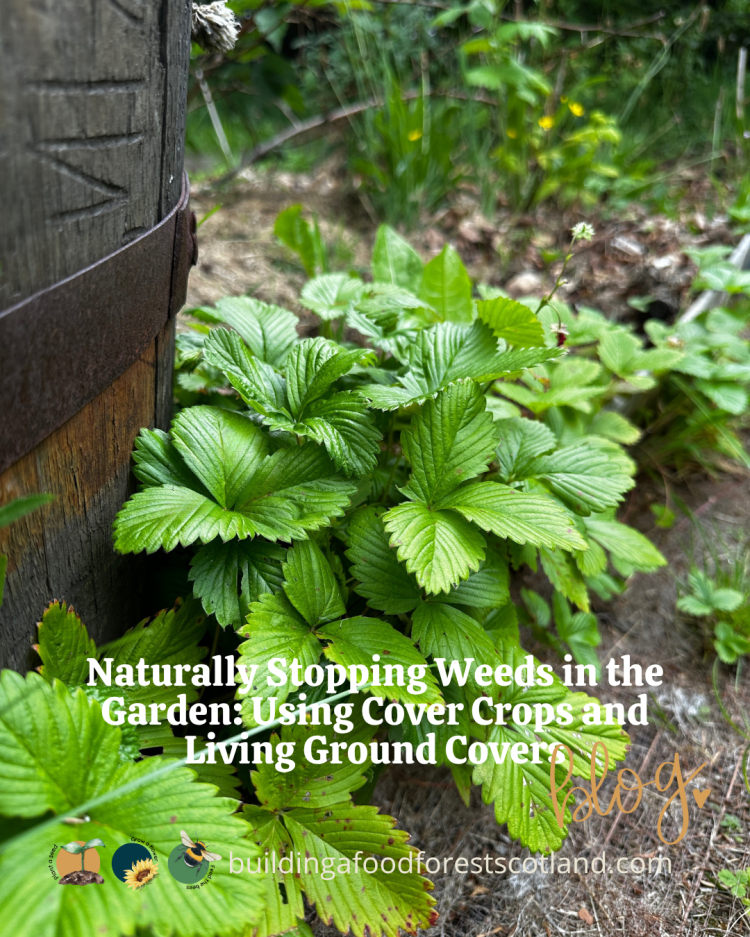
Wild strawberries form a dense mat of runners and leaves, spreading horizontally and creating an almost carpet like surface. Their tight growth habit shades the soil year round, making it difficult for light demanding weed seeds to germinate.
Effect on soil:
While they are not nitrogen fixers, wild strawberries contribute organic matter as old leaves die back. Their shallow roots also help prevent erosion on sloped beds.
Other benefits:
They provide edible fruit, attract pollinators and can be integrated into ornamental or food gardens as a permanent ground layer beneath taller crops like currants or fruit trees. We use these across our food forest floor. See our blog on Wild Strawberry Ground Cover.

Ground floor of the food forest bed in July. Wild Strawberries, Comfrey, Chives in the background.
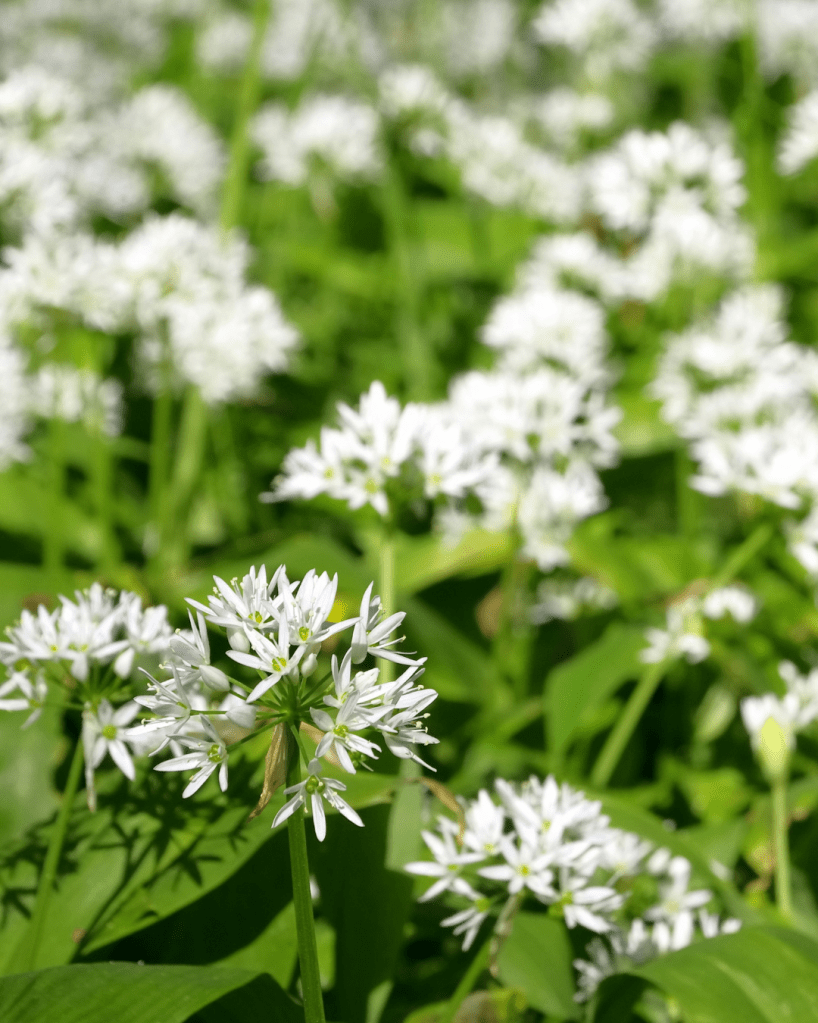
Wild Garlic (Allium ursinum) – Aromatic Weed Deterrent
Weed suppression role:
Wild garlic emerges early in spring, filling spaces before many weeds appear. Its broad leaves shade the soil, while its strong scent may deter certain pests and potentially discourage the germination of some competing species.
Effect on soil:
It doesn’t fix nitrogen but adds organic matter and helps maintain soil microbial diversity, particularly beneficial fungi that support perennial plantings.
Other benefits:
Wild garlic is edible, and its flowers support early pollinators. It thrives in semi shade, where many ground covers struggle.
Red Clover (Trifolium pratense) – Nitrogen Rich Green Manure
Weed suppression role:
Red clover grows quickly and forms a dense canopy, which prevents light from reaching the soil. Its vigorous roots compete strongly for space and resources.
Soil benefits:
As a legume, it forms a symbiotic relationship with Rhizobium bacteria, which convert atmospheric nitrogen into plant available forms. When cut back or incorporated as green manure, it releases this nitrogen, improving fertility for subsequent crops. Clover also loosens compacted soil and increases organic matter.
Other benefits:
Clover flowers attract bees and beneficial insects, improving overall garden biodiversity. There are white, red and crimson clover, we have all 3 growing but like to use red and crimson as cover crops.
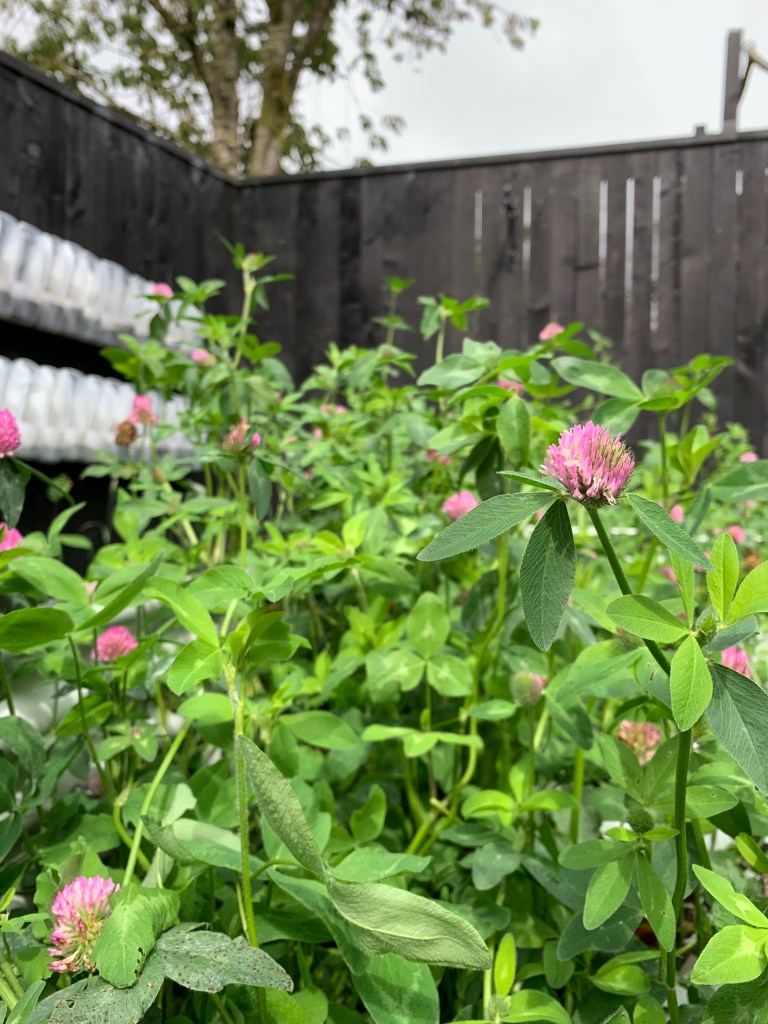
Red Clover over wintered in one of our raised beds. Growing through the winter so no bare soil.
Birdsfoot Trefoil (Lotus corniculatus) – Low Growing Legume
Weed suppression role:
Birdsfoot trefoil creates a thick mat that can be used similarly to clover but tends to stay shorter and less aggressive, making it easier to maintain in mixed plantings.
Soil benefits:
It fixes nitrogen and tolerates poorer soils than red clover, improving fertility where other legumes may struggle.
Other benefits:
It withstands mowing and light foot traffic, making it suitable for orchard floors or pathways. Its flowers also feed pollinators. We have a lot of this growing in the food forest that we chop and drop each year underneath the fruit trees for next years nitrogen to be released.

Huge growth this year around the base of the fruit trees, it’ll be chop and dropped in Autumn
Winter Tares (Vetch) – Cold Season Weed Fighter
Weed suppression role:
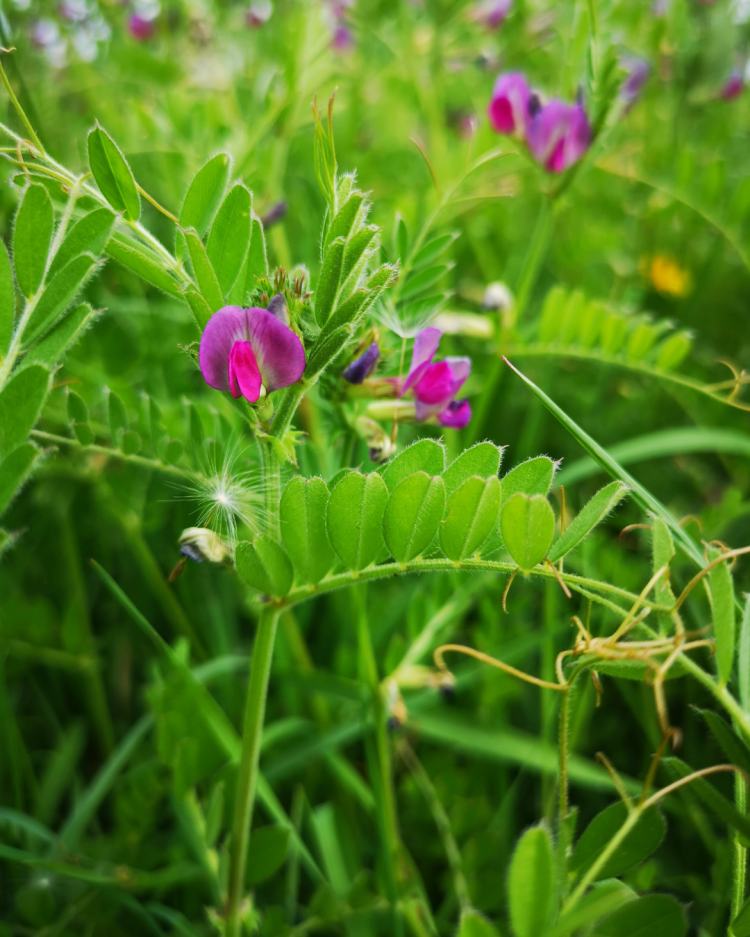
Winter tares (a type of vetch) are sown in autumn, germinate quickly and grow through winter. They form a thick canopy that smothers winter annual weeds, species that otherwise emerge when beds are left bare after summer crops.
Soil benefits:
Vetch is a powerful nitrogen fixer. In spring, when cut down or dug in, it releases large amounts of nitrogen and organic matter. It also improves soil tilth, water retention, and microbial activity.
Other benefits:
It protects soil from erosion and compaction over the winter months.
Forage Peas – Fast Growing Nitrogen Boost
Weed suppression role:
Forage peas (or manure peas) grow quickly, covering ground rapidly and preventing early season weeds. Their tendrils can climb supports or intermingle with cereals like rye, forming a dense green cover.
Soil benefits:
Like other legumes, they fix nitrogen. Their biomass breaks down quickly when incorporated, enriching soil ahead of heavy feeding crops like corn or brassicas.
Other benefits:
Pea shoots can be harvested for edible greens in spring, adding a dual purpose use.
Integrating Cover Crops Into Your Garden Plan
Choose species by season:
- Use vetch, forage peas, or clovers in autumn to cover winter beds.
- Use wild strawberries or trefoil as permanent perennials.
- Rotate annual legumes in summer or early spring for fertility building.
Time management:
For green manure species (clover, vetch, peas), cut or dig them in before they set seed but after sufficient growth. This ensures maximum nitrogen contribution and prevents them from becoming weedy themselves.
Combination planting:
Mixing species can provide multiple benefits: for example, pairing vetch with oats creates a more robust weed barrier, as the oat’s tall biomass shades weeds while vetch adds nitrogen.
Avoid bare soil at all costs:
Weeds are opportunists; continuous living cover—whether edible groundcovers, mulches, or rotational cover crops—keeps their populations in check.
Cover crops and living ground covers aren’t just a weed management tool, they are a foundation for building healthier soil, reducing external inputs, and creating a more resilient garden ecosystem. By strategically using species like wild strawberries for perennial ground cover, red clover for nitrogen rich green manure, and vetch for winter protection, you can suppress weeds naturally while enhancing soil fertility year after year.
Alternatively you can mulch bare soils to stop weeds, so our blog post on this process: Mulch in Gardening: What It Is, Why It’s Used and How to Choose the Right Type
Happy Gardening!


Katrina & Clayton and family live in East Ayrshire and share their daily life in the garden on instagram. They practice permaculture principles in the garden, reducing & repurposing waste whenever they can. Katrina shows how home educating in nature has helped Clayton thrive.
Clayton Completed The 2 Grow and Learn Courses with the Royal Caledonian Horticultural Society. He is Autistic, Non Verbal & has been Home Educated since 2018. Katrina & Peter hold their PDC & PDC PRO Permaculture Design Course from Oregon State University.
They featured on BBC Beechgrove Gardens Ep23 2022 and returned in 2023 for an update, Katrina & Clayton are also columnists for ScotlandGrows Magazine, Guest Blog for Caledonian Horticulture as well as working with Gardeners’ World Magazine and many other brands.
They are also Author of the new Children’s Book Series: Clayton’s Garden Journey: Stories of Autism and Gardening. Topics on Growing, Harvesting, Sowing & Composting and 108 Page Weather and Seasons Weekly Gardening Record Book available on Amazon and Kindle. Listen in on their Guest Podcasts to learn more about them.

Get Weekly Blogs Straight To Your Inbox
Our Children’s Book Series
Author of the new children’s book series: Clayton’s Garden Journey: Stories of Autism and Gardening and Sowing, Growing, Weather and Seasons Weekly Gardening Record Book available on Amazon and Kindle
Visit Our Print On Demand Stores
REDBUBBLE STORE -WORLDWIDE
Over 175 Garden & Nature Designs. Coasters, Phone Covers, Bags, Mouse Mats & Much More


Discover more from Building a Food Forest -Scotland
Subscribe to get the latest posts sent to your email.

2 thoughts on “Naturally Stopping Weeds in the Garden: Using Cover Crops and Living Ground Covers”