

Get Weekly Blogs Straight To Your Inbox

Corking on Peppers: What Those White Lines Really Mean
If you’ve ever grown peppers or chilies in your garden, you may have noticed something curious, fine white or tan lines stretching across the skin of your fruits. These markings, often called corking, can appear as tiny scars, streaks, or crack like textures. At first glance, they can be alarming, are the peppers diseased? Unsafe to eat? A sign of something gone wrong?
The good news is that corking is a natural phenomenon and not necessarily a bad thing. In fact, some pepper enthusiasts even prize corked peppers for their flavour and character. Still, understanding what causes corking, what it means for your harvest, and how to reduce it if you’d prefer smooth skinned fruit can make you a more confident grower.
What Is Corking?
Corking refers to the thin, white, tan, or sometimes light brown scars that develop on the surface of peppers and chilies. These marks can look like stretch marks, crack lines, or spiderweb like etchings. They’re usually shallow and don’t affect the flesh beneath the skin.
The name comes from the resemblance to cork or rough bark. On hot peppers like jalapeños corking is especially common, but it can also appear on sweet peppers and other varieties.

Why Does Corking Happen?
Corking isn’t caused by a pest or disease. Instead, it’s a result of natural growth stress, when the skin of the pepper can’t keep up with the rapid expansion of the fruit inside. Several factors can trigger this:
Rapid Growth Spurts
When peppers experience sudden growth often after heavy rain following a dry period or when fertilisation is strong, the inside of the fruit swells faster than the outer skin can expand. The skin “tears” slightly, leaving behind the familiar white scars.
Environmental Stress
Fluctuations in water, temperature swings, and inconsistent humidity can all put stress on developing fruits. Peppers are sensitive to these changes and corking is often their way of adjusting.
Genetics and Variety
Certain pepper varieties are simply more prone to corking than others. Jalapeños, for instance, are well known for it, and in some cultures, corking is even seen as a mark of maturity and flavour intensity. Sweet bell peppers tend to cork less, but under the right stress, it can still happen.
Pollination and Seed Development
Some growers notice more corking in peppers with heavier seed sets. Since the fruit grows to accommodate more seeds, the skin stretches more quickly, increasing the chance of cracking.


These we grew inside on the windowsill, watered deeply once a week, indoor conditions.
What Does Corking Mean for Your Peppers?
Edibility
Corking is completely harmless. It doesn’t affect the flavour, safety, or nutritional value of the pepper. The marks are only skin deep. Once cut open, the flesh inside is just as fresh and delicious as ever.
Flavour
For hot peppers like jalapeños, corking is often considered a good sign of heat and maturity. In fact, some chefs and pepper enthusiasts seek out corked peppers because they believe they pack more punch and flavour. Smooth, unblemished peppers are often underripe or milder in comparison.
Market Appeal
At the grocery store, smooth, shiny peppers dominate the shelves because they’re seen as more visually appealing. Corked peppers are sometimes rejected by commercial sellers, even though they’re just as good, if not better, than their spotless counterparts. In farmers’ markets and among pepper fans, however, corked peppers may fetch more appreciation.
How to Reduce Corking in Future Harvests
If you prefer your peppers with smooth, glossy skins, there are a few strategies you can try to minimise corking. Keep in mind, though, that corking isn’t entirely avoidable, it’s partly genetic and partly environmental. Still, you can reduce the chances with consistent care.
Keep Watering Consistent
The biggest culprit behind corking is uneven watering. Periods of drought followed by sudden soaking rains cause peppers to swell too quickly. Aim to keep the soil evenly moist, not soggy, not bone dry. Using mulch around your plants can help regulate soil moisture. (this is obviously the cause of ours both inside and out!)
Avoid Over fertilisation
Too much nitrogen, especially, can fuel rapid vegetative growth and oversized fruits, both of which stress the skin. Use a balanced fertiliser and feed your plants steadily instead of in big bursts.
Choose Varieties Carefully
If corking bothers you, opt for pepper varieties that are less prone to it. Many hybrid bell peppers, for instance, are bred for smooth, market ready skins. On the other hand, if you like jalapeños with character, embrace varieties known for corking.
Protect From Stress
Keep your plants as stress free as possible:
- Provide shade cloth during extreme heat.
- Ensure good airflow to reduce humidity spikes.
- Stake plants to prevent fruits from being damaged by wind.
Harvest Regularly
Leaving peppers on the plant too long can increase corking as the fruit continues to swell and ripen. Regular picking encourages steady production and can limit stress on the skins.
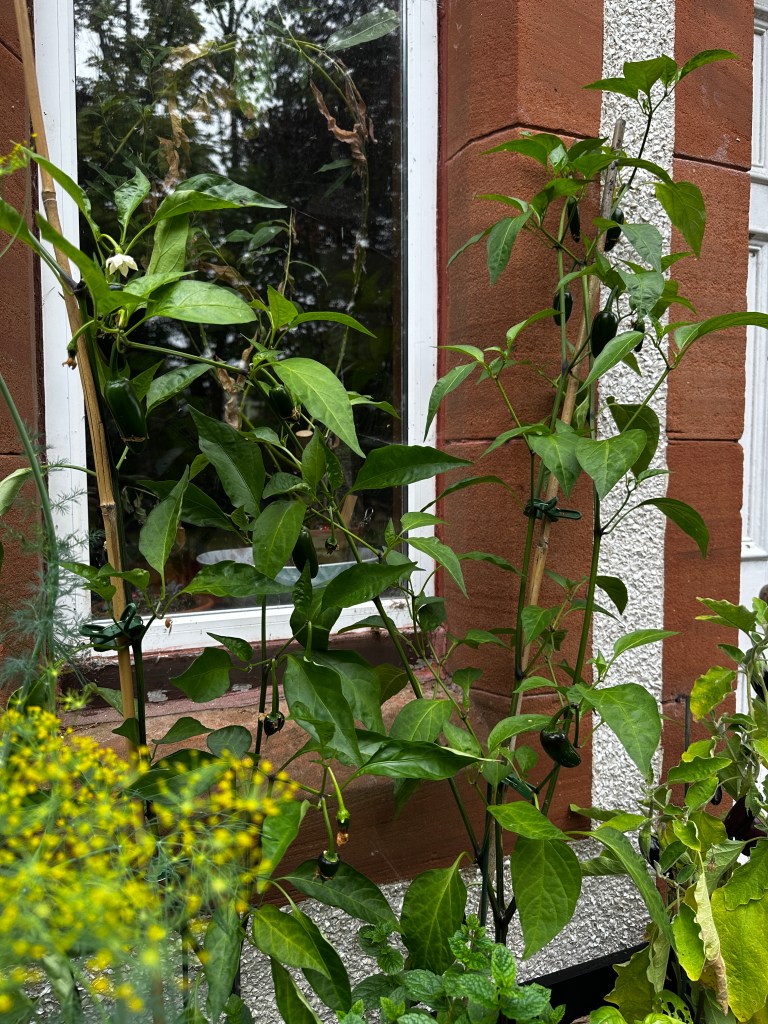
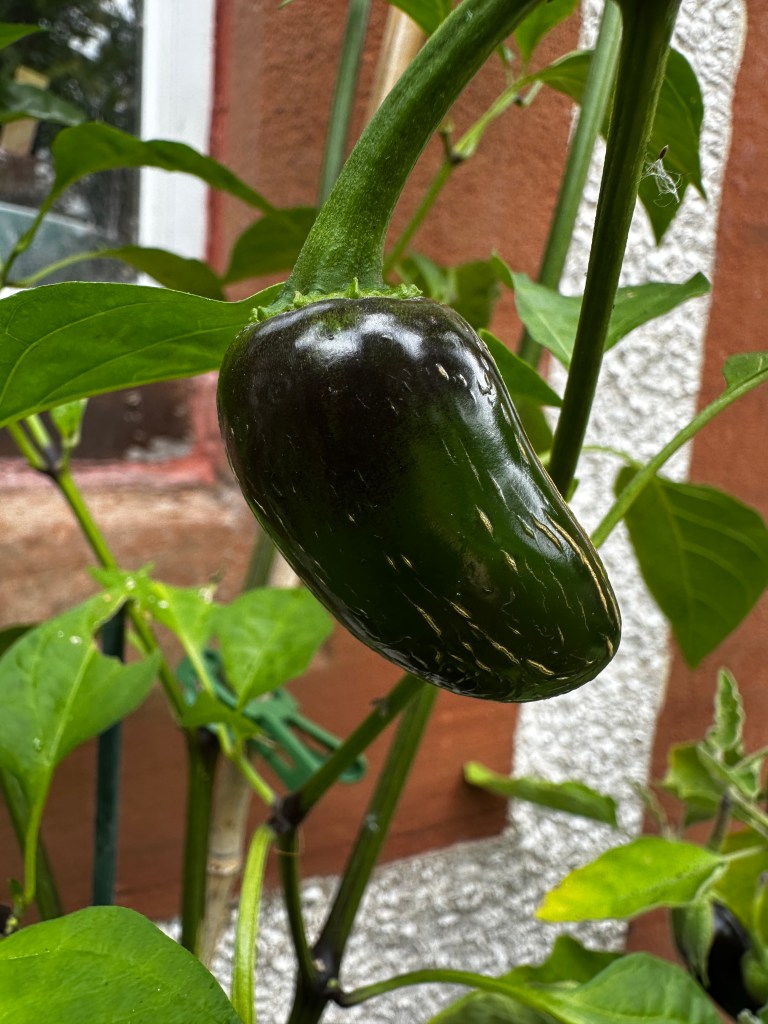
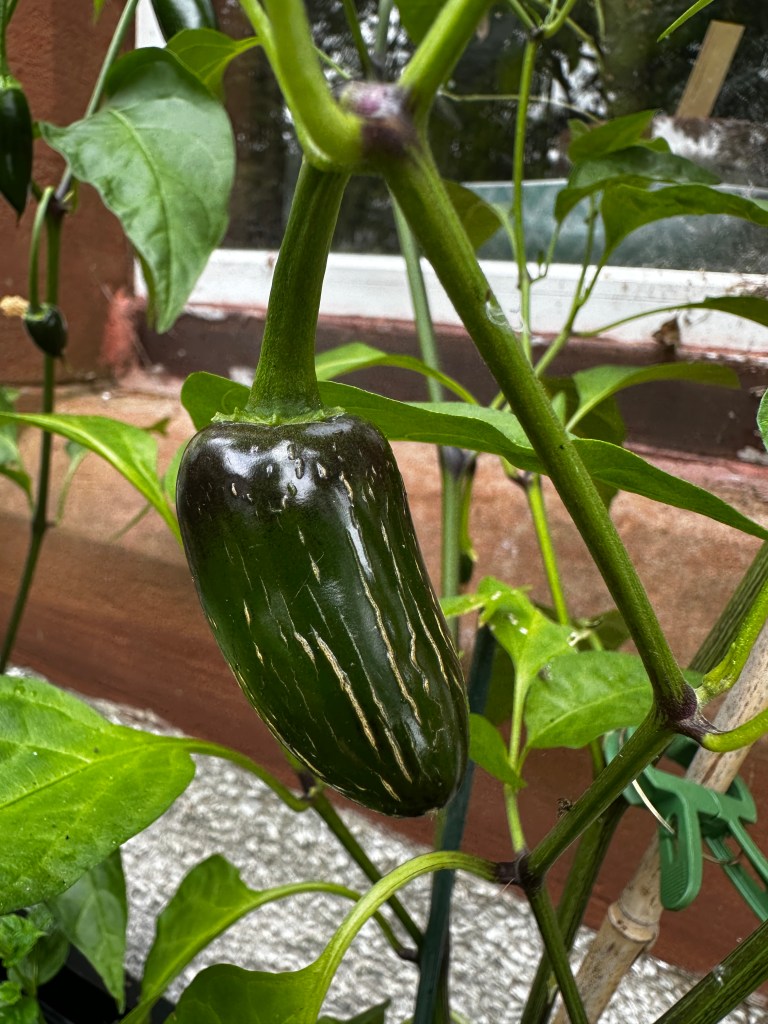
These we grew outside in a pot in a raised bed, watered by rain only, outdoor conditions.
and NO—corking doesn’t only happen on peppers. While peppers (especially jalapeños) are the most well known for it, corking is really just the plant’s skin forming scar tissue after rapid growth or stress. That means it can happen on a variety of fruits and vegetables like:
- Cucumbers – They can develop white streaks, cracks or rough skin when they grow quickly after inconsistent watering.
- Squash & Zucchini – Rapid growth can cause fine scars on the surface, especially if there’s uneven moisture.
- Tomatoes – They don’t usually “cork” in the same way, but they do get growth cracks or “catfacing” from similar stress (rapid growth, fluctuating conditions).
- Apples & Pears – Can develop corky patches or russeting, often caused by stress, humidity, or certain nutrient imbalances (like low calcium).
- Chilli relatives (aubergine, ornamental peppers, etc.) – Since they’re in the same botanical family, they can show similar stretch mark like scars.
So really, corking (or growth scarring) can happen on many fruits when the skin can’t keep up with the inside growth, often due to water, temperature or nutrition swings.
While many gardeners try to avoid corking, it’s worth asking: should you fight it at all? For jalapeños and other hot peppers, corking is a badge of authenticity. It signals that the pepper is mature, flavourful and potentially hotter than its smooth skinned siblings. In some cuisines, corked jalapeños are the preferred choice.
Even in sweet peppers, corking has no negative impact beyond appearance. Once you slice or roast them, the white scars are unnoticeable. If your goal is great taste and a healthy harvest, corking is not a problem, it’s just nature’s artwork.
So the next time you see those white lines running across your peppers, don’t toss them aside. Instead, celebrate them as a reminder of the plant’s resilience and enjoy the delicious, vibrant fruit they offer.
Happy Gardening!


Katrina & Clayton and family live in East Ayrshire and share their daily life in the garden on instagram. They practice permaculture principles in the garden, reducing & repurposing waste whenever they can. Katrina shows how home educating in nature has helped Clayton thrive.
Clayton Completed The 2 Grow and Learn Courses with the Royal Caledonian Horticultural Society. He is Autistic, Non Verbal & has been Home Educated since 2018. Katrina & Peter hold their PDC & PDC PRO Permaculture Design Course from Oregon State University.
They featured on BBC Beechgrove Gardens Ep23 2022 and returned in 2023 for an update, Katrina & Clayton are also columnists for ScotlandGrows Magazine, Guest Blog for Caledonian Horticulture as well as working with Gardeners’ World Magazine and many other brands.
They are also Author of the new Children’s Book Series: Clayton’s Garden Journey: Stories of Autism and Gardening. Topics on Growing, Harvesting, Sowing & Composting and 108 Page Weather and Seasons Weekly Gardening Record Book available on Amazon and Kindle.
Listen in on their Guest Podcasts to learn more about them.

Get Weekly Blogs Straight To Your Inbox
Our Children’s Book Series
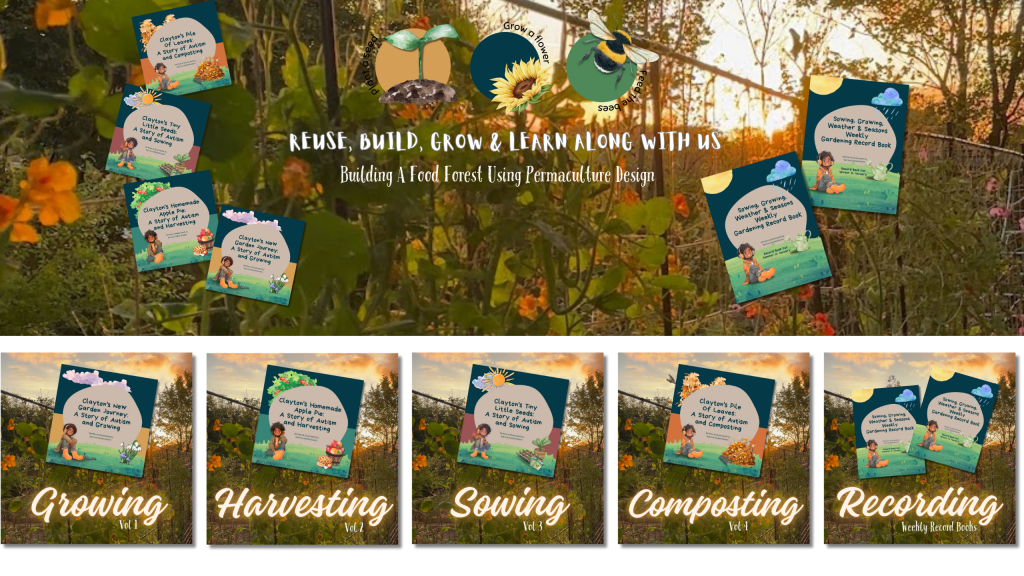
Author of the new children’s book series: Clayton’s Garden Journey: Stories of Autism and Gardening and Sowing, Growing, Weather and Seasons Weekly Gardening Record Book available on Amazon and Kindle
Visit Our Print On Demand Stores
REDBUBBLE STORE -WORLDWIDE
Over 200 Garden & Nature Designs. Coasters, Phone Covers, Bags, Mouse Mats & Much More


Discover more from Building a Food Forest -Scotland
Subscribe to get the latest posts sent to your email.
