

Get Weekly Blogs Straight To Your Inbox

How We Use Coir Erosion Sheeting for Sustainable Landscaping
Coir products: byproducts of coconuts that otherwise would go to waste
Coir Erosion Sheeting Blanket
An erosion sheeting blanket, also called an erosion control blanket (ECB), is a biodegradable or synthetic matting used to prevent soil erosion, promote vegetation growth, and stabilise slopes. It is commonly made from natural fibers like coir (coconut husk), straw, or jute, or from synthetic materials like polypropylene.
Uses of Erosion Sheeting Blankets:
Prevents soil erosion on slopes, riverbanks, and construction sites.
Helps establish grass and plant growth by retaining moisture and stabilising seeds.
Reduces runoff and sediment loss in areas prone to erosion.
Provides temporary or long term stabilisation, depending on material type.
Why Use Coir Erosion Blankets?
Coir based erosion blankets are eco friendly, durable, and biodegradable, lasting up to 3–5 years before naturally decomposing into the soil. They are especially useful for steep slopes, wetland restoration, and riverbank protection due to their water resistance and strong fibre structure. This is from Salike.

Used As A Path On A Slope
Used For: Muddy sloped pathway
Prep Work: None, already had been sheet mulched for 18mth so had no grass, just

Why we chose it: As it is on a slope anything we put on here ended up moving or washing down the bottom. We tried walking across the sheet mulched area but would just slip over so had to make a dedicated pathed area. This was a great alternative to adding woodchips, stones or sheet mulching. It is very stable and soaks up water when it rains.

How we put it down: we ran a rake down the path to collect anything there. Then we rolled it out and cut it slightly longer than needed so we could fold it under to pin so no loose bits would get caught. We pinned it with standard U Shaped metal tent/garden pegs every 20cm or so making sure to pull it tight before pegging in


How easy was it to do: very easy to do, had the children help do the task, only took around 20mins to do each one.

How does it stay in: normal ground pegs or U shaped pegs were hammered in to hold in place, making sure to pull it tight.


Used For Weed Control On A Slope

Used For: 2 different slopes, 1 for flowers & 1 for lavender on a deeper gradient slope
Prep Work: Grass on the flower slope was cut down short and black fabric (not plastic) weed suppressant put down and then the erosion sheeting pinned on top.
Both these slopes had existing flowers/lavender on so we just cut straight lines into the side, wrapped it around the plants & pinned back into place.
Any new plants on the flower slope we just cut an X shape lift the section up to plant in the soil and fold it back around the base.
Why we chose it: Same as the paths anything we put on here ended up moving or washing down the bottom of the slopes so we needed something we could pin in place that helped keep the soil in place. Adding the fabric underneath with any grass/weeds wanting to grow through.
How we put it down: We pinned it with standard U Shaped metal tent/garden pegs every 20cm or so making sure to pull it tight before pegging in


Used With Our Lavender On A Slope


Happy Gardening!


Katrina & Clayton and family live in East Ayrshire and share their daily life in the garden on instagram. They practice permaculture principles in the garden, reducing & repurposing waste whenever they can. Katrina shows how home educating in nature has helped Clayton thrive.
Clayton Completed The 2 Grow and Learn Courses with the Royal Caledonian Horticultural Society. He is Autistic, Non Verbal & has been Home Educated since 2018. Katrina & Peter hold their PDC & PDC PRO Permaculture Design Course from Oregon State University.
They featured on BBC Beechgrove Gardens Ep23 2022 and returned in 2023 for an update, Katrina & Clayton are also columnists for ScotlandGrows Magazine, Guest Blog for Caledonian Horticulture as well as working with Gardeners’ World Magazine and many other brands.
They are also Author of the new Children’s Book Series: Clayton’s Garden Journey: Stories of Autism and Gardening. Topics on Growing, Harvesting, Sowing & Composting and 108 Page Weather and Seasons Weekly Gardening Record Book available on Amazon and Kindle. Listen in on their Guest Podcasts to learn more about them.

Get Weekly Blogs Straight To Your Inbox
Our Children’s Book Series
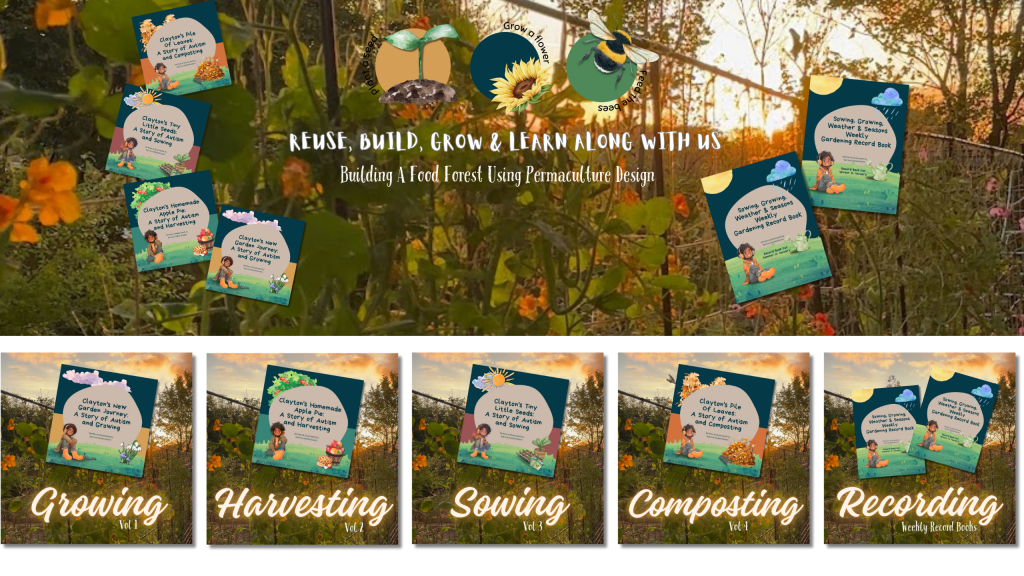
Author of the new children’s book series: Clayton’s Garden Journey: A Story of Autism and Gardening and Sowing, Growing, Weather and Seasons Weekly Gardening Record Book available on Amazon and Kindle
Visit Our Print On Demand Stores
REDBUBBLE STORE -WORLDWIDE
Over 175 Garden & Nature Designs. Coasters, Phone Covers, Bags, Mouse Mats & Much More


Discover more from Building a Food Forest -Scotland
Subscribe to get the latest posts sent to your email.

4 thoughts on “How We Use Coir Erosion Sheeting for Sustainable Landscaping”