
Get Weekly Blogs Straight To Your Inbox

Transforming a Large Grass Lawn with Sheet Mulching
Why Mulching?
Mulching is a fundamental practice in gardening, especially within permaculture, as it enhances soil health, conserves moisture, suppresses weeds, and supports the overall ecosystem of your garden. Using materials like cardboard, leaves, grass clippings, and compost aligns with permaculture principles, which emphasises working with nature to create sustainable, regenerative systems. Here’s why mulching with these materials is beneficial:

1. Cardboard
Weed Suppression: Cardboard acts as an excellent weed barrier, blocking sunlight and preventing weed seeds from germinating. Always make sure to only use blank card with no tape or print on.
Soil Moisture Retention: It helps retain soil moisture by reducing evaporation, which is crucial for maintaining consistent soil hydration.
Decomposition: Over time, cardboard breaks down, adding organic matter to the soil and improving soil structure and fertility.
Recycling and Waste Reduction: Using cardboard repurposes waste, reducing the need for synthetic weed barriers and minimising landfill contributions. (Permaculture Principle No6: Produce No waste)
2. Leaves
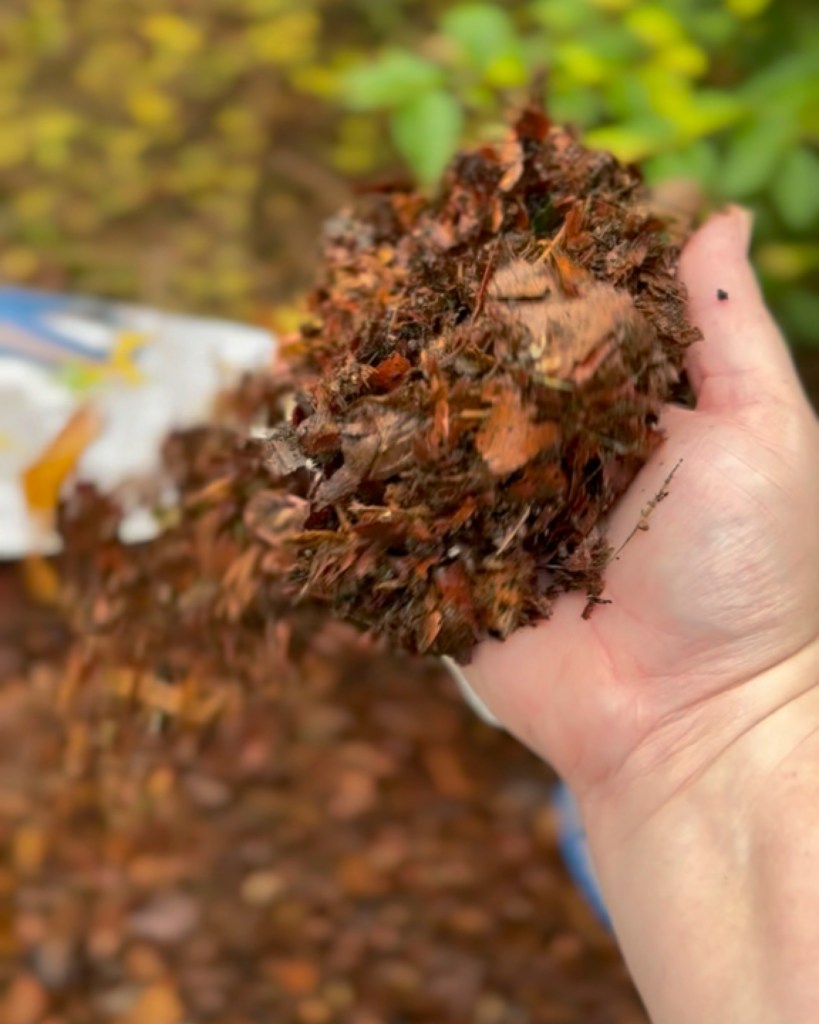
Nutrient Rich: As leaves decompose, they release essential nutrients back into the soil, enriching it and feeding beneficial microorganisms and plants.
Soil Insulation: Leaves provide a natural insulating layer, keeping soil temperatures more stable, protecting plant roots from extreme temperature fluctuations.
Habitat for Beneficial Insects: A layer of leaves creates habitat for beneficial insects and microorganisms, enhancing biodiversity and promoting a balanced ecosystem.
3. Grass Clippings
Nitrogen Source: Grass clippings are high in nitrogen, a key nutrient for plant growth. They break down quickly, releasing nitrogen into the soil.
Soil Aeration and Structure: As they decompose, grass clippings improve soil aeration and structure, making it easier for roots to grow and access nutrients.
Moisture Retention: Like other mulches, grass clippings help retain soil moisture, reducing the need for frequent watering and in wetter climate like ours, it holds the water longer and releases it slowly to reduce water logging.
4. Compost
Nutrient-Rich Amendment: Compost is full of nutrients and beneficial microorganisms that boost soil fertility and plant health.
Improves Soil Structure: Compost improves soil texture, making sandy soils more water-retentive and clay soils more usable.
Encourages Earthworms and Soil Life: Compost attracts earthworms and other beneficial soil organisms that further break down organic material, enhancing soil aeration and nutrient availability.
Benefits in Line with Permaculture Principles
Mimicking Natural Processes: Mulching replicates the natural leaf litter found on forest floors, creating a self-sustaining cycle of organic matter returning to the soil.
Reducing External Inputs: By using readily available materials like cardboard, leaves, and grass clippings, you reduce reliance on external inputs, making your garden more sustainable and cost-effective.
Building Soil Health: Healthy soil is a core principle of permaculture. Mulching builds soil health by adding organic matter, improving water retention, and fostering a thriving ecosystem of beneficial organisms.
Supporting Biodiversity: Mulching supports biodiversity by creating habitats for insects, fungi, and other microorganisms, contributing to a resilient garden ecosystem.
By incorporating these mulching practices, you work in harmony with natural systems, enhancing the productivity and sustainability of your garden in line with permaculture principles.
Where We Started
This area had the 8 Fruit Trees & Cages planted across the back. The idea was to sheet mulch the whole area around the cages so in 6mths time next Spring we would not only have stopped all the grass from growing but we would have some composted leaf mould soil covering this area ready to plant out more of our Food Forest
The space we are covering was 77ft long by 22ft wide and on a slight slope of about 15°

Summer 2019

Oct 2021
Getting Started
We spent the whole 12mths collecting cardboard, we filled up a huge section of the garage, removing any tape or stickers and flat packing as we went.
This time last year we collected all the leaves from the garden & road weekly until they were all cleared to produce leaf mould compost to use for this project.
Leaf mould is made when autumn leaves are broken down by the slow action of fungi, rather than by bacteria that decompose other compost bin ingredients.
Pile leaves up separately in a bespoke leaf mould bin or cage and you’ll have the perfect material to use for mulching and potting in years to come.
Source: Gardeners World

Oct 2021
Using the cardboard we lay it over the grass (we did not cut it first as it was too wet & some areas were over 12” high, just flattened it down with our feet) making sure to overlap every piece of cardboard by a good 6” and checking any flaps had cardboard underneath, so there was no gaps at all. Ideally 2 layers would have been good but this was a huge space to cover we went with 1, but very overlapped.


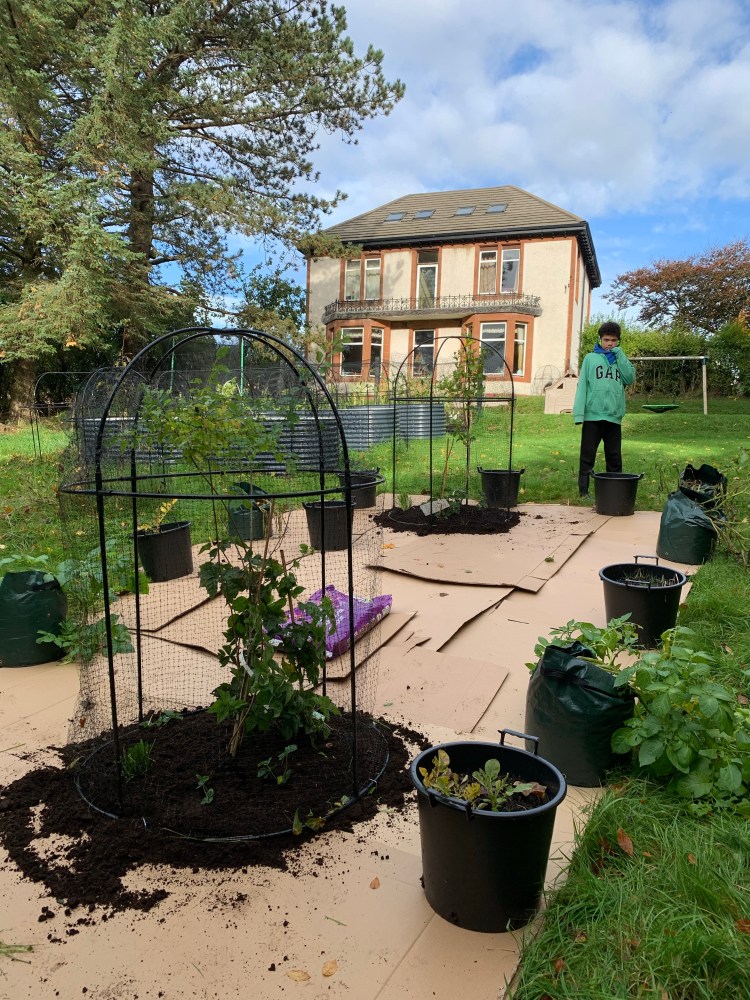
Check out the detailed process back in 2021 in our blog post: Sheet Mulching a Large Grass Lawn Area To Build A Food Forest


Moving Forward
Each Autumn we collect the cardboard and leaves and add them onto this area to continue to build the food forest floor, since 2021 we had made paths now the grass growth has stopped see blog post: How We Use Coir Erosion Sheeting as we couldn’t walk on this area as we would just slip due to it being on a slope, the card and thick layer of leaves on top.
Grass clippings are added direct throughout the year sprinkled across it rather than adding it to a compost bin, as do any scarps of food, get put into a hole and covered over in this area.
This is what the area looks like now (Spring 2024) with paths, constant mulching every year and strawberry ground cover to suppress the weeds and help support the soil and water.
We are gradually filling up the area with plants, as it is such a large space we are propagating and dividing each year to help with our budget. You can see our planting structure in blog post: What is a Guild? and what Berries we have growing too in Growing & Harvesting Our Berries
Why We Use Strawberries As A Ground Cover In Our Food Forest
Happy Gardening!


Katrina & Clayton and family live in East Ayrshire and share their daily life in the garden on instagram. They practice permaculture principles in the garden, reducing & repurposing waste whenever they can. Katrina shows how home educating in nature has helped Clayton thrive.
Clayton Completed The 2 Grow and Learn Courses with the Royal Caledonian Horticultural Society. He is Autistic, Non Verbal & has been Home Educated since 2018. Katrina & Peter hold their PDC & PDC PRO Permaculture Design Course from Oregon State University
They featured on BBC Beechgrove Gardens Ep23 2022 and returned in 2023 for an update,Katrina & Clayton are also columnists for ScotlandGrows Magazine, Guest Blog for Caledonian Horticulture as well as working with Gardeners’ World Magazine and many other brands.
They are also Author of the new children’s book series: Clayton’s Garden Journey: A Story of Autism and Gardening. Topics on Growing, Harvesting, Sowing & Composting and 108 Page Weather and Seasons Weekly Gardening Record Book available on Amazon and Kindle. Listen in on our Guest Podcasts to learn more about us.
Get Weekly Blogs Straight To Your Inbox
Our Children’s Book Series
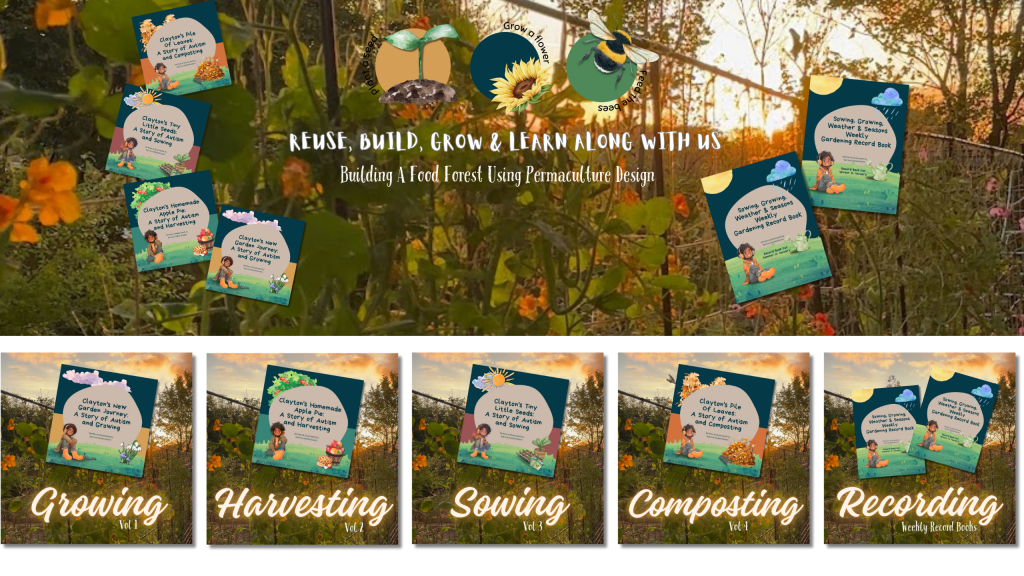
Author of the new children’s book series: Clayton’s Garden Journey: A Story of Autism and Gardening. Topics on Growing, Harvesting, Sowing & Composting and 108 Page Weather and Seasons Weekly Gardening Record Book available on Amazon and Kindle
Visit Our Print On Demand Stores
REDBUBBLE STORE -WORLDWIDE
Over 175 Garden & Nature Designs. Coasters, Phone Covers, Bags, Mouse Mats & Much More

Discover more from Building a Food Forest -Scotland
Subscribe to get the latest posts sent to your email.

3 thoughts on “Transforming a Large Grass Lawn with Sheet Mulching”