

Get Weekly Blogs Straight To Your Inbox

RASPBERRIES
Observing and Monitoring In Our Garden

MONITORING OUR RASPBERRIES
We planted out 4 varieties back in summer 2022, we didn’t know what would work best or in what area so we added these 4 to test them out. We added them to our food forest area, to our mini food forest in a raised bed and to our raised bed planter pathway.
We walked around the garden checking on each variety, each one is marked by a cane with coloured yarn on corresponding to each of the varieties. We were able to mark if they grew well, didn’t grow at all or was a poor grower I our book.
This is the varieties we have:
💜Purple- Raspberry Variety Glen Lyon 💜EARLY
Glen Lyon’ is a fabulous Early fruiting Raspberry variety that produces masses of fruit from June to July. A modern Scottish variety it is disease resistant and performs well in the UK climate, making it perfect addition to the summer garden.
💚Green- Raspberry Variety Glen Doll 💚SUMMER
Thornless. Superb heavy cropping summer variety. The fruit quality is outstanding and unbelievably is superior to Glen Ample. Disease free. Perfect for freezing.
💙Blue- Raspberry Variety Autumn Bliss 💙AUTUMN
Autumn Bliss is a popular autumn flowering variety of Raspberry that produces rich red delightful fruit that is full of flavour from August until the first frosts.
💛Yellow- Raspberry Variety Glen Dee 💛LATE
Glen Dee (floricane) is a late fruiting summer variety that is new on the market. Fruit is large, conical shaped, great flavour and good shelf life. Glen Dee produces fruit on spine free canes making this variety easily managed.
Observing & Monitoring Our Raspberries Video Reel
RECORDING OUR RASPBERRIES

RECORDING OUR RASPBERRIES
This is what happened to these 4 varieties in our garden over the 18mths. Each one is marked on our diagram of the area, showing what colour they are and where they are placed in our garden.
We then marked it underneath with a red line showing that they grew well or we put a X over the circle to show that they either didn’t grow or was not there anymore (some just got snapped in high winds/moving things about)
We could then see which were our best performing and which was not for us to replace and add more to these areas
💜Purple- Raspberry Variety Glen Lyon 💜EARLY
Out of 6 in this area
4 grew well
2 didn’t grow at all
💚Green- Raspberry Variety Glen Doll 💚SUMMER
Out of 13 in this area
6 grew well
7 didn’t grow at all
💙Blue- Raspberry Variety Autumn Bliss 💙AUTUMN
Out of 6 in this area
All 6 grew well
💛Yellow- Raspberry Variety Glen Dee 💛LATE
Out of 6 in this area
None grew at all
As you can see our Early and Summer were hit and miss, our late didn’t do a thing but our Autumn was a clear winner. We will replacing new ones with Autumn Bliss as they were they only ones that all grew and adding a new row in where the red dots are on the diagram
Recording Our Raspberries Video Reel
PRUNING OUR RASPBERRIES – FLORICANE

PRUNING OUR RASPBERRIES
Pruning the floricane fruiting raspberries that produce fruit on last years growth.
They should be pruned and trained as soon as you finish harvesting the crop but can be done through to end of Winter -end of February at the latest for us, as you can see ours have started budding up so need doing to get the space, light and air around the base for the best production.
This means removing all of the year before’s wooden growth to make room for more canes to grow up through the middle for next years fruit. You do this by cutting the old wooded stems down to the ground.
We have these in the food forest, raised bed planter path AND up on the front area in our mini food forest in a raised beds
This is Variety Glen Lyon which is an EARLY fruiting raspberry that we are pruning. This is a floricane fruiting raspberry
Showing before and after being pruned, you can see the extra space, light and air it gives the bottom area to enable the new growth to come up through the middle for the following year.
You can see the difference in the 2 woods in these photos to be able to see what needs cutting. The older wood that will be removed is a lot paler in colour and has lost that bright look. The newer ones are a vibrant wood colour and will show signs of new growth.
PLANTING NEW RASPBERRY CANES

PLANTING OUT RASPBERRIES CANES
Planting out some new canes and replacing those that didn’t grow & some extra space we had in here. Take each cane in turn and spread out the roots evenly, the old soil mark (if visible) should be level with the surface. Make sure the canes are planted around 3in (7.5cm) as an optimum depth.
Preparation (guidelines from our supplier)
Plant raspberries in fresh ground that has never grown raspberries or any Rubus plants before. The previous Rubus plants leave a dormant virus in the soil that becomes active as soon as fresh plants are put in the ground. This virus can lie dormant for up to 30 years, and so it is so important that fresh ground is found to plant fresh stock in. (The ones we are replacing never grew, hence why we can replace in the same spot)
Raspberries should be grown in a sheltered spot – they grow best in full sun but will tolerate partial shade.
Ensure that the soil they are being planted in is not too heavy – soil that holds a lot of water is no use as raspberries will die very quickly with their roots standing in wet, airless earth.
If planting in clay soil, it is recommended to plant in a raised bed by forming a ridge. Dig a trench approx 18in (40cm) wide and 6in (15cm) deep.
We are topping these raised beds up with Planter Mix from Caledonian Horticultural Planter Mix is a peat-free growing medium filler mix made from a blend of Green Goodness, composted bark fines, and basalt rock dust.
Ideal for using in raised beds and garden borders, the Planter Mix is guaranteed to be weed free. The added rock dust provides valuable minerals and nutrients that promote healthy longer lasting plants as the rock dust slowly breaks down.
Planting Out New Raspberries Canes Video Reel
Hope this has covered what we do in our garden with our different varieties and how we observed, monitored and recorded to sort out an issue and replace new ones


Katrina & Clayton and family live in East Ayrshire and share their daily life in the garden on instagram. They practice permaculture principles in the garden, reducing & repurposing waste whenever they can. Katrina shows how home educating in nature has helped Clayton thrive.
Clayton Completed The 2 Grow and Learn Courses with the Royal Caledonian Horticultural Society. He is Autistic, Non Verbal & has been Home Educated since 2018. Katrina & Peter hold their PDC & PDC PRO Permaculture Design Course from Oregon State University.
They featured on BBC Beechgrove Gardens Ep23 2022 and returned in 2023 for an update,Katrina & Clayton are also columnists for ScotlandGrows Magazine, Guest Blog for Caledonian Horticulture as well as working with Gardeners’ World Magazine and many other brands.
They are also Author of the new Children’s Book Series: Clayton’s Garden Journey: Stories of Autism and Gardening. Topics on Growing, Harvesting, Sowing & Composting and 108 Page Weather and Seasons Weekly Gardening Record Book available on Amazon and Kindle.
Listen in on their Guest Podcasts to learn more about them.
Get Weekly Blogs Straight To Your Inbox
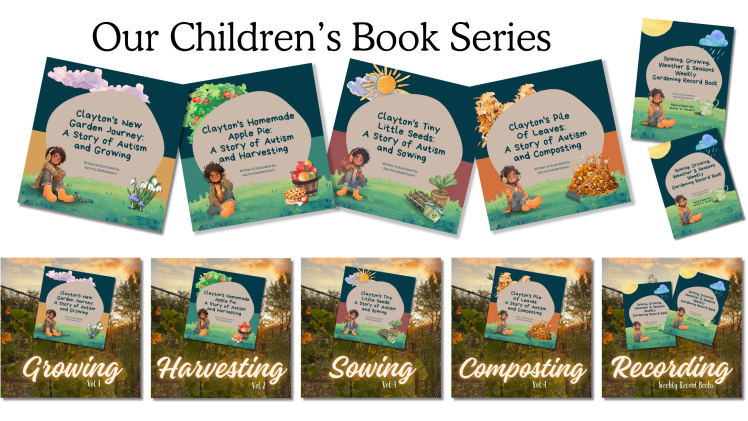
Our Children’s Book Series
Author of the new children’s book series: Clayton’s Garden Journey: Stories of Autism and Gardening and Sowing, Growing, Weather and Seasons Weekly Gardening Record Book available on Amazon and Kindle

Visit Our Print On Demand Stores
Redbubble Store – Worldwide! 200+ garden & nature-inspired designs on coasters, phone covers, tote bags, mouse mats and so much more. Perfect for plant lovers, gardeners and anyone who wants to bring a touch of the outdoors into everyday life

Discover more from Building a Food Forest -Scotland
Subscribe to get the latest posts sent to your email.

5 thoughts on “Raspberries: Monitoring, Recording, Pruning & Planting”