

Get Weekly Blogs Straight To Your Inbox

Permaculture, in simple terms, is a way of designing and creating systems – like gardens or farms working in harmony with nature.
The word “permaculture” itself comes from combining “permanent” and “agriculture” or “culture,” reflecting a focus on sustainability and long-term thinking.
Permaculture was co-founded by Bill Mollison and David Holmgren in Tasmania, Australia, in the 1970s. Both Mollison and Holmgren played significant roles in developing and popularising permaculture.
Bill Mollison, an Australian ecologist, researcher, and teacher, was a driving force behind the development of permaculture. He observed natural ecosystems and traditional agricultural practices, inspiring the creation of a holistic design system.
David Holmgren, also an Australian ecologist, collaborated with Bill Mollison in refining and expanding permaculture principles. Holmgren’s contributions have been crucial in shaping the design framework and principles of permaculture.

In a nutshell, permaculture is like learning from nature’s playbook to create sustainable, efficient, and harmonious systems that support both the environment and people.
It’s about being smart, observing, and working together with the Earth to create a better way of living.
There are 12 Permaculture Principles and we will be looking each each one every month over the year and how we use it in our garden
Permaculture Principle No. 3:
Obtain A Yield
Permaculture Principle No. 3, “Obtain a Yield,” emphasises the importance of ensuring that our efforts in designing and maintaining systems yield valuable returns. This principle encourages us to design our landscapes, gardens, and lifestyles in ways that generate abundance, whether in the form of food, resources, energy, or other benefits. Let’s explore this principle in three sections: explanation, application, and outcome.

Obtaining a yield in permaculture is about maximising the productive outputs of our systems while minimising inputs and waste. It involves carefully designing and managing landscapes and ecosystems to yield tangible and meaningful returns. This could include harvesting fruits and vegetables, collecting rainwater, generating renewable energy, or fostering biodiversity.
At its core, obtaining a yield is about creating regenerative systems that provide for human needs while enhancing ecological health and resilience. By recognising and harnessing the abundance in nature, we can create self-sustaining and resilient systems that benefit both people and the planet.

Design for Productivity:
When designing landscapes or gardens, prioritise elements that contribute to productivity and yield. This could include selecting fruit-bearing trees and shrubs, planting diverse food crops, and integrating livestock or poultry systems.
Efficient Resource Use:
Optimise resource use to maximise yield while minimising waste. Implement water-efficient irrigation systems, capture and store rainwater, and utilise renewable energy sources such as solar panels or wind turbines.
Multifunctional Design:
Embrace the concept of multi functionality by selecting plants and elements that serve multiple purposes. For example, plant fruit trees that provide food while also offering shade, habitat for wildlife, and erosion control.
Continuous Harvest:
Plan for staggered or continuous harvests to ensure a steady supply of fresh produce throughout the growing season. Incorporate succession planting and companion planting techniques to maximise space and yield.
Value-Adding Activities:
Explore value-adding activities such as food preservation, fermentation, or value-added product creation. Transform surplus produce into jams, pickles, or herbal remedies to extend its shelf life and value.

Abundance and Resilience:
Designing systems that yield abundant harvests and resources enhances resilience to external shocks such as climate change or economic instability. A diverse and productive landscape can better withstand fluctuations and disruptions.
Self-Sufficiency:
By obtaining a yield from our land and resources, we reduce dependence on external inputs and systems. This fosters greater self-sufficiency and empowerment as we meet more of our needs from within our own communities and landscapes.
Economic and Social Benefits:
The yields generated from permaculture systems can have economic and social benefits, such as reduced grocery bills, increased community cohesion through sharing surplus harvests, and the creation of livelihood opportunities through value-added products.
There are 12 permaculture Principles we will be looking at each one every month
When looking at implementing the design into our garden we looked at setting our sections up into different areas that suited, we have
- Food Forest Area
- Raised Bed Area
- Kitchen Courtyard
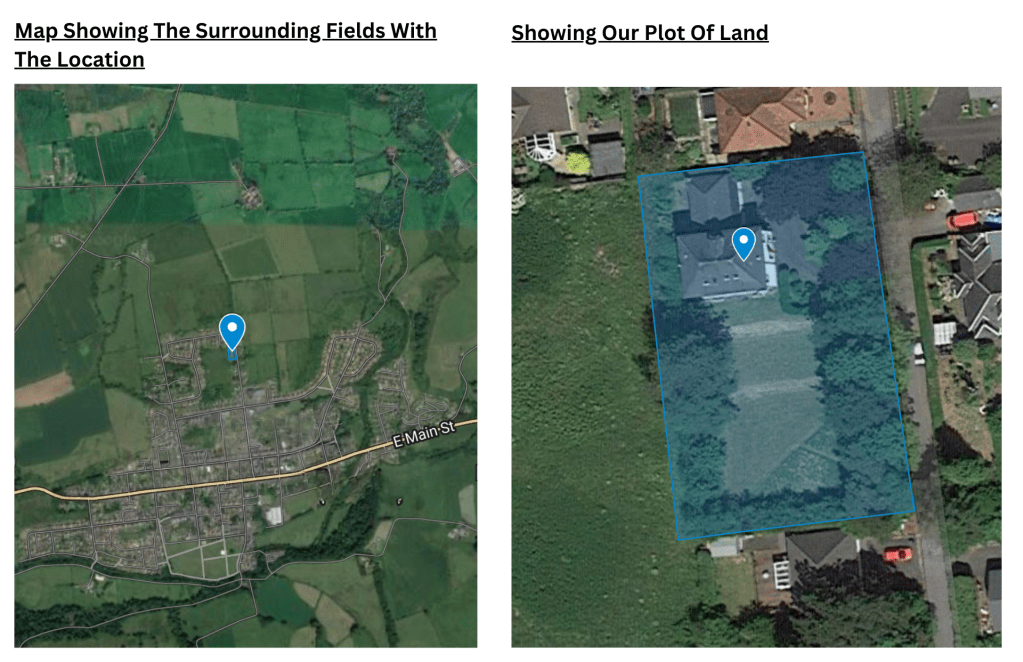
This is a shot of our home showing the surrounding area. We are on a hill, at the top of the hill and behind us the fields you see are an even steeper hill
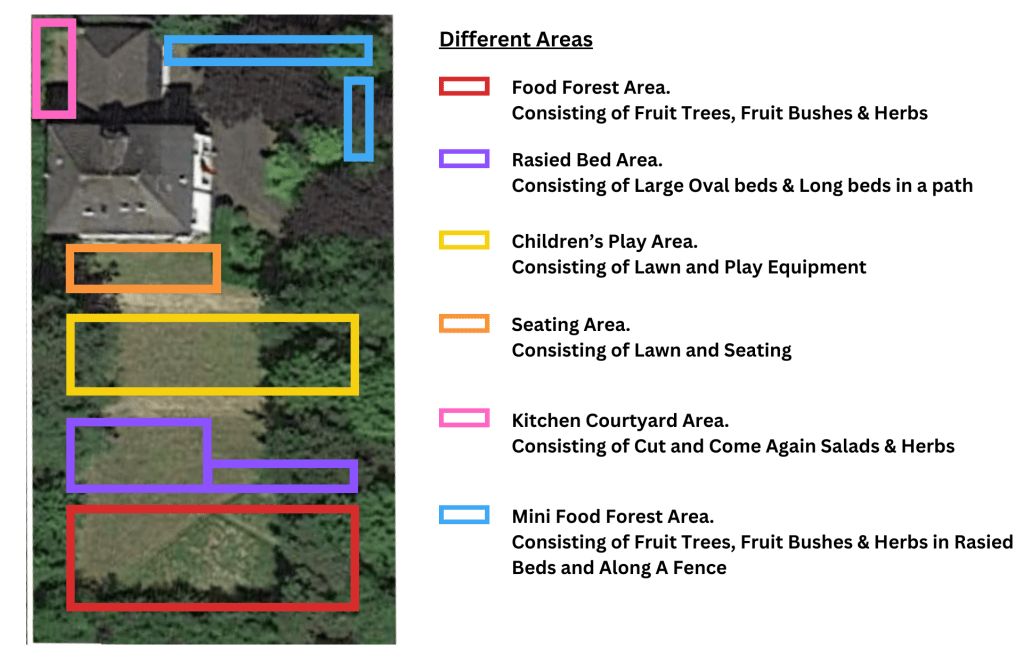
- Food Forest Area
This is the largest section of our garden, it is all sloped and not levelled like the upper 2 section so this lent itself to being transformed into our garden areas. This started out a fully grassed. We added our fruit trees in first slowly over the first 3years as budget allowed us to. Fruit bushes were added under them, followed by herbs and ground covers. There is a lot of space to still fill but we are filling that with propagated plants over the years to keep the costs down.
This is a long term project that will take time to grow and fill out, but we are adding to it each year and still getting harvests from the berries. last year was our first year getting some apples from the trees.
Take a look at some of the starting blogs for more details of how we got started and what we have added A Little About Us and Where The Food Forest Has Started From – 2022 Update and Food Forest Area- New Fruit Trees Planted For 2023
Food Forest Progress Up to 2022 Video Reel
2. Raised Bed Area
This is the area we mostly grow our annual veg in, we have now got some perennials, asparagus, Jerusalem artichoke and oca that is in this area, but mostly this is for all annual veg like squashes and sweetcorns
In our raised bed path, that’s the shorter L-shaped raised beds. We have it full of berries and herbs. We aim to grow red kidney beans up the back of the trellis. Trialled sweet peas and nasturtium on the trellis last year and they worked well
Take a look at some of the starting blogs for more details of how we got started and what we have added -No Waste Wednesday-What To Do With All The Little Bits Of Cardboard
Raised Bed Area Progress Up to 2022 Video Reel
3. Kitchen Courtyard
This area is right by our kitchen and we use it for growing our cut and come again, herbs and salads and leafy greens. This is planted up in every season from Winter leafy greens all the way through the summer to strawberries.
Take a look at some of the starting blogs for more details of how we got started and what we have added Building a Kitchen Courtyard Herb Garden in a Small Space in Scotland (Part 1) and How We Grow Food in a Vertical Garden Using Milk Cartons On A Fence – 2022 UPDATE
Kitchen Courtyard Area Up to 2022 Video Reel
No3 Obtain A Yield: Applied To Our Garden
PDC Permaculture Design Certificate
Peter received his Permaculture Design Certificate online in 2019 with Oregon State Uni. Certified by the Permaculture Institute of North America. Taught by: World Renowned Permaculturist Andrew Millison
Peter designed our garden using the Permaculture Design processes and the 12 Permaculture Principles.
Katrina completed Permaculture Design Certificate PDC PRO in 2024 to continue the process and pass all the knowledge onto Clayton and others.
Happy Gardening!


Katrina & Clayton and family live in East Ayrshire and share their daily life in the garden on instagram. They practice permaculture principles in the garden, reducing & repurposing waste whenever they can. Katrina shows how home educating in nature has helped Clayton thrive.
Clayton Completed The 2 Grow and Learn Courses with the Royal Caledonian Horticultural Society. He is Autistic, Non Verbal & has been Home Educated since 2018. Katrina & Peter hold their PDC & PDC PRO Permaculture Design Course from Oregon State University.
They featured on BBC Beechgrove Gardens Ep23 2022 and returned in 2023 for an update,Katrina & Clayton are also columnists for ScotlandGrows Magazine, Guest Blog for Caledonian Horticulture as well as working with Gardeners’ World Magazine and many other brands.
They are also Author of the new Children’s Book Series: Clayton’s Garden Journey: Stories of Autism and Gardening. Topics on Growing, Harvesting, Sowing & Composting and 108 Page Weather and Seasons Weekly Gardening Record Book available on Amazon and Kindle. Listen in on their Guest Podcasts to learn more about them.
Get Weekly Blogs Straight To Your Inbox
Our Children’s Book Series
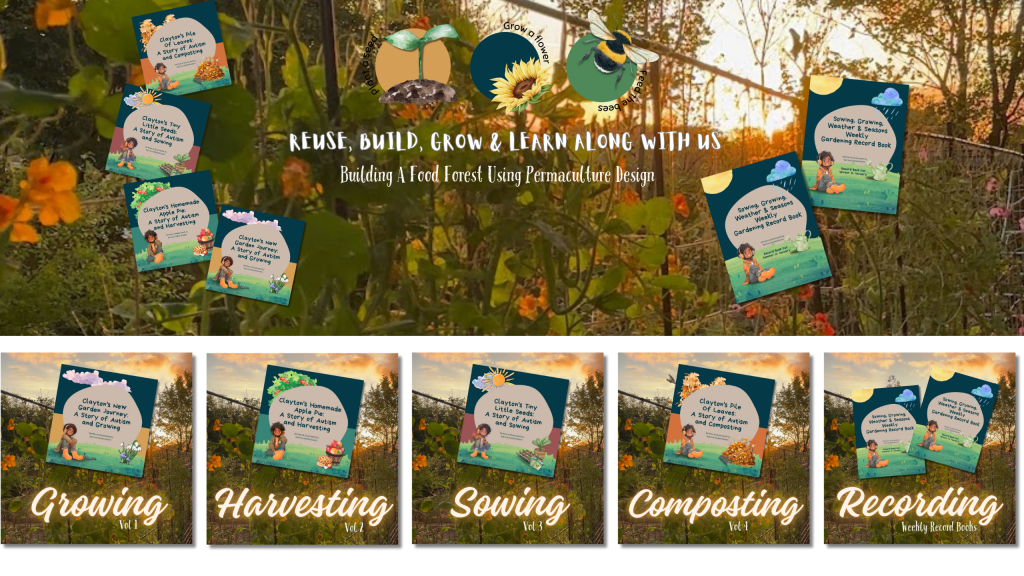
Author of the new children’s book series: Clayton’s Garden Journey: Stories of Autism and Gardening and Sowing, Growing, Weather and Seasons Weekly Gardening Record Book available on Amazon and Kindle
Visit Our Print On Demand Stores
REDBUBBLE STORE -WORLDWIDE
Over 175 Garden & Nature Designs. Coasters, Phone Covers, Bags, Mouse Mats & Much More

Discover more from Building a Food Forest -Scotland
Subscribe to get the latest posts sent to your email.
