

Permaculture, in simple terms, is a way of designing and creating systems – like gardens or farms working in harmony with nature.
The word “permaculture” itself comes from combining “permanent” and “agriculture” or “culture,” reflecting a focus on sustainability and long-term thinking.

Permaculture was co-founded by Bill Mollison and David Holmgren in Tasmania, Australia, in the 1970s. Both Mollison and Holmgren played significant roles in developing and popularising permaculture.
Bill Mollison, an Australian ecologist, researcher, and teacher, was a driving force behind the development of permaculture. He observed natural ecosystems and traditional agricultural practices, inspiring the creation of a holistic design system.
David Holmgren, also an Australian ecologist, collaborated with Bill Mollison in refining and expanding permaculture principles. Holmgren’s contributions have been crucial in shaping the design framework and principles of permaculture.

In a nutshell, permaculture is like learning from nature’s playbook to create sustainable, efficient, and harmonious systems that support both the environment and people.
It’s about being smart, observing, and working together with the Earth to create a better way of living.

There are 12 Permaculture Principles and we will be looking each each one every month over the year and how we use it in our garden
Permaculture Principle No. 5:
“Use And Value Renewable Resources And Services”
Permaculture Principle No. 5, as articulated by David Holmgren, one of the co-originators of permaculture, is “Apply self-regulation and accept feedback.” emphasises the importance of relying on resources that are regenerative and abundant, while also appreciating and utilising the services provided by natural ecosystems. Let’s explore this principle further, breaking it down into explanation, application, and expected outcome:
Using and valuing renewable resources and services means prioritizing resources that can be replenished over time and recognizing the benefits provided by ecosystems.
Renewable resources include sunlight, wind, water, biomass, and other natural elements that are continuously available or replenished naturally.
Valuing these resources involves understanding their inherent worth and incorporating them into designs and practices to meet human needs sustainably.
Additionally, it involves recognising and leveraging the services provided by ecosystems, such as pollination, soil fertility, and water purification, to enhance the resilience and productivity of human systems.
Resource Selection:
Energy: Prioritise renewable energy sources such as solar, wind, and hydropower over finite fossil fuels.
Materials: Choose materials that are renewable, recyclable, or biodegradable, such as sustainably harvested wood, bamboo, or recycled materials.
Water: Implement rainwater harvesting systems to capture and store rainfall for irrigation and household use, reducing reliance on finite groundwater sources.
Ecosystem Services:
Pollination: Encourage biodiversity and habitat creation to support pollinators like bees and butterflies, enhancing crop yields and ecosystem health.
Soil Fertility: Utilise cover cropping, composting, and agroforestry practices to improve soil health and fertility, reducing the need for synthetic fertilisers.
Water Management: Mimic natural water cycles through techniques like swales, contour planting, and constructed wetlands to manage water flow, recharge aquifers, and prevent erosion.
Design Integration:
Integrate renewable resources and ecosystem services into the design of homes, gardens, farms, and communities to create regenerative systems that meet human needs while enhancing ecological health and resilience.
Environmental Stewardship:
By prioritising renewable resources and ecosystem services, human systems become more aligned with natural processes, reducing pressure on finite resources and minimising environmental degradation.
Resilient Systems:
Utilising renewable resources and ecosystem services increases the resilience of human systems to external shocks and disturbances by diversifying resource inputs and enhancing ecosystem functions.
Sustainable Livelihoods:
Valuing renewable resources and ecosystem services can create opportunities for sustainable livelihoods based on activities such as renewable energy production, agroecological farming, and ecotourism, which contribute to local economies while preserving natural capital.
Regenerative Culture:
Embracing the use and value of renewable resources and services fosters a culture of respect and reciprocity with the Earth, promoting a deeper connection to and stewardship of the natural world.
By applying this principle, individuals, communities, and organisations can move towards more sustainable and regenerative practices that support both human well-being and ecological integrity. This aligns with the broader goals of permaculture to create harmonious and resilient human habitats that function in partnership with nature.
There are 12 permaculture Principles we will be looking at each one every month
When looking at implementing the design into our garden we looked at setting our sections up into different areas that suited, we have
- Food Forest Area
- Raised Bed Area
- Kitchen Courtyard
This is a shot of our home showing the surrounding area. We are on a hill, at the top of the hill and behind us the fields you see are an even steeper hill
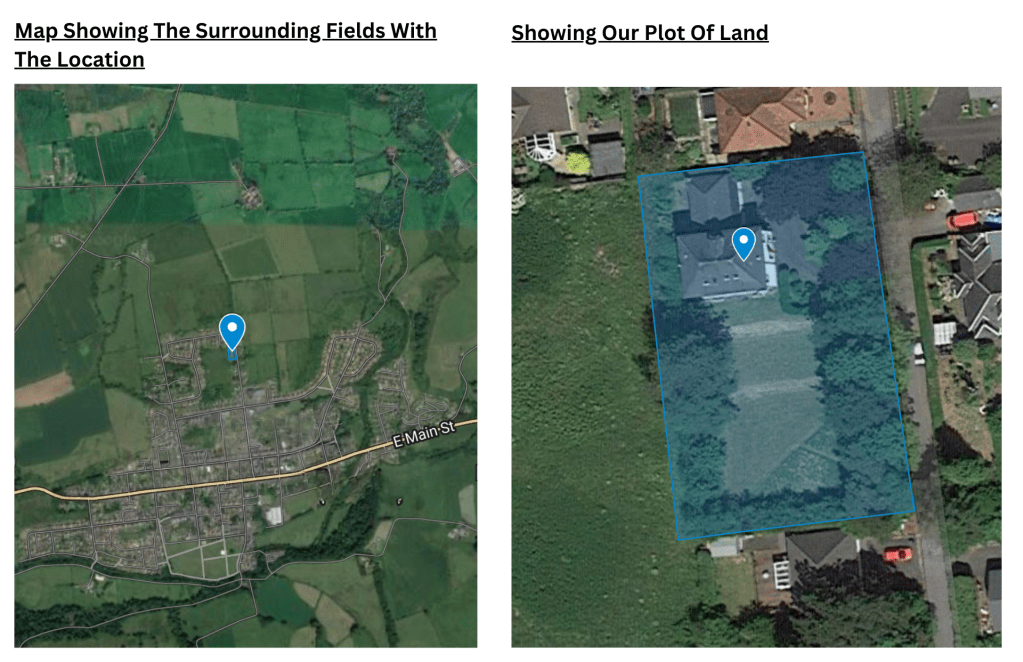
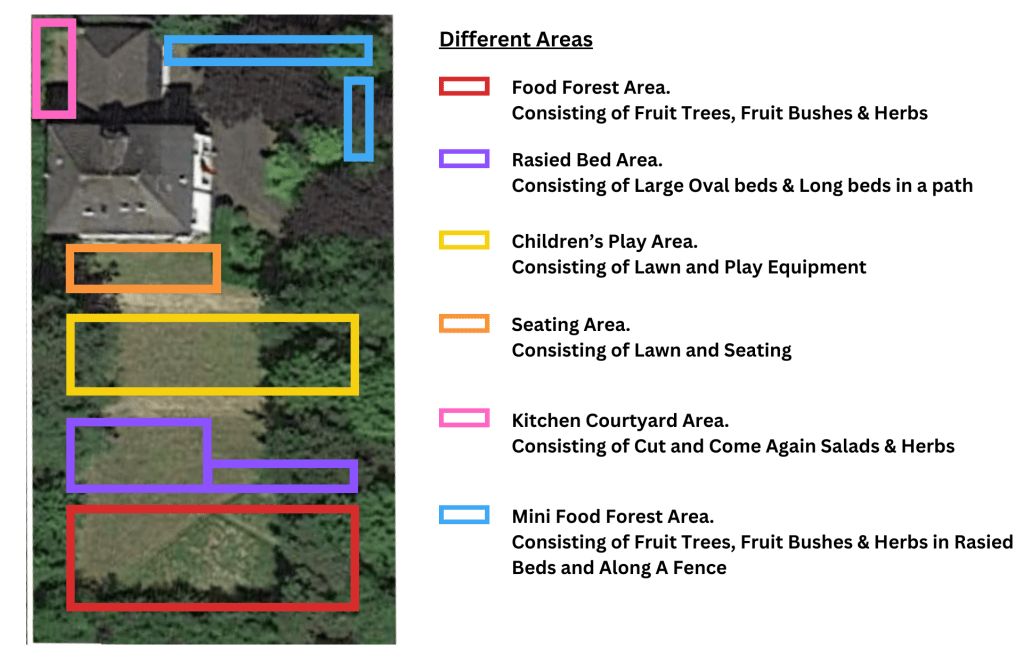
This is a long term project that will take time to grow and fill out, but we are adding to it each year and still getting harvests from the berries. Last year was our first year getting some apples from the trees. Observing and self regulating as we go along.
Take a look at some of the starting blogs for more details of how we got started and what we have added A Little About Us and Where The Food Forest Has Started From – 2022 Update and Food Forest Area- New Fruit Trees Planted For 2023
Leaf Mould- Soil Fertility Resources Video Reel
Using On Hand Resources To Make A Trellis You Tube
PDC Permaculture Design Certificate
Peter received his Permaculture Design Certificate online in 2019 with Oregon State Uni. Certified by the Permaculture Institute of North America. Taught by: World Renowned Permaculturist Andrew Millison
Peter designed our garden using the Permaculture Design processes and the 12 Permaculture Principles.
Katrina started her Permaculture Design Certificate PDC PRO in 2024 to continue the process and pass all the knowledge onto Clayton and others.

Katrina & Clayton and family live in East Ayrshire and share their daily life in the garden on instagram. They practice permaculture principles in the garden, reducing & repurposing waste whenever they can. Katrina shows how home educating in nature has helped Clayton thrive.
Clayton Completed The Grow and Learn Course with the Royal Caledonian Horticultural Society Last Year. This year he started the Level 2 Nurture Course. Clayton has just turned 16, Autistic, Non Verbal & has been Home Educated for the last 6yrs.
They featured on BBC Beechgrove Gardens Ep23 2022, and returned to the show for an update in 2023. Katrina & Clayton are also columnists for ScotlandGrows Magazine and Author of the new children’s book: Clayton’s New Garden Journey: A Story of Autism and Growing available on Amazon
Get Weekly Blogs Straight To Your Inbox

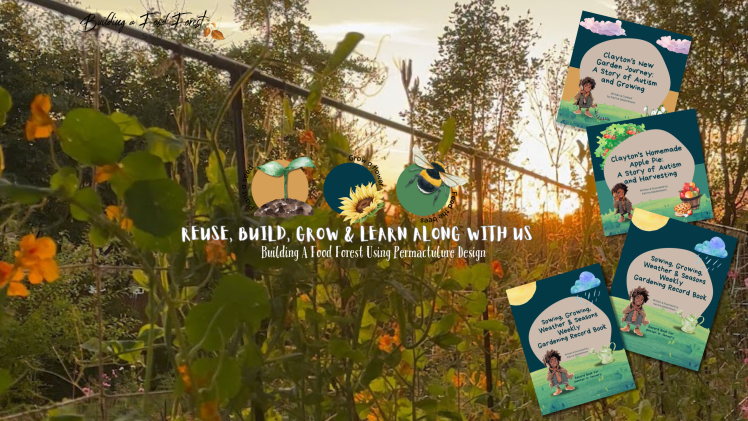
Author of the new children’s book series: Clayton’s Garden Journey: A Story of Autism and Gardening and Sowing, Growing, Weather and Seasons Weekly Gardening Record Book available on Amazon
Discover more from Building a Food Forest -Scotland
Subscribe to get the latest posts sent to your email.

One thought on “Permaculture Principle No. 5: “Use And Value Renewable Resources And Services””