

Get Weekly Blogs Straight To Your Inbox

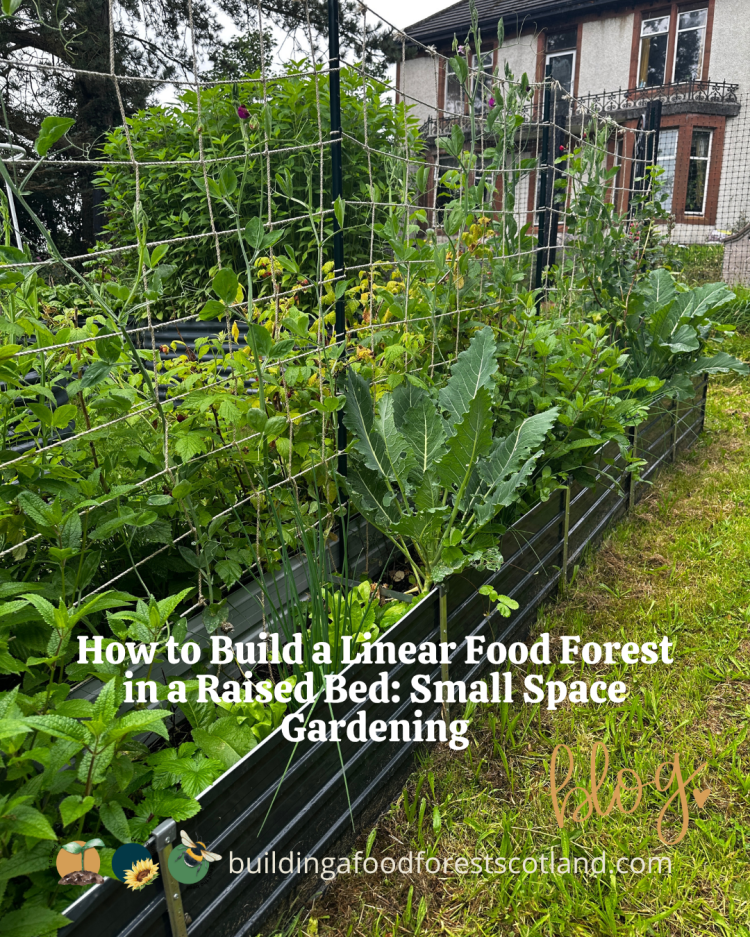
How to Build a Linear Food Forest in a Raised Bed: Small Space Gardening
In today’s world of shrinking green garden spaces, apartment balconies and community garden plots, space is at a premium, but that doesn’t mean your gardening goals have to be. Imagine transforming a small raised bed into a productive ecosystem that mimics the diversity and efficiency of a forest. Enter the linear food forest, a brilliant adaptation of the 7 layer permaculture food forest model, tailor made for smaller spaces with big ambitions.
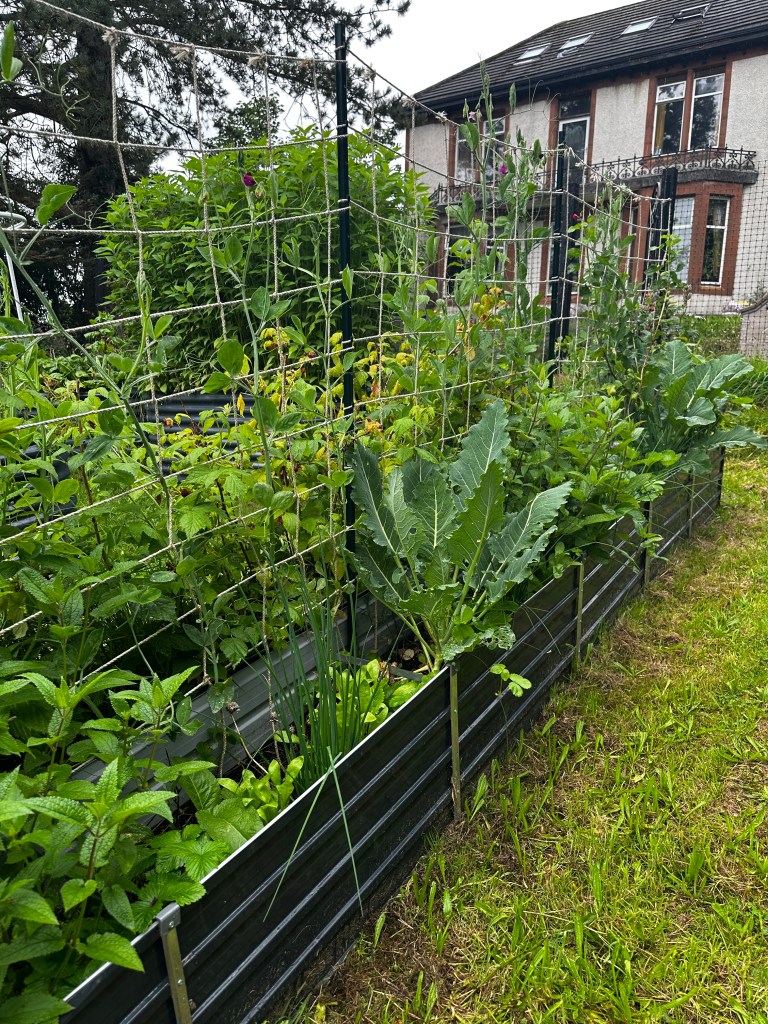
What Is a Food Forest, and Why Go Linear?
A food forest is a self sustaining garden system that mimics the structure of a natural forest but replaces wild plants with ones that feed us, fruits, nuts, vegetables, herbs, edible flowers and more. Based on permaculture design, it creates an ecosystem where every plant has a role: providing food, fixing nitrogen, creating shade, suppressing weeds, or attracting pollinators.
But what if you don’t have the space for a sprawling food forest?
A linear food forest takes the same principles and compresses them into a straight, narrow line, such as a raised bed like we have or a garden strip. By layering vertically and using smart spacing, you can pack surprising productivity into a space as small as 2×8 feet.
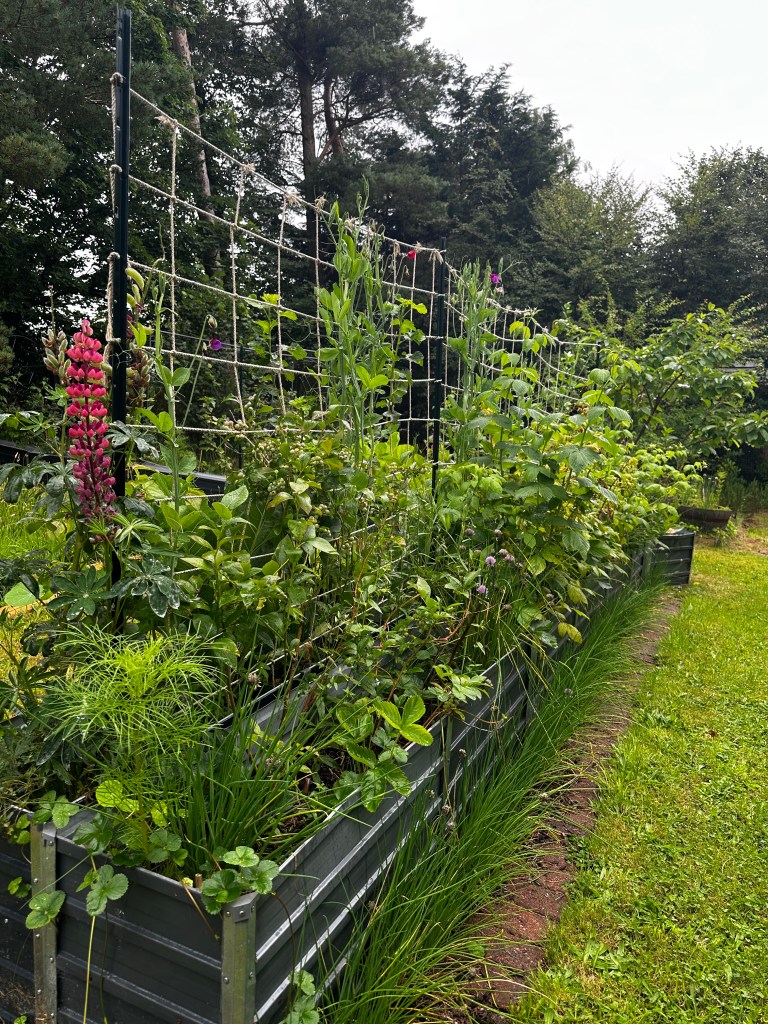
Permaculture’s 7 Layers of a Food Forest
7 layers of a food forest, take a look at Building a Mini Food Forest in a Raised Bed blog where we build this style in our front garden along a hedge.
- Canopy Layer – Tall fruit or nut trees.
- Sub-Canopy (Dwarf Tree) Layer – Smaller trees or large shrubs.
- Shrub Layer – Berry bushes and smaller fruit shrubs.
- Herbaceous Layer – Culinary and medicinal herbs, leafy greens.
- Groundcover Layer – Plants that sprawl and cover soil.
- Rhizosphere (Root) Layer – Root crops and soil-enriching plants.
- Vertical Layer – Vines and climbers using vertical space.
In a linear raised bed, we scale these layers down but still include them. The trick lies in designing vertically, interplanting wisely, and choosing plants that work together. Take a look at our blog on: Understanding Plant Guilds in Permaculture Food Forest Gardening
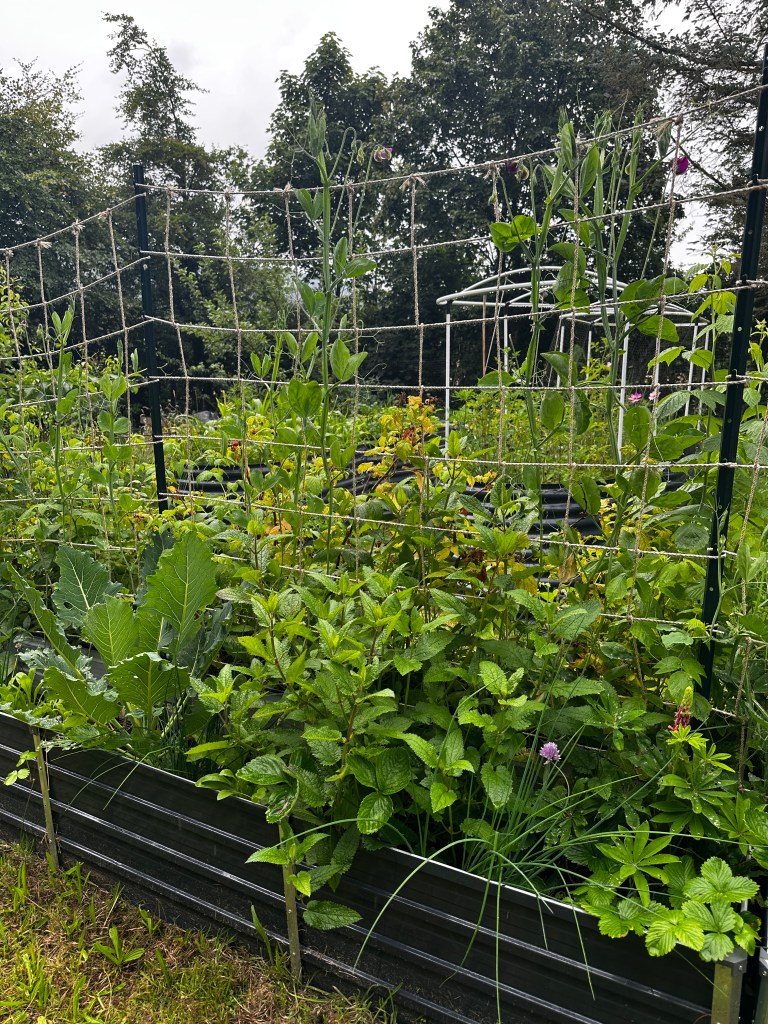
Step-by-Step Guide to Building a Linear Food Forest in a Raised Bed
1. Choose Your Raised Bed Site
Pick a spot with full sun to partial shade, access to water, and protection from strong winds. Raised beds typically range from 2–4 feet wide. A length of 6–12 feet works well for a linear design. We use metal beds as they are quick and easy and cost effective to put up and you can also add more at a later date to extended them.
As Scotland is so wet using raised beds is a better option to allow faster drainage rather than planting straight into the ground for us and reduces any weeding or grass growing in between plants, if you have a great area in mind then plant directly in the ground.
2. Prepare the Soil
Layer your raised bed using a lasagna style method for rich, fertile soil:
Bottom: Cardboard or newspaper to suppress weeds
Middle: Compost, rotted manure, or worm castings
Top: Organic soil with mulch (like straw or wood chips)
Mix in biochar, rock dust, or mycorrhizal fungi to supercharge microbial life and improve long term fertility.
3. Map Out the 7 Layers
Now comes the creative part. Think vertically and sequentially. Here’s how to integrate the 7 layers in your linear space, some areas we have included the fruit trees and some we haven’t and started from the Shrub layer.
Canopy Layer (Miniature Fruit Trees)
Opt for dwarf or columnar fruit trees like: Dwarf apple or plum
Place these at intervals (e.g. every 4ft) along the length of the bed.
Sub-Canopy Layer
Under or beside the trees, add smaller trees or large shrubs like: Goji berry
They provide dappled shade and produce earlier than larger trees.
Shrub Layer
Fill gaps with high yielding berry bushes like: Blueberries or Currants.
Choose varieties suited to your climate and soil type.
Herbaceous Layer
Around the base of trees and shrubs, tuck in herbs and vegetables like : Chives, Basil, oregano, thyme, Comfrey (dynamic accumulator), Kale or perennial greens (like tree collards)
These attract beneficial insects and deter pests.
Ground cover Layer
These plants spread horizontally to cover and protect the soil like: Strawberries, Creeping thyme. Check our Video on Why We Use Strawberries As Ground Cover In Our Food Forest
They suppress weeds, conserve moisture, and add yields.
Rhizosphere Layer
Root crops help break up soil and provide food below the surface like: Garlic, onions, Daikon radish (great for compacted soil)
Use gaps between perennials to plant these each season.
Vertical Layer
Vines climb structures or neighbouring plants like: Beans up a trellis or tree stake, Passionfruit on a fence wire or Sweet peas along the back
This layer maximises vertical productivity without shading everything else.

4. Companion Planting for Symbiosis
In permaculture, relationships matter. Use plants that support each other, such as:
Nitrogen fixers (e.g. clover, peas, lupins) near heavy feeders
Pest deterrents (e.g. marigold, chives) around vulnerable crops
Pollinator magnets (e.g. borage, calendula) throughout
Think of your raised bed as a living web of connections, not rows of separate plants. Take a look at our blog on: Understanding Plant Guilds in Permaculture Food Forest Gardening
5. Watering, Mulching, and Maintenance
A well designed food forest is low maintenance, but not no maintenance:
Water deeply and less often to encourage deep roots.
Add thick mulch every season to suppress weeds and retain moisture.
Prune shrubs and trees lightly to maintain air flow and sunlight.
Top dress with compost annually for nutrient cycling.
The system becomes more resilient and self sustaining over time. Look at our blog on Mulch in Gardening: What It Is, Why It’s Used and How to Choose the Right Type
6. Harvesting and Succession Planting
With careful planning, your linear food forest can produce year round yields:
Early spring: herbs, greens, strawberries
Summer: berries, tomatoes, beans, edible flowers
Autumn: apples, squash, root veggies
Winter: kale, garlic shoots, winter salad leaves
As perennials mature, interplant with seasonal annuals to maximise space until the canopy fills out. Take a look at some of our berries that we grow Food Forest Gardening: How to Grow and Harvest Raspberries, Strawberries, Blueberries & More
7. Observing and Adapting
The beauty of permaculture is that it’s dynamic. Observe how your mini food forest behaves across seasons. Watch which plants thrive, which struggle, and where sunlight or water pools. Then adjust…..
Add more trellises.
Swap out struggling plants.
Create microclimates with shade or rocks.
Nature will guide your design forward.

Start Small. Plant Densely. Harvest Generously.
A linear food forest in a raised bed proves that you don’t need acres to grow abundance. With just a few feet, smart layering and permaculture structure, you can create a biodiverse, low maintenance, high yield garden area that nourishes both you and the earth.
Whether you’re on a balcony, in a backyard, or working with a single raised bed in a community plot, this approach invites you to think like nature, creatively, cooperatively and abundantly.
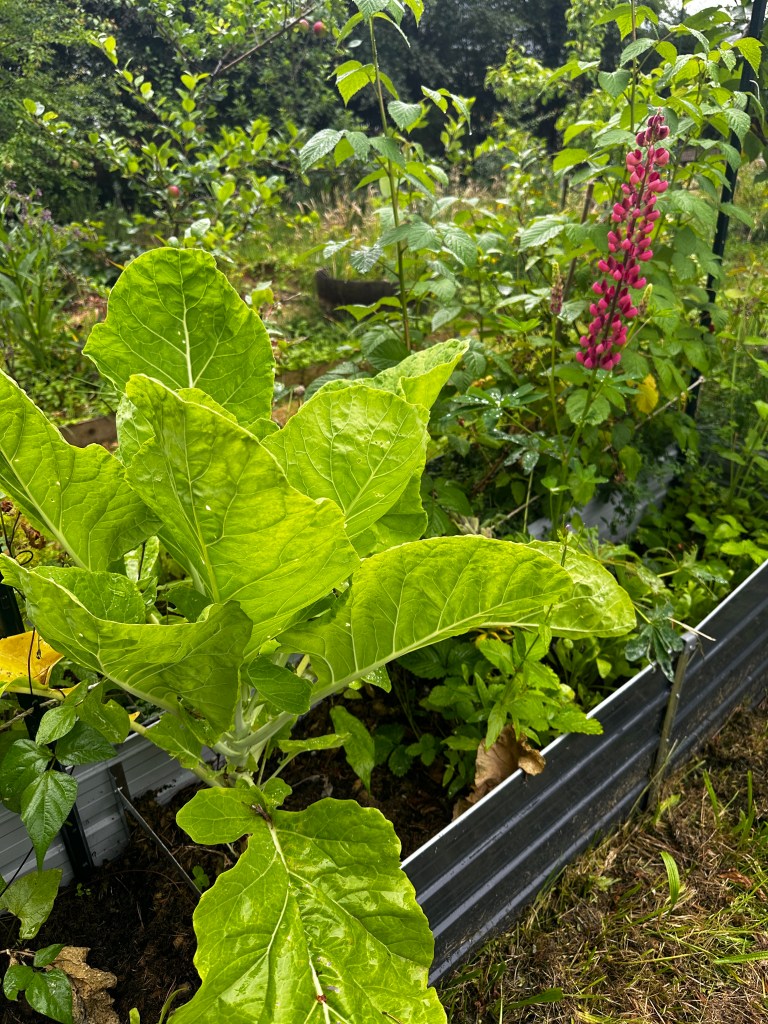
Our Latest Linear Food Forest Video Reel
In this new raised bed path we have planted:
🌿Shrub – Jostaberries, Pheasant Berries
🌿Herbaceous – Chives
🌿Ground Cover – Strawberries
🌿Root & Veg -Chinese Artichoke, 9 Star Perennial Broccoli & Tree Cabbage
🌿Climbers -Sweet Peas & Beans
🪻Lupins are added as a nitrogen fixer and for pollinators
🌼Calendula are added for pest control due to the smell keeps pests away
Happy Gardening!


Katrina & Clayton and family live in East Ayrshire and share their daily life in the garden on instagram. They practice permaculture principles in the garden, reducing & repurposing waste whenever they can. Katrina shows how home educating in nature has helped Clayton thrive.
Clayton Completed The 2 Grow and Learn Courses with the Royal Caledonian Horticultural Society. He is Autistic, Non Verbal & has been Home Educated since 2018. Katrina & Peter hold their PDC & PDC PRO Permaculture Design Course from Oregon State University.
They featured on BBC Beechgrove Gardens Ep23 2022 and returned in 2023 for an update, Katrina & Clayton are also columnists for ScotlandGrows Magazine, Guest Blog for Caledonian Horticulture as well as working with Gardeners’ World Magazine and many other brands.
They are also Author of the new Children’s Book Series: Clayton’s Garden Journey: Stories of Autism and Gardening. Topics on Growing, Harvesting, Sowing & Composting and 108 Page Weather and Seasons Weekly Gardening Record Book available on Amazon and Kindle. Listen in on their Guest Podcasts to learn more about them.

Get Weekly Blogs Straight To Your Inbox
Our Children’s Book Series
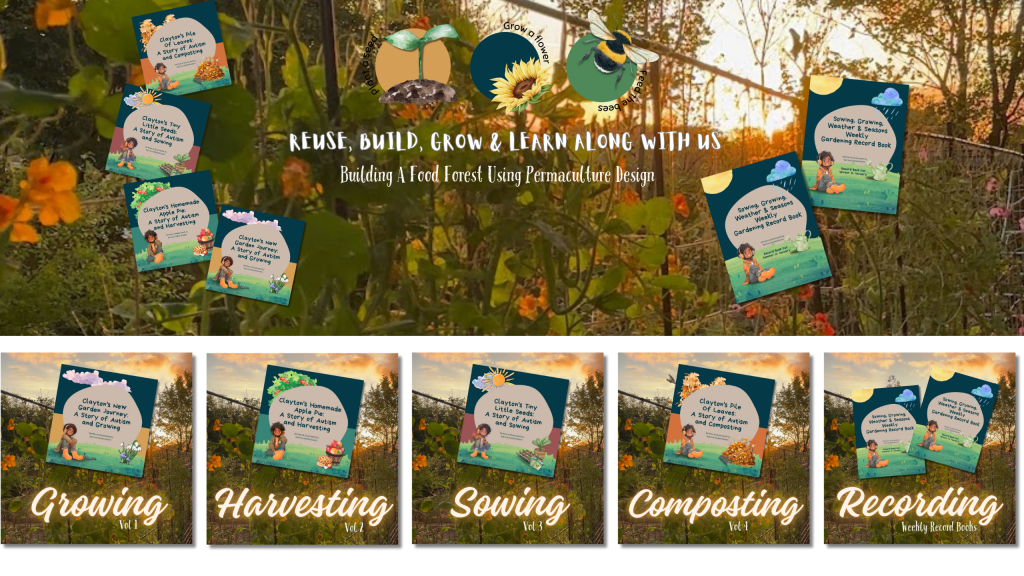
Author of the new children’s book series: Clayton’s Garden Journey: Stories of Autism and Gardening and Sowing, Growing, Weather and Seasons Weekly Gardening Record Book available on Amazon and Kindle
Visit Our Print On Demand Stores
REDBUBBLE STORE -WORLDWIDE
Over 175 Garden & Nature Designs. Coasters, Phone Covers, Bags, Mouse Mats & Much More

Discover more from Building a Food Forest -Scotland
Subscribe to get the latest posts sent to your email.

2 thoughts on “How to Build a Linear Food Forest in a Raised Bed: Small Space Gardening ”