

Get Weekly Blogs Straight To Your Inbox

November: Month By Month In Our Scottish Gardens
The Food Forest, The Raised Bed Garden & The Kitchen Courtyard
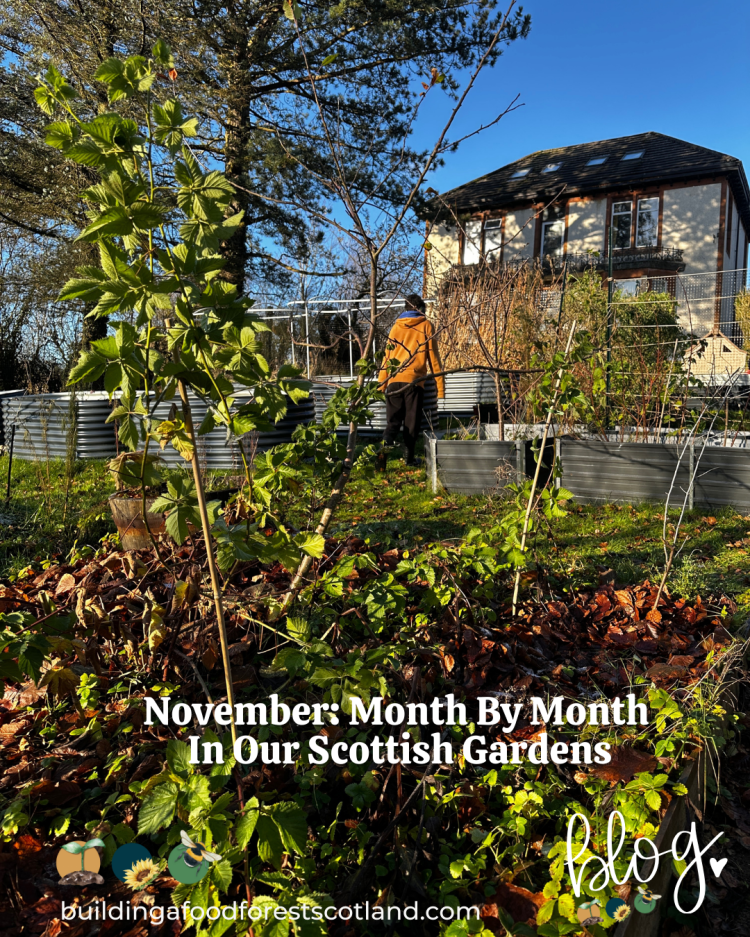
November arrives with a sense of deepening stillness. The winds feel sharper, the daylight slips away earlier each afternoon, and the garden shifts from gentle Autumn decline into true Winter rest. The colours fade to soft browns and greys, the soil cools and frost begins to trace the edges of leaves in the early mornings. Yet even in this quieter month, the garden continues to offer small tasks and small pleasures—final harvests, last preparations, and the quiet satisfaction of knowing the year’s work is nearly complete. Make sure you are protecting your plants from the frosts and the colder winds: Blog Post- How to Protect Plants from Frost and Freezing Temperatures in the UK
The Season’s Mood
November carries a reflective stillness. The garden no longer asks much of us; instead, it invites us to pause. The big tasks are behind us, the harvests are stored and what remains is simply the work of watching the landscape rest. There’s beauty even now, in the hush of fallen leaves, the architecture of bare branches, and the quiet breathing of the soil beneath its Winter blanket.
As the world outside slows, we follow its pace. We tuck seeds away for Spring, tend the small green life on our windowsills, and take comfort in knowing the garden is doing exactly what it should, resting, renewing, and preparing for another year of growth.
Our November Garden
The Food Forest
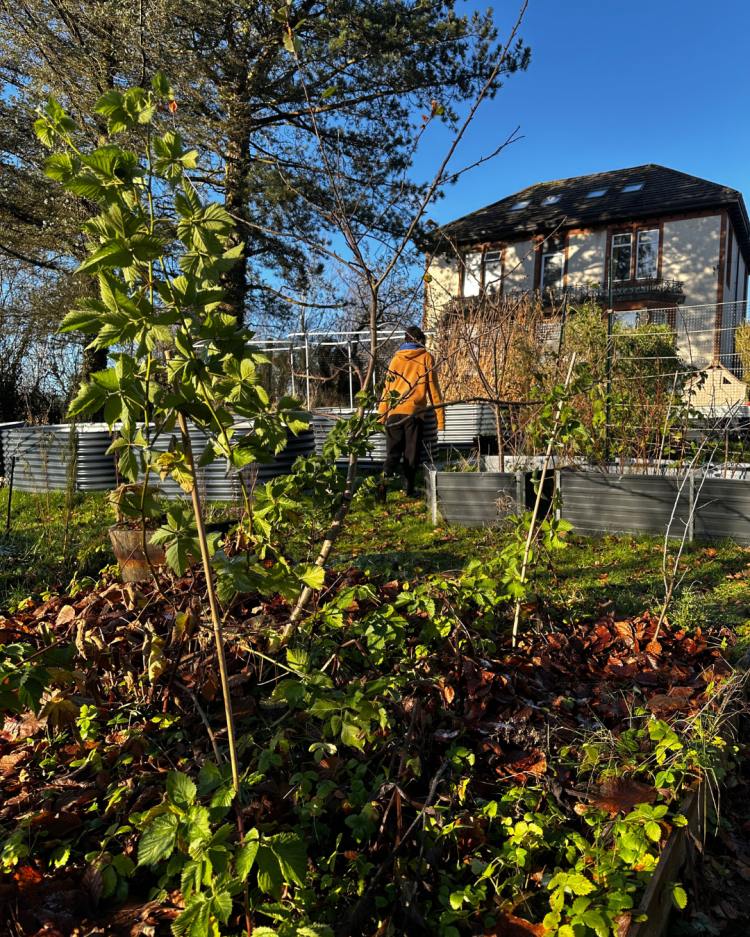
In the food forest, November marks the true end of harvest. We gathered the last of the apples, those final late ripening fruits that hung on through October’s winds as well as the very last handfuls of Autumn raspberries. Once the fruit was in, our attention turned fully to preparing the system for Winter.
This month, we planted four young yarrow plants at the base of each fruit tree, all grown from seed earlier in the year, that’s over 60 plants to help the fruit trees flourish next year. As yarrow is valued as a “dynamic accumulator” plant, enriching the soil and mining for nutrients their deep roots and pollinator friendly flowers will strengthen the guild next season. We also tucked in horseradish crowns and planted wild garlic bulbs across the shadier patches, imagining carpets of Spring growth in a few months’ time.
Finally, a thick layer of fallen leaves was added as mulch across the food forest floor. In November’s cool, damp air, it feels like putting a warm blanket over the soil, protecting the roots, feeding the worms, and allowing the whole system to settle quietly into Winter.


The Raised Beds
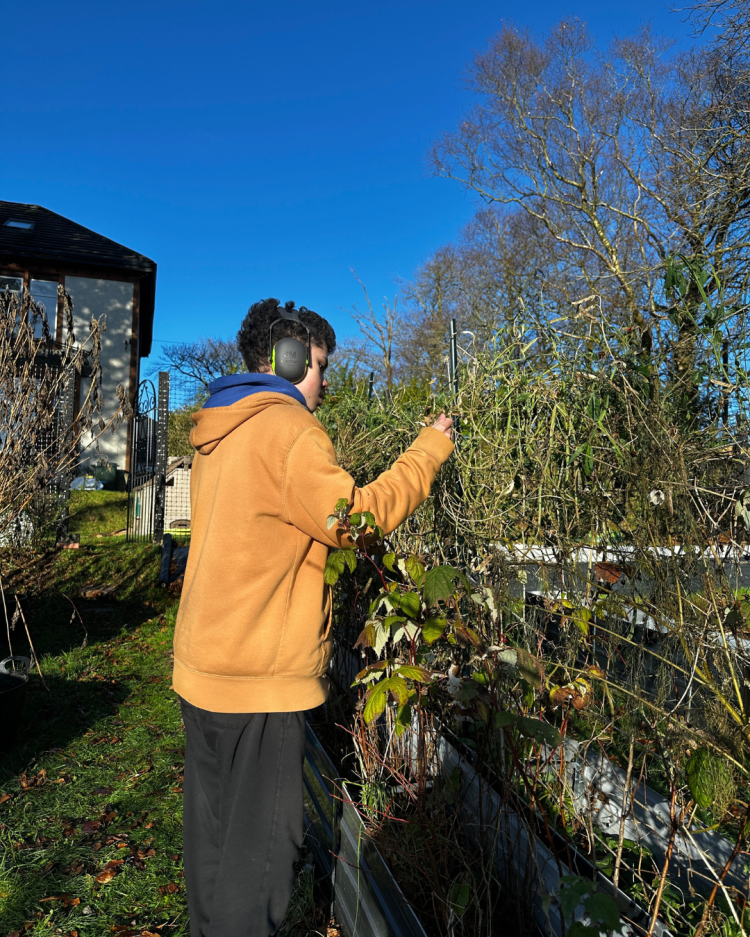
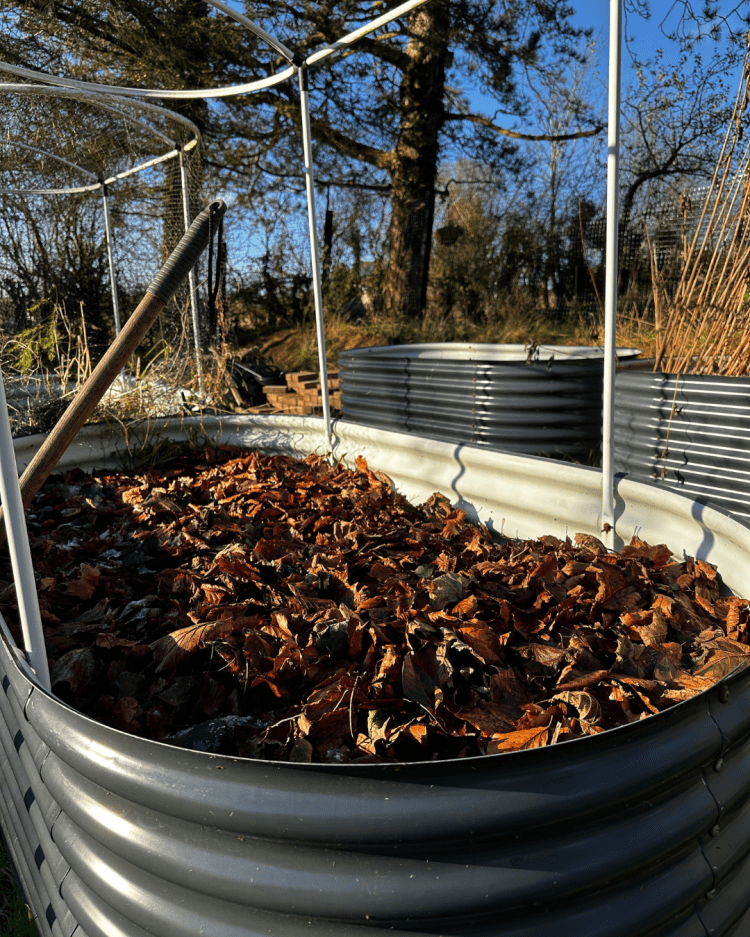
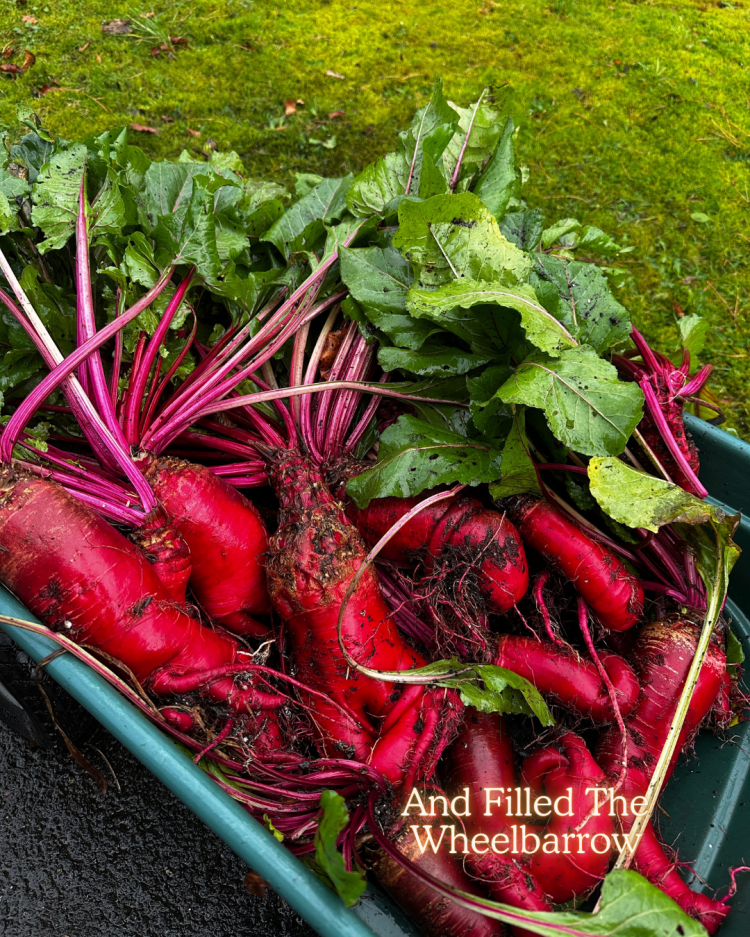
The raised beds now look calm and tidy, their work for the season nearly done. We harvested the last of the mangelwurzels earlier in the month, lifting the great, hefty roots from the soil and storing them away. If you’ve not heard of these before take a look at blog post: Mangelwurzel: The Underrated Giant Beet Worth Growing In The UK With the beds cleared, we laid down sheets of cardboard and covered them with generous layers of collected leaves. This slow mulch will break down over Winter, enriching the soil and suppressing weeds until Spring.
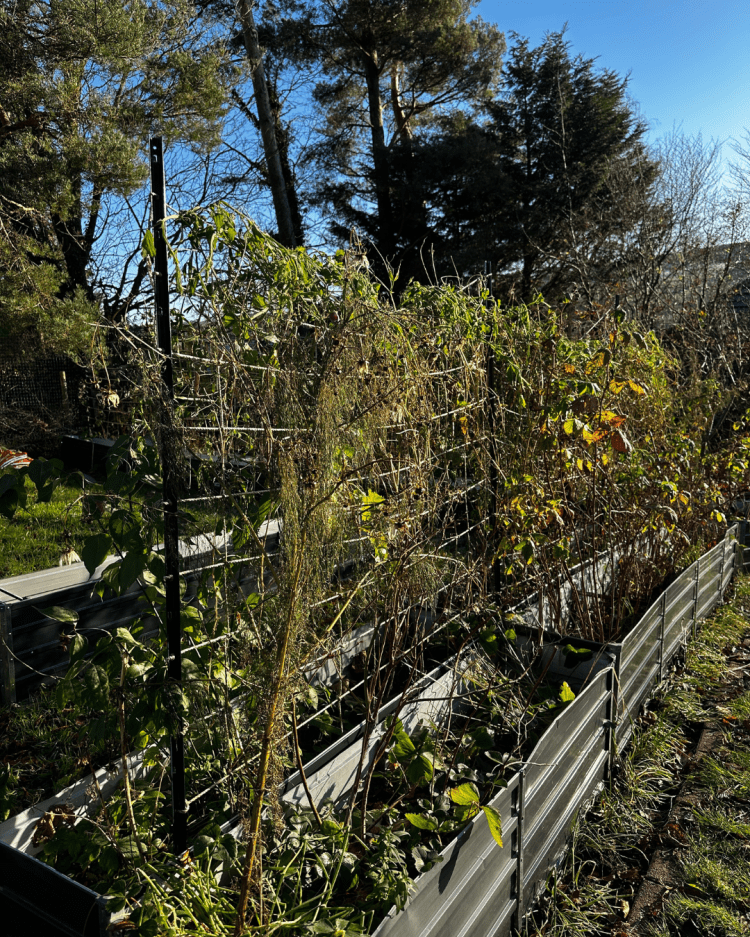
Seed saving is always one of our final jobs before Winter truly sets in. We collected the last of the chive seeds, sweet pea pods, lupin seeds and the last small crop of raspberries that lingered on the canes. These saved seeds feel like tiny promises of next year’s colour and abundance. Before the frosts deepened, we also planted out more chive seedlings we’d grown from seed in pots hardy enough to settle in now and leap back to life in Spring.
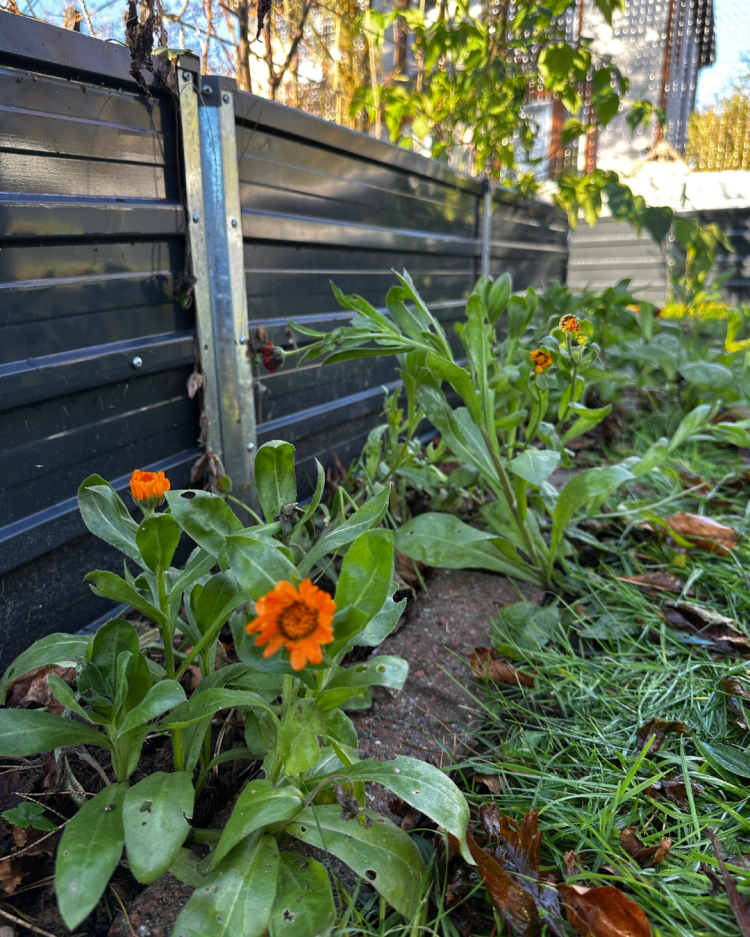
By late November, the raised beds are resting, quietly composting beneath their leafy cover.
The Kitchen Courtyard & Indoors
With the outdoor spaces settling into dormancy, our attention turns naturally closer to the house. The kitchen courtyard still offers small gatherings of herbs, rosemary, thyme, mint and Winter hardy chives standing strong, though their growth has slowed to a crawl. Pots are pushed into sheltered corners and anything tender is brought indoors or under cover.
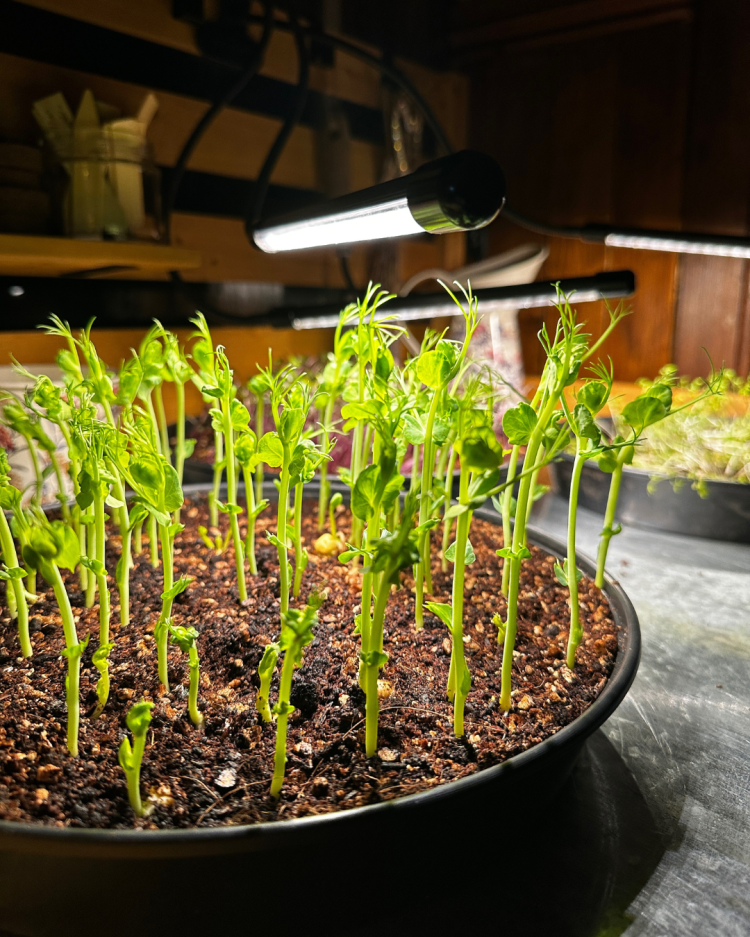
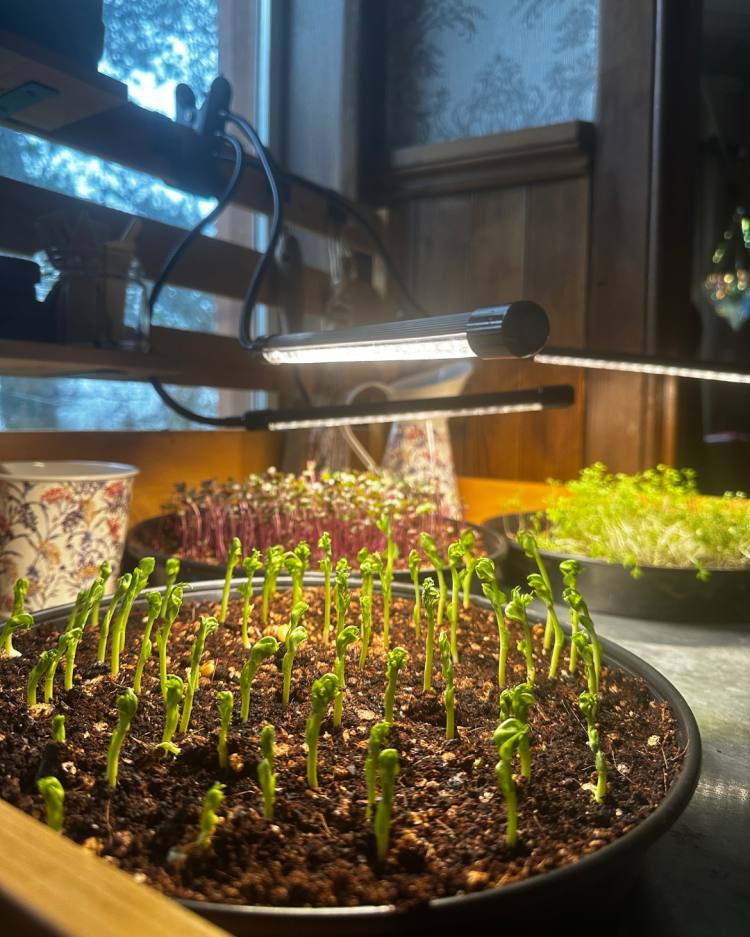
Indoors, the season feels very different: it is bright, green and alive. Trays of microgreens line the windowsills, catching what little November light the days still offer & growlights on a few hours at night to give them a daily boost. Rocket, mustard, pea shoots and coriander grow with a freshness that contrasts beautifully with the bare garden outside. They bring colour to the kitchen & dinning room (best window for light in the house!) and offer easy little harvests when outdoor picking is almost done. See how we grow our microgreens in this blog post: Growing Microgreens: Fresh Food From Your Windowsill Over Winter
This shift toward indoor growing feels right for November—gentle, contained, and comforting.

Collecting The Sweet Pea Seed Pods Video Reel
Microgreens Going in for Winter Video Reel
Planting Yarrow & Mulching Food Forest Video Reel
The Season’s Mood
November carries a quieter, more introspective mood in the Scottish garden. The light is lower and softer now, mornings edged with mist and the scent of damp earth. Each day feels shorter, the air cooler, the colours deeper, burnished golds and russets replacing the bright greens of Summer.
Work in the garden slows to a gentler rhythm: clearing beds, spreading mulch, collecting leaves and gathering the last lingering fruits. There’s less urgency now, more reflection, as we begin to accept the garden’s natural pause. The energy that once pushed upwards and outwards turns inward, both in the soil and in ourselves.
November reminds us that rest is part of the cycle, that letting go is as necessary as growing, and that even in stillness, the garden continues its quiet work of renewal beneath the surface.
Happy Gardening!


Follow Us Across Our Socials
Katrina & Clayton and family live in East Ayrshire and share their daily life in the garden on instagram. They practice permaculture principles in the garden, reducing & repurposing waste whenever they can. Katrina shows how home educating in nature has helped Clayton thrive.
Clayton Completed The 2 Grow and Learn Courses with the Royal Caledonian Horticultural Society. He is Autistic, Non Verbal & has been Home Educated since 2018. Katrina & Peter hold their PDC & PDC PRO Permaculture Design Course from Oregon State University.
They featured on BBC Beechgrove Gardens Ep23 2022 and returned in 2023 for an update, Katrina & Clayton are also columnists for ScotlandGrows Magazine, Guest Blog for Caledonian Horticulture as well as working with Gardeners’ World Magazine and many other brands.
They are also Author of the new Children’s Book Series: Clayton’s Garden Journey: Stories of Autism and Gardening. Topics on Growing, Harvesting, Sowing & Composting and 108 Page Weather and Seasons Weekly Gardening Record Book available on Amazon and Kindle.
Listen in on their Guest Podcasts to learn more about them.

Get Weekly Blogs Straight To Your Inbox

Our Children’s Book Series
Author of the new children’s book series: Clayton’s Garden Journey: Stories of Autism and Gardening and Sowing, Growing, Weather and Seasons Weekly Gardening Record Book available on Amazon and Kindle

Visit Our Print On Demand Stores
Redbubble Store – Worldwide! 200+ garden & nature-inspired designs on coasters, phone covers, tote bags, mouse mats and so much more. Perfect for plant lovers, gardeners and anyone who wants to bring a touch of the outdoors into everyday life

Discover more from Building a Food Forest -Scotland
Subscribe to get the latest posts sent to your email.
