

Get Weekly Blogs Straight To Your Inbox

Understanding Plant Guilds in Permaculture Food Forest Gardening
Building A Guild
We spent a lot of time designing this area based on Permaculture Design, making sure they were in the best position of the sun, wind and rain. We built most of the plants into a guild.
In permaculture design this involves creating a community of plants and organisms that work together to support each other, enhancing the overall productivity and health of the ecosystem. This concept is inspired by natural ecosystems, where diverse species interact to create a balanced and resilient environment. The primary goal of a guild is to mimic natural systems, where each component has a role in supporting the others, reducing the need for external inputs like fertilisers and pesticides.


Image from our garden guild design as used in my Permaculture Design Course (PDC Pro)
Key Components of a Guild
Primary Crop

Apple Tree. Cherry Tree. Black Currants In Our Food Forest
PRIMARY CROP:
This is usually a fruit or nut tree that forms the central element of the guild. It provides the main yield and often the most significant structure for the guild. Check our blog on our berries we grow
IN OUR FOOD FOREST AREA:
We have Apple, Cherry, Plum, Pear, Hazelnut Trees and Raspberries, Blackberries, Honey berries, Black currants, Red Currants Bushes/Shrubs.
Nitrogen Fixers

Our Lupins Grown From Seed Ready To Go Into Our Food Forest
NITROGEN FIXERS:
Plants like legumes, clover or lupins that enhance soil fertility by fixing atmospheric nitrogen into the soil.
IN OUR FOOD FOREST AREA:
We have crimson clover.
Dynamic Accumulators

Heal All. Comfrey. Crimson Clover In Our Food Forest
DYNAMIC ACCUMULATORS:
Plants like comfrey and dandelion, which draw nutrients from deep in the soil and make them available to other plants.
IN OUR FOOD FOREST AREA:
We have both comfrey and dandelions, also clovers, self heal and we are growing lemon balm and mint this year down there too
Companion and Support Species
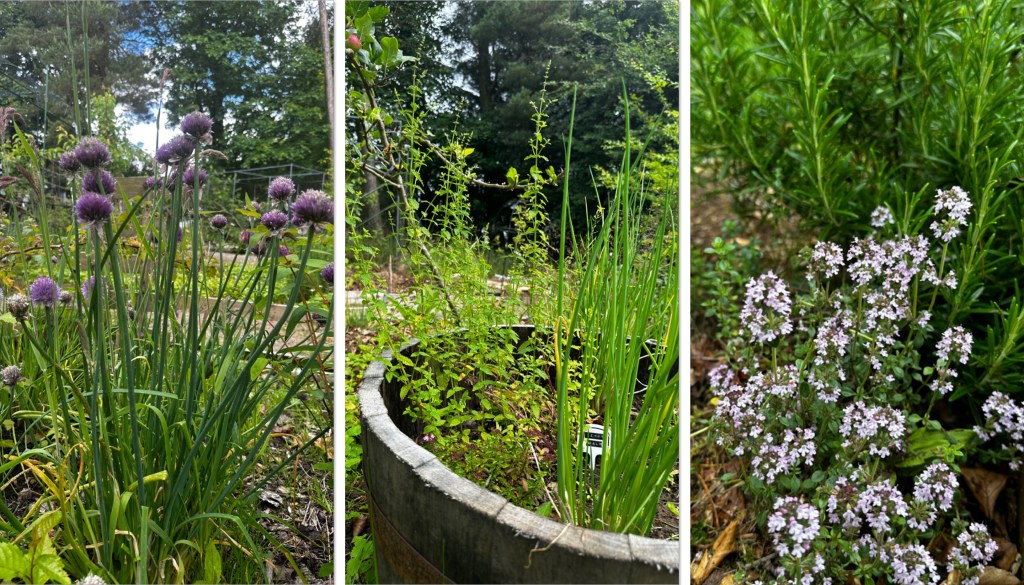
Chives. Lemon Balm. Rosemary & Oregano In Our Food Forest
COMPANIONS AND SUPPORT SPECIES:
These include a variety of herbs, flowers, and other plants that attract beneficial insects, repel pests, and provide additional yields. Check out our blog on Companion Planting.
IN OUR FOOD FOREST AREA:
We have rosemary, oregano, chives, lemon balm, mint, nasturtium.
Mulch Plants and Ground Cover
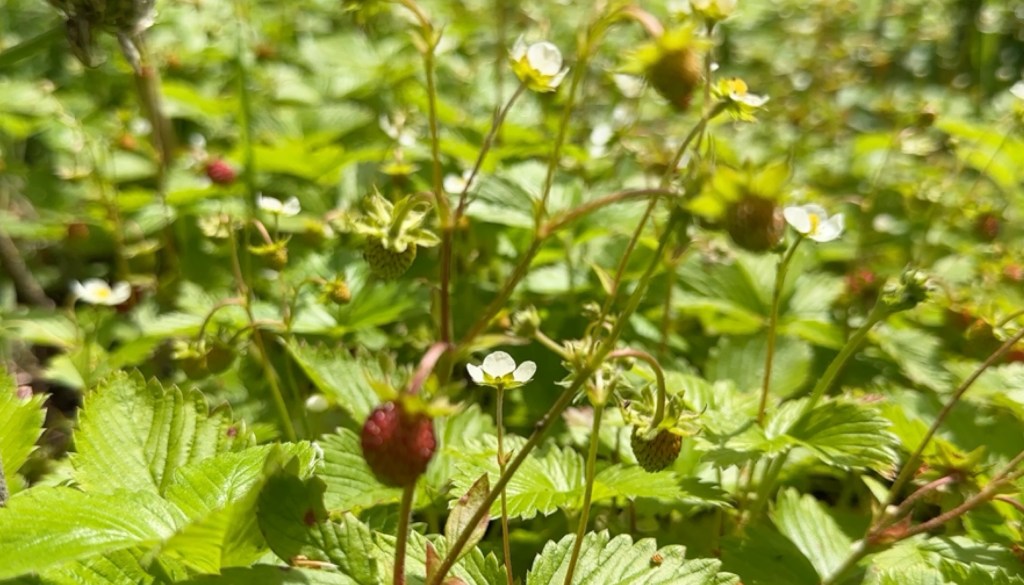
Wild Strawberries. In Our Food Forest
MULCH PLANTS AND GROUND COVERS:
Species that spread across the soil surface, protecting it from erosion, suppressing weeds, and retaining moisture. Strawberries are a good example of this you can read our blog on Strawberries as Ground Cover
IN OUR FOOD FOREST AREA:
We have strawberries as our ground cover
Vines and Climbers

Borlotti Beans. Sweet Peas. Nasturtium
These are our Climbers we will add into the food forest next year.
CLIMBERS AND VINES:
Plants that grow vertically, utilising the space efficiently without competing directly with the primary crop. Beans and peas are common climbers in a guild.
IN OUR FOOD FOREST AREA:
We don’t have any climbers this year, we will be looking to add them in for next year to complete this area. At the moment we have them all added into our raised bed path. We will grow extra to add into the food forest area for next year.


Cross section from our garden guild design as used in my Permaculture Design Course (PDC Pro)
Benefits of Guilds
- Enhanced Productivity: The diverse species in a guild support each other, leading to higher yields and more resilient systems.
- Improved Soil Health: Nitrogen fixers and dynamic accumulators enhance soil fertility and structure, reducing the need for synthetic fertilisers.
- Pest and Disease Management: Companion plants attract beneficial insects and repel pests, while increased biodiversity reduces the risk of disease outbreaks.
- Resource Efficiency: Guilds make efficient use of space, light, and nutrients, mimicking natural ecosystems and reducing waste.
- Ecological Balance: By working with nature, guilds promote biodiversity and ecosystem health, contributing to a sustainable and regenerative landscape.
Adding Nitrogen Fixers and Climbers
We are missing the 2 areas:
Nitrogen Fixers: We will be adding the 30+ lupins we’ve grown from seed into the area this Autumn.
Climbers and Vines: We will also be setting up a system, maybe teepees or just allow them to grow up the trees, to have more nitrogen fixers that are also climbers into the food forest areas too for next year.
A much needed addition to the guilds and the food forest to help give the soil and roots the nitrogens they need without adding fertilisers this will build a more advanced and diverse root and soil system
Adding in a set of nitrogen fixers into each guild will build a more advanced and diverse root and soil system, it will be extra yearly work to grow, plant and monitor the peas and beans but will give the site added nitrogen and more plant matter to chop and drop onto the food forest floor for the winter months to store the nutrients and energy into the soil.

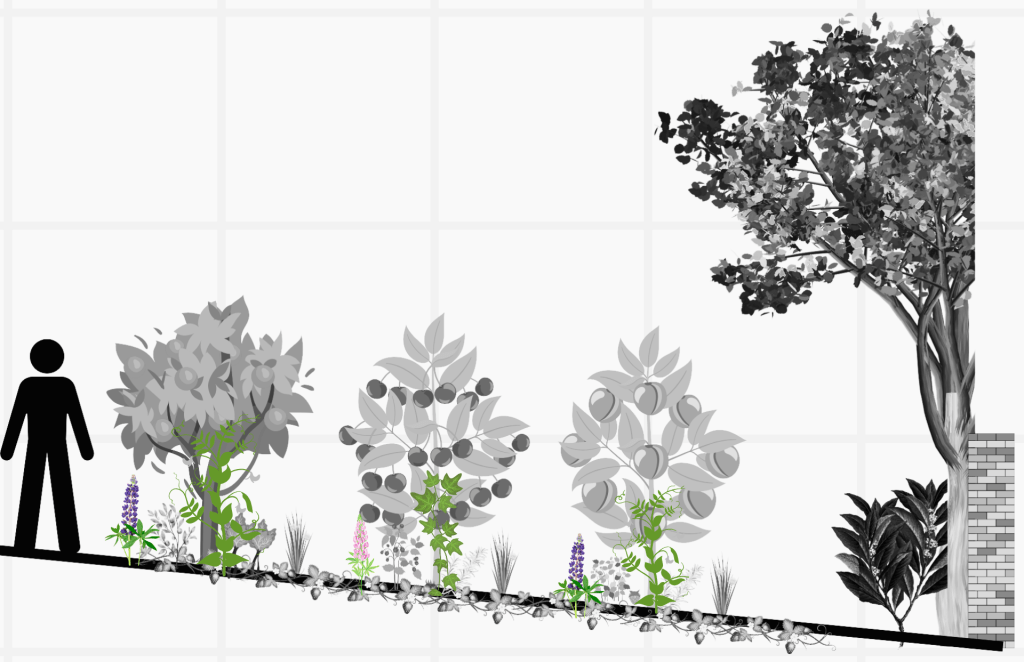

Designs showing our guilds at the moment and where the extra nitrogen fixers and climbers will be added from our garden guild design as used in my Permaculture Design Course (PDC Pro)

Our Food Forest Area in July 2024.
Why We Use Strawberries As Ground Cover In Our Food Forest You Tube Video
Happy Gardening


Katrina & Clayton and family live in East Ayrshire and share their daily life in the garden on instagram. They practice permaculture principles in the garden, reducing & repurposing waste whenever they can. Katrina shows how home educating in nature has helped Clayton thrive.
Clayton Completed The 2 Grow and Learn Courses with the Royal Caledonian Horticultural Society. He is Autistic, Non Verbal & has been Home Educated since 2018. Katrina & Peter hold their PDC & PDC PRO Permaculture Design Course from Oregon State University.
They featured on BBC Beechgrove Gardens Ep23 2022 and returned in 2023 for an update,Katrina & Clayton are also columnists for ScotlandGrows Magazine, Guest Blog for Caledonian Horticulture as well as working with Gardeners’ World Magazine and many other brands.
They are also Author of the new Children’s Book Series: Clayton’s Garden Journey: Stories of Autism and Gardening. Topics on Growing, Harvesting, Sowing & Composting and 108 Page Weather and Seasons Weekly Gardening Record Book available on Amazon and Kindle. Listen in on their Guest Podcasts to learn more about them.


Get new content delivered directly to your inbox.
Our Children’s Book Series
Author of the new children’s book series: Clayton’s Garden Journey: Stories of Autism and Gardening and Sowing, Growing, Weather and Seasons Weekly Gardening Record Book available on Amazon and Kindle
Visit Our Print On Demand Stores
REDBUBBLE STORE -WORLDWIDE
Over 175 Garden & Nature Designs. Coasters, Phone Covers, Bags, Mouse Mats & Much More

Discover more from Building a Food Forest -Scotland
Subscribe to get the latest posts sent to your email.

This is a wonderful site, I am inspired by your journey and how clearly you have set out what you did, for others to learn from. YOu are very generous, thank you.
LikeLike
Thank you for such a lovely comment. You are so welcome, glad you are enjoying it
LikeLike